


Cusco: How to get to the “Imperial City” by bus
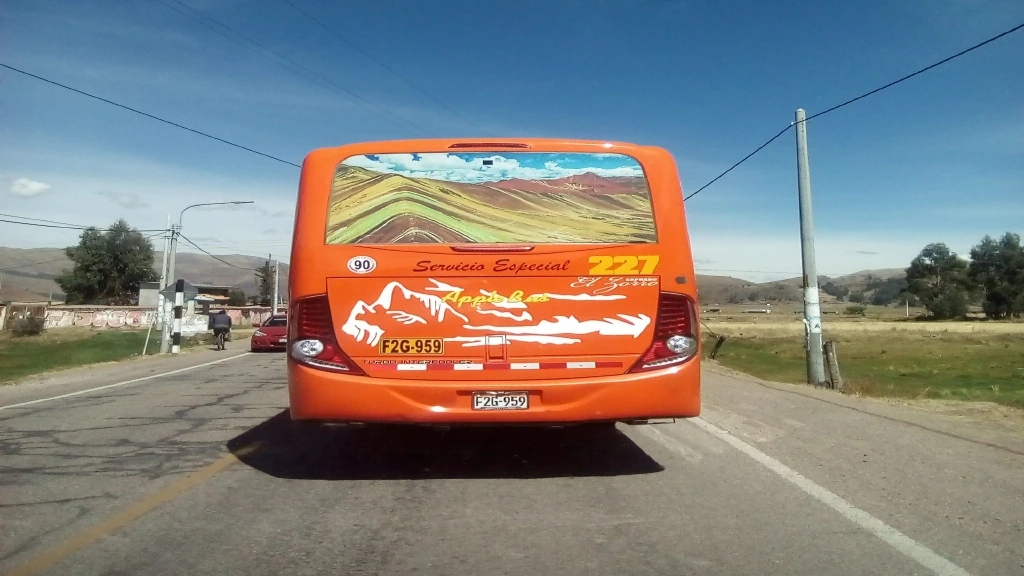
You need to have patience and find ways to fight off boredom, though it’s not easy when you’ve been on a bus for nearly 20 hours, spinning around like a top, going up and down like a yo-yo. So what can you do to make the time fly? Try sleeping, watching any movie, or gazing at the landscape rushing past the window.
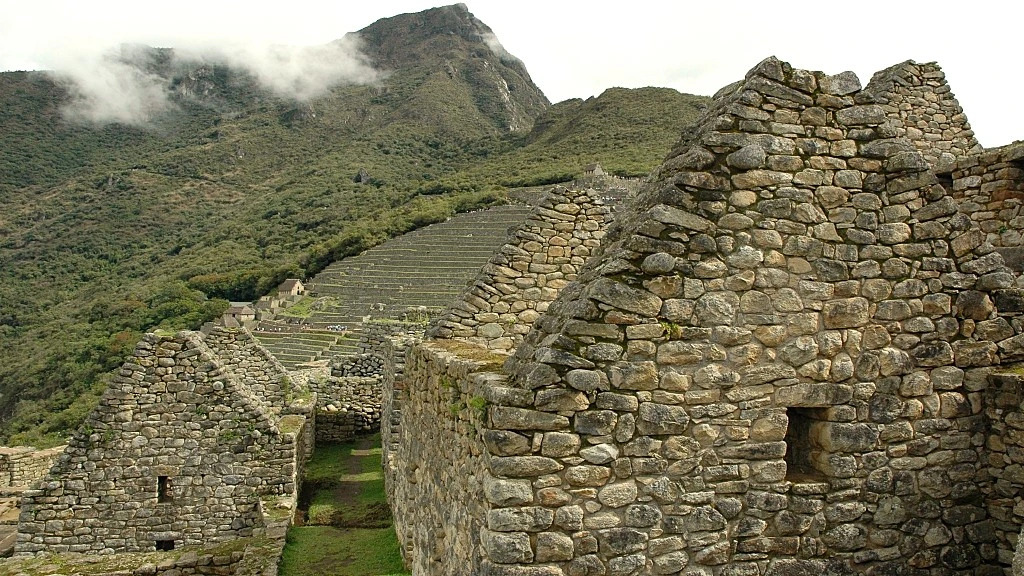
Yes, patience, that’s all that’s left – patience and waiting. After all, no journey lasts forever, and no body can endure it indefinitely. Sooner or later, you’ll reach your destination, which is no ordinary place – it’s Cusco, the “Historical Capital of Peru”, the city that was once the “navel of the Andean world” and the starting point for exploring the Sacred Valley of the Incas and the Historic Sanctuary of Machu Picchu.
We won’t lie to you – if you’re not an experienced traveller, you’ll likely arrive exhausted, sleepy, and perhaps with a headache, courtesy of the altitude and the marathon journey you began in coastal Lima, the capital of Peru. The trip is long and tedious, with ascents and twists, with high altitudes, sun, and cold, with backaches, despite the fact that the bus is “five-star”.
If road trips aren’t your thing but you still want to experience a land journey from the Pacific to the Andes, then we recommend a route plan with stops and overnight stays at strategic locations. These will spare you from over 20 continuous hours on the road and, in the process, allow you to relax and enjoy a range of unmissable attractions.
Want to know more? Stay with us until the end of this article.
On the way to Cusco
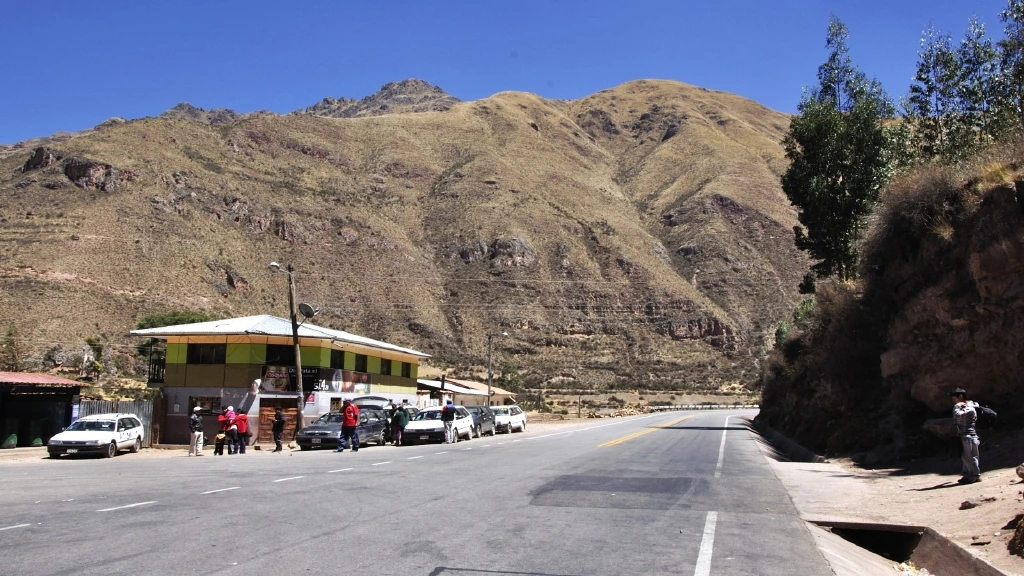
An hour by plane versus nearly a whole day by bus. The choice seems simple and undeniable – flying is the way to go, although prices can vary considerably depending on the date. That’s what common sense dictates, but often, decisions go beyond logic. There are other factors, such as the desire to take it easy – that is, making stops along the way – to avoid “suffering too much” on the 1,100-kilometre stretch between Lima and Cusco.
And that itinerary, which many travellers follow and which we’re about to share with you, includes stops in Paracas – to explore the national reserve of the same name and the Ballestas Islands with their abundant marine wildlife –; in the Huacachina lagoon, the “Oasis of the Americas” – where it’s a “tourist duty” to learn to slide down the dunes on a sandboard – and, finally, flying over the spectacular Nazca Lines.
In this way, your journey will turn into a full-fledged tour. Depending on your availability and budget, you can decide how long to stay in each location. If you choose to travel directly, keep in mind that buses covering the Lima-Cusco route depart in the afternoon (between 12:00 p.m. and 3:00 p.m.). Cost: 130 soles. These buses make scheduled stops in the cities of Ica, Nasca, and Abancay.
That’s one option. The other is to go from Lima to Paracas (it’s recommended to leave early in the morning, Cost: 60 soles); then from Paracas to Ica (where you can spend the afternoon in Huacachina), and from Ica to Nasca, where you’ll overnight. All these legs can be done using public transport, but if you want to avoid setbacks and complications, local operators offer a daily tour from Lima to Paracas, Huacachina, and back to Lima.
In your case, since you won’t be returning to the capital, coordinate with your guide to drop you off at the bus station or the collective transport stops heading to Nasca (3 hours, 30 soles). This way, step by step, you’ll gradually make your way to your final destination.
The First Stops on the Route
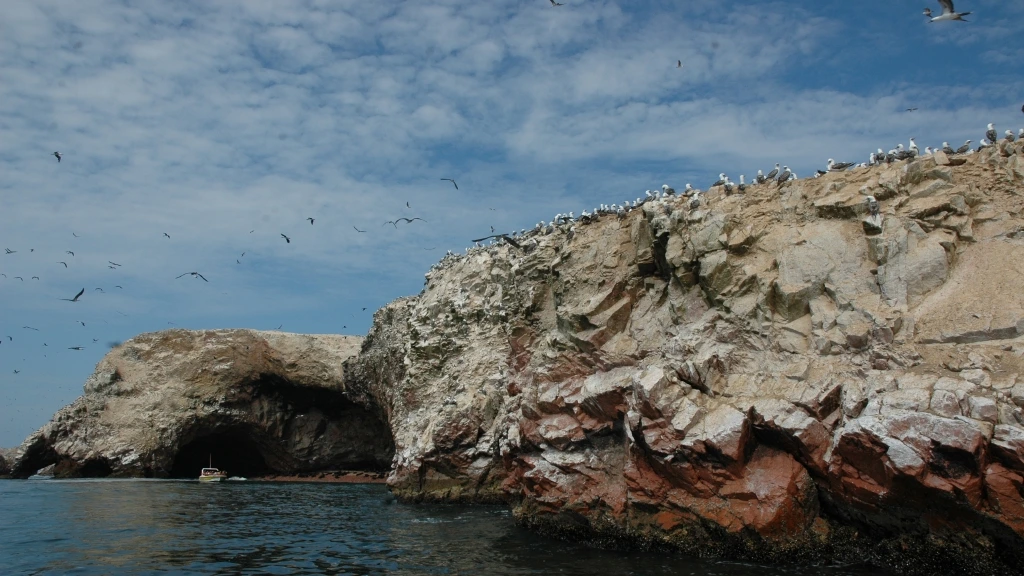
What do you prefer: a journey of over 20 hours, or taking a little extra time to visit several places? What do you prefer: looking at the ocean and desert from the bus window, or cruising on a boat and sliding down the sand dunes? What do you prefer: spending nearly a whole day dozing in your seat, or becoming the protagonist of exciting adventures in Paracas and the dunes of Huacachina?
That’s what we’re offering you: swap monotony for action. It doesn’t matter if it takes a bit longer, as long as it means setting off to the Ballestas Islands from the El Chaco pier in Paracas, with the goal of seeing the mysterious Candelabra geoglyph and the rich biodiversity that makes this part of the Pacific a sanctuary for dolphins, sea lions, otters, Humboldt penguins, and numerous seabirds like the zarcillo and guanay.
Delays are welcome, especially if, after returning to the pier (note: the boats to Ballestas only depart in the morning), you continue to the Paracas National Reserve, just a stone’s throw away. You’ll reach it by car, where you can spot flamingos, explore pre-Hispanic ruins in a museum, cool off at hidden beaches, and – why not? – sample some fresh seafood from the area.
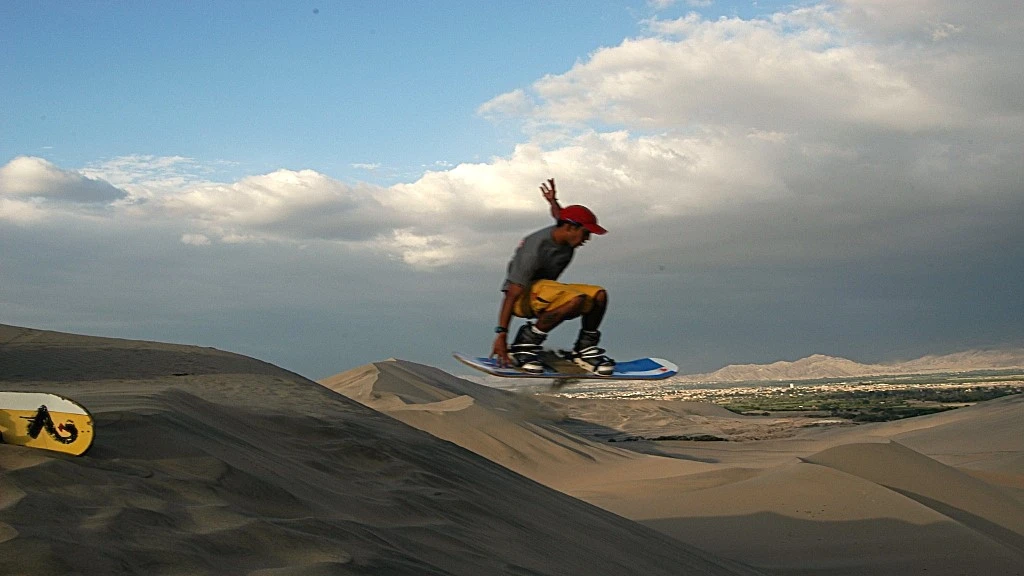
After enjoying the reserve, head towards Ica. If you haven’t booked a tour, don’t stress. In Paracas, you’ll find direct buses to Ica (cost: 25 soles). Other options include taking a collective taxi to Pisco (the capital of the province), where you can catch a bus to Ica, or heading to the Panamericana Sur highway to wait for buses coming from Lima. The journey takes about an hour along a fully paved road.
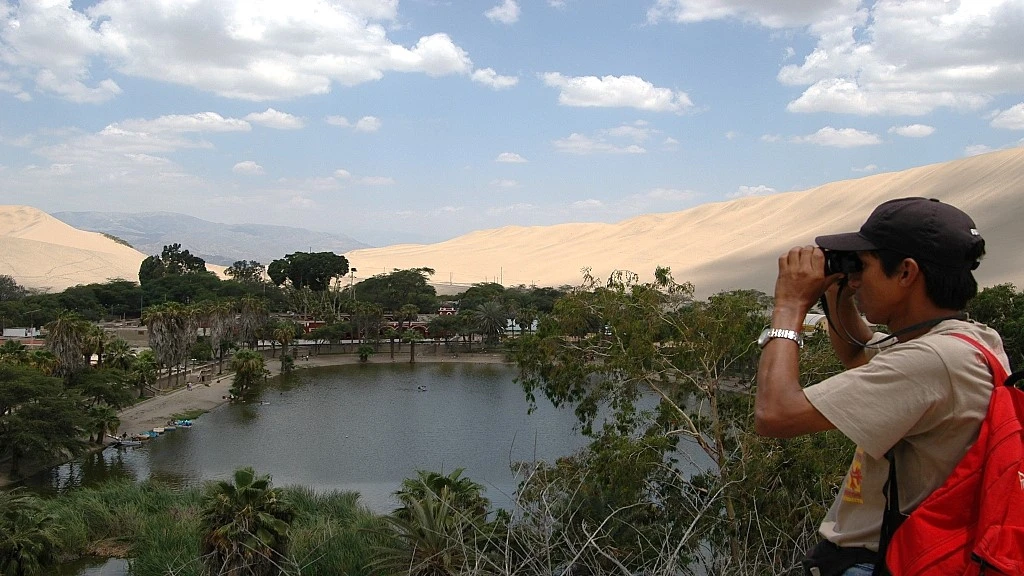
Once in the “City of Eternal Sun,” head to the Huacachina Oasis, just 5 km from the city centre. This real-life mirage is a lush green patch in the desert, with an underground lagoon surrounded by dunes that shimmer in the sun, making it a perfect spot for sandboarding. After daring to “surf” the sand, raise a glass of wine or pisco, the iconic Peruvian drink.
Una escala en las líneas de Nasca
If the Ica wines and the pisco – which is only found in Peru – lift your spirits so much that you feel like staying in Huacachina, there’s no problem. The oasis has several hotels where you can spend the night. If that’s not the case, head back to the city and prepare to leave for Nasca. The distance is 145 kilometres. Once you arrive, find accommodation and get ready for an extraordinary day ahead.
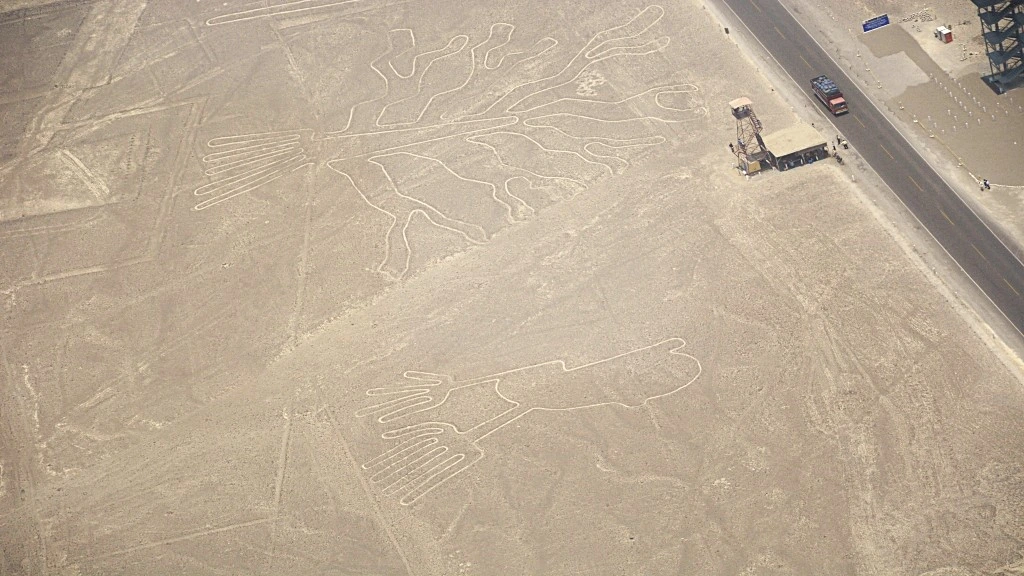
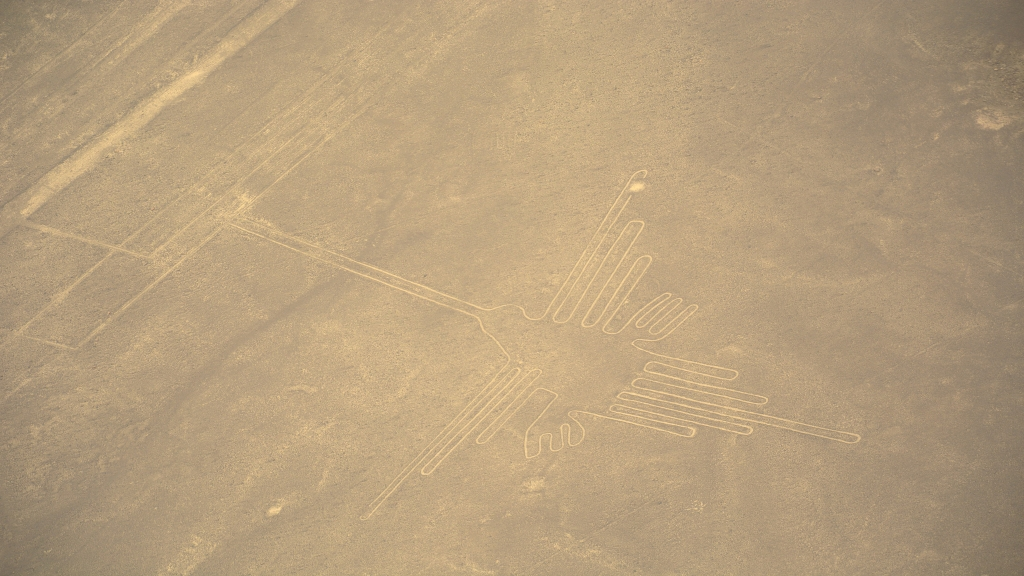
In Nasca, it’s a must to fly over the famous Nazca Lines and geoglyphs, etched into the desert by ancient civilizations. Don’t leave the city without seeing from the air the astronaut, the hummingbird, the condor, the monkey, the whale, the hands, and many other figures, whose purpose and meaning are still a mystery to researchers. This scientific uncertainty only adds to their intrigue.
The flight lasts between 30 and 40 minutes. Small planes depart daily from the María Reiche Neuman Airport, which is located about 4 km from the city centre. The ticket price varies depending on the operator, but it typically ranges around or above 300 soles (depending on the season). Yes, those soles you saved on your flight to Cusco will be well spent, as the experience of seeing the geoglyphs from the air is truly unique.
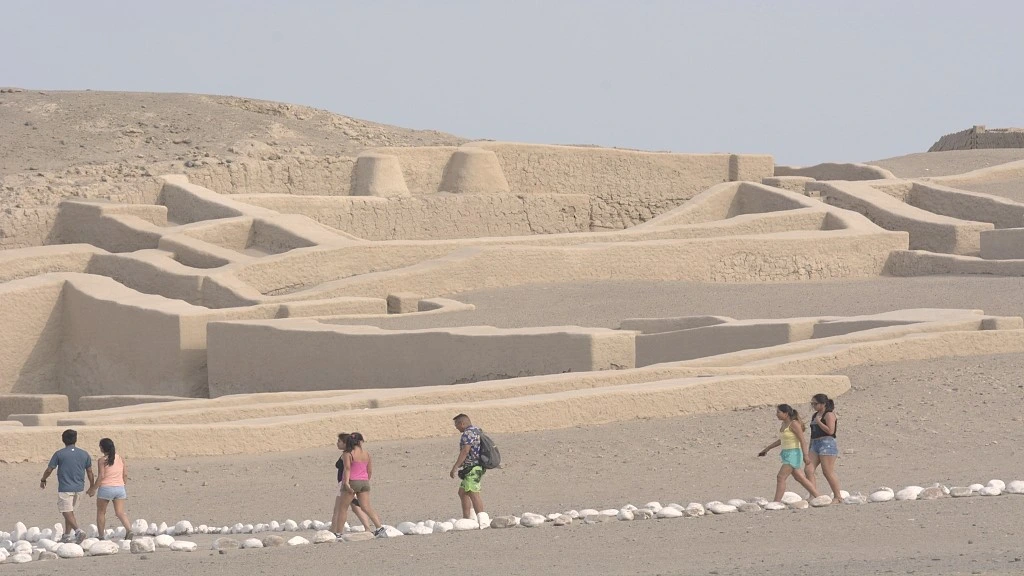
Once you’re back on solid ground, an excellent plan is to visit Cantayoc, the ancient aqueducts that allowed the Nasca people to harness underground water, and Cahuachi, a ceremonial center made of adobe, with its impressive pyramid standing out. A place of pilgrimage, Cahuachi is the largest architectural legacy of the Nasca culture, which flourished in the Ica Valley and surrounding desert between the 1st and 7th centuries AD.
After your exploration, return to the city and buy your ticket with any of the companies heading to Cusco (approximately 130 soles). These buses depart from Lima and pass through Nasca starting at 10:00 p.m. Keep in mind that this is where the paved detour begins, which, after many slopes, descents, and curves crossing several towns in the Ayacucho and Apurímac regions, will triumphantly bring you to the “Imperial City.”
The Final Stretch
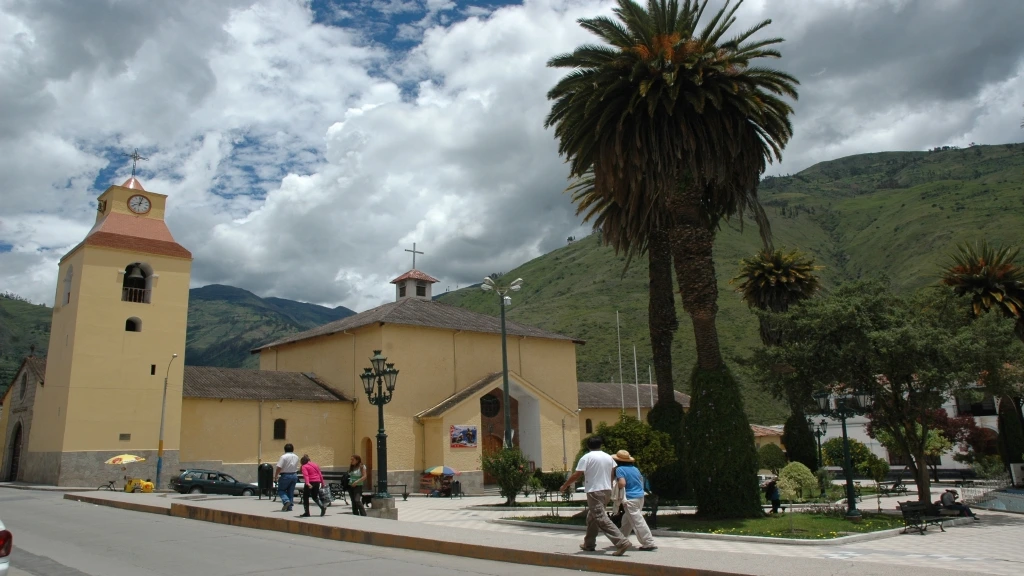
From the coast to the Andes on a traveller’s night journey, where it’s not a bad idea to take a pill for altitude sickness (soroche) and have a light dinner before setting off. Another tip: if possible, choose a company that offers reclining or semi-reclining seats. Comfort is key if you want to get some sleep during the winding stretches.
Sleep, or at least try to rest. Then, when you wake up, you’ll be surprised at how the landscape has changed. No more desert—now, there are mountains. It’s like a hands-on geography lesson about the diverse ecological zones of Peru. In the morning, you’ll pass through Abancay (2,377 m a.s.l.), the capital of the Apurímac region. This is a city with a pleasant climate and much to offer, though it is often overlooked by tourists.
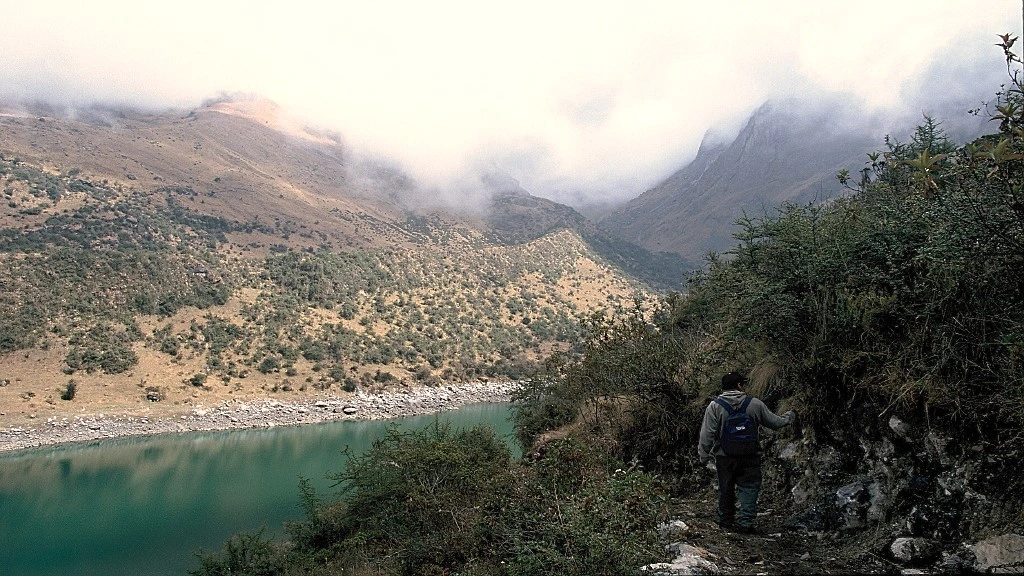
If you want to be the exception that proves the rule and decide to make one last stop, we suggest visiting the Ampay National Sanctuary and the Cconoc Hot Springs, as well as trying the delicious homemade noodles with chicken, one of the local gastronomic specialties. Close to Abancay is the village of Cachora, one of the starting points for the archaeological site of Choquequirao.
But let’s not get sidetracked. Your final destination is Cusco (3,400 m a.s.l.), where you’ll arrive just as midday breaks. It’s up to you whether you travel straight from Lima or if you make any of the suggested stops along the way. The final itinerary is yours to choose – always yours. Just know that whatever you decide, the experience will be unforgettable, whether it’s the monumental bus ride or the tourist stops along the route.
What will your memories be? You’ll find out on your next holiday in Peru. What are you waiting for to visit us?
November 15, 2024