


Unexpected Getaways in Cusco
A commandment, principle or basic rule for any traveller, tourist or wanderer — call it whatever you like. In the end, the name isn’t what matters. What really counts are the actions that come from following the commandment, principle or rule I’m about to share with you, based on my own experience exploring the routes and roads of Peru.
And while this basic rule applies to many destinations across the country — and the world — today I’m focusing on Cusco. In this city and region, there are so many historical, natural and cultural attractions that no itinerary will ever let you see them all. Accept it. Even if you moved to the “navel of the world”, it would still be an impossible — or almost impossible — task.
I say “almost impossible” only because hope is the last thing we lose — in this case, the hope of exploring every tourist site, both the well-known ones and those yet to be discovered. New archaeological complexes continue to gain recognition, new hiking and adventure circuits open up, and immersive community-based routes are constantly being developed.
Faced with this constant wave of new discoveries and ongoing changes, I recommend leaving one free, unscheduled day in your travel plan. This will allow you to slip away to a little spot that’s just beginning to make a name for itself, or give a chance to places that are already known but often overlooked or deprioritised because of tight itineraries.
I’ve applied this simple rule, principle or “commandment” more than once — and with great success. That’s why I dare to share my own experiences with you. Thanks to my free day, I discovered the archaeological sites of Quillarumiyoc and Tarawasi (in the province of Anta); I prayed, danced and toasted with the devotees of Santa Rosa de Lima in Lamay (province of Calca); and I visited an Indigenous community in the jungle of Paucartambo.
It all started with a poster
There’s no single, exclusive method for planning your free day. The process can vary and draw inspiration from all sorts of sources: a promotional poster you spot in a travel agency, a tip you overhear during a tour or on public transport, a recommendation from your hotel receptionist, or the advice of a seasoned traveller sharing stories of their adventures in hidden corners.
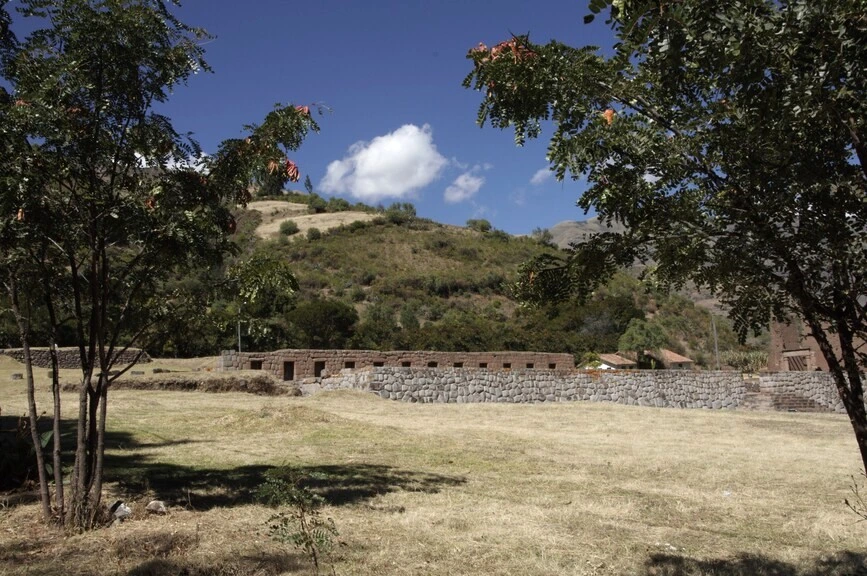
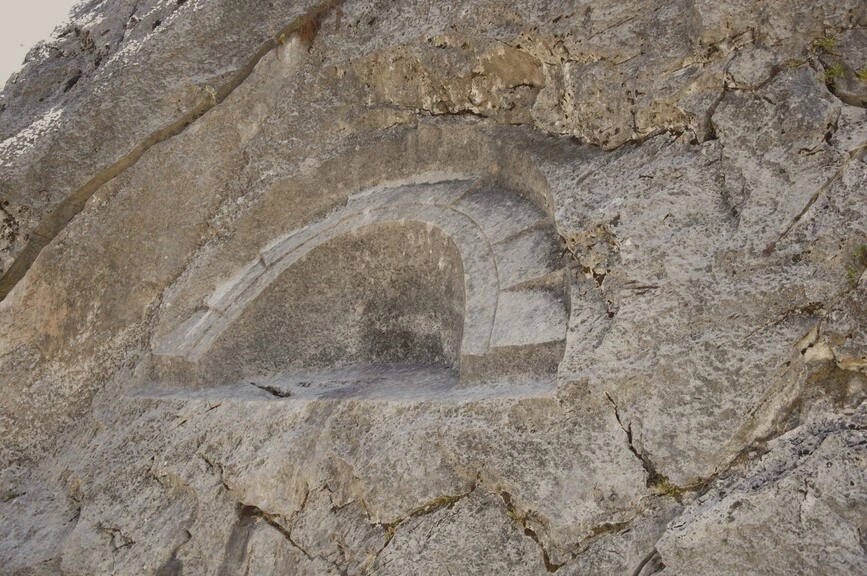
Information is everywhere. You just need to stay alert and, depending on your tastes and preferences, feel encouraged to head off to the “place of the moon rock” (that’s what Quillarumiyoc means in English) or the “house of the tara” (the meaning of Tarawasi). Well, at least that’s what I did several years ago when I first learned about these two Inca constructions.
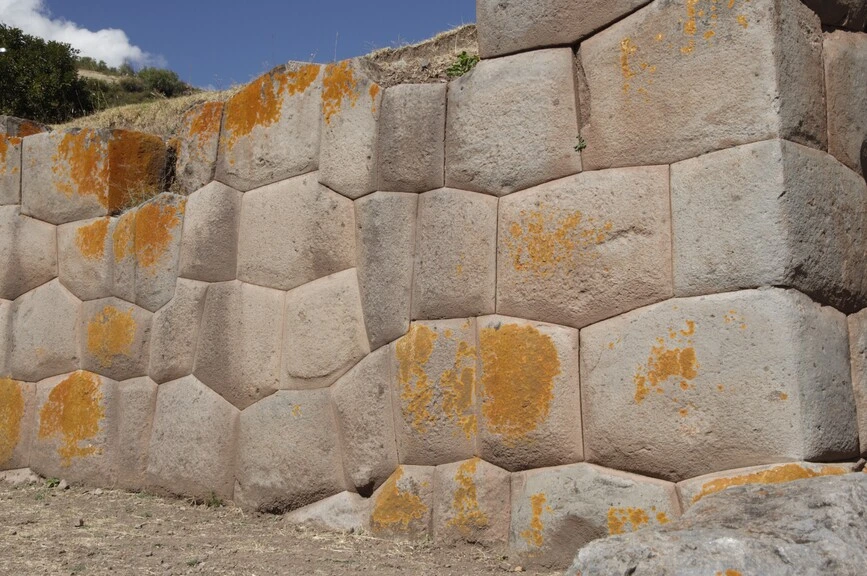
I saw a poster. I liked it, and I happened to have a free day. What followed was some research — asking around and doing a bit of googling. That’s how I found out that Quillarumiyoc — 50 km from Cusco — was a ceremonial centre dedicated to the Moon, and that Tarawasi — 72 km away — served the same purpose and was also a tambo (a roadside lodging and supply station) built by order of Pachacutec, the ninth ruler of the Tawantinsuyu.
The best part is that both places lie along the same route — the Cusco–Abancay road — so all I had to do was hop on the buses or shared taxis heading towards Limatambo, one of the nine districts of Anta. Tarawasi is just a few steps from the road and very close to the town centre. Quillarumiyoc is a different story. In that case, I got off in the town of Ancahuasi and walked for about 20 minutes (you can also take a taxi) through the San Martín community.
From Cusco, Ancahuasi is closer than Limatambo; but on my journey, I decided to visit Tarawasi first (have I already mentioned that tara is an Andean tree or shrub?), meaning I started with the furthest point. Don’t worry about getting back — transport runs constantly. Just wait by the roadside. In the city, the departure point is on Pavitos Street, about a 10-minute walk from the Plaza de Armas.
The Feast of Santa Rosita
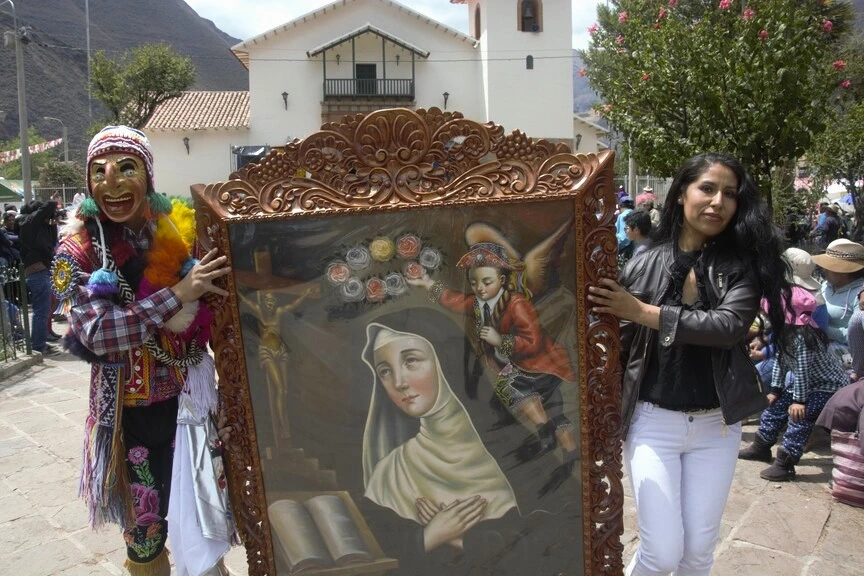
It was in a taxi that I learned that the feast of Santa Rosa in Lamay, one of the eight districts in the province of Calca, was similar to the celebration of the Virgin of Carmen in Paucartambo. “And you don’t have to travel that far,” said the driver — a local from that little corner of the Sacred Valley, located 45 km from Cusco (about 1 hour 20 minutes by public transport; departures from Puputi Street).
His comment came as a direct response to my enthusiastic description of the Paucartambo celebration (a 3-hour journey from Cusco), held from 15 to 17 July. I no longer remember why I was reminiscing about my experiences from previous years in the land of “mamacha” Carmencha, but I do remember the driver’s recommendation: “Take the chance and visit my town. You’ll see I’m not lying.”
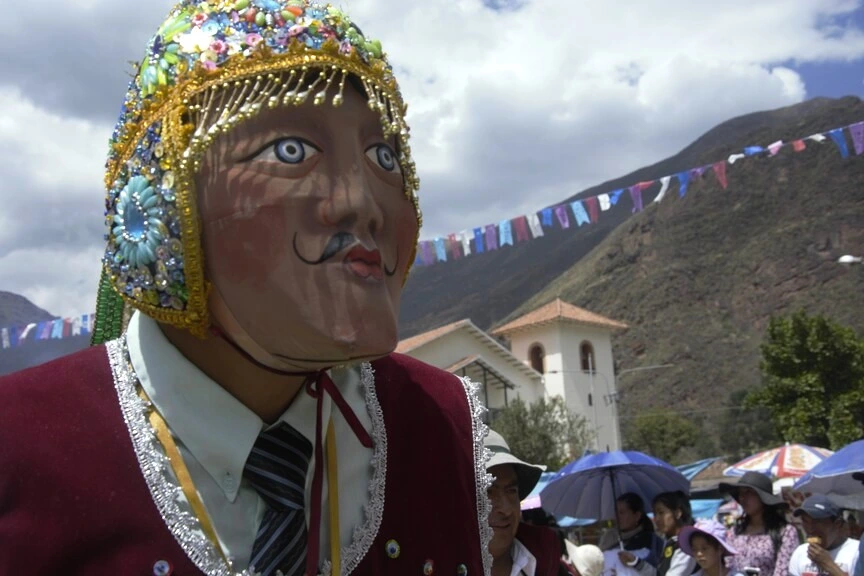
Said and done. I took his advice, especially since my “free day” happened to fall on 30 August — a national holiday in Peru in honour of Santa Rosa, the first woman from the New World to be canonised by the Catholic Church. It was an excellent decision. Once again, my commandment, principle or basic rule proved its worth. The feast in Lamay is an explosion of faith, music, dance and colour that mesmerises travellers.
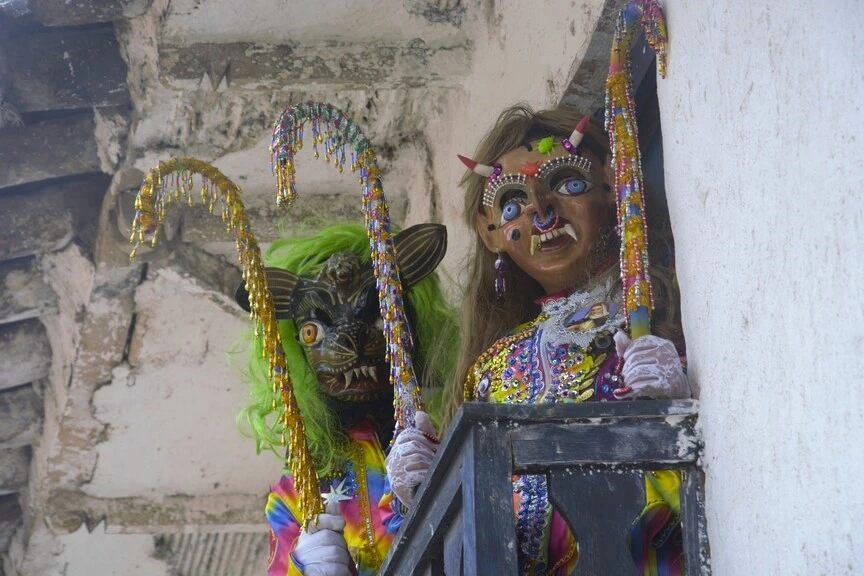
Processions, fireworks and hundreds of dancers filled the streets — performers representing the devil (saqras), the people of the Altiplano (Qhapaq Qolla), the jungle dwellers (Qhapaq Chuncho) and the descendants of enslaved Africans (Qhapaq Negro), among other dance groups. They honour and worship the saint from Lima with inspired choreography, artistic masks and striking costumes.
The taxi driver was right. In Lamay (2,941 m a.s.l.), I felt just as I had in Paucartambo. The conclusion: if you’re in Cusco at the end of August, escape to the “place where the llamas live” (the meaning of llamac, from which the district’s name likely comes) so you can witness — and why not, even take part in — a fabulous patronal celebration, one that showcases the deep cultural and religious syncretism of the Andes.
Good aim in the Jungle
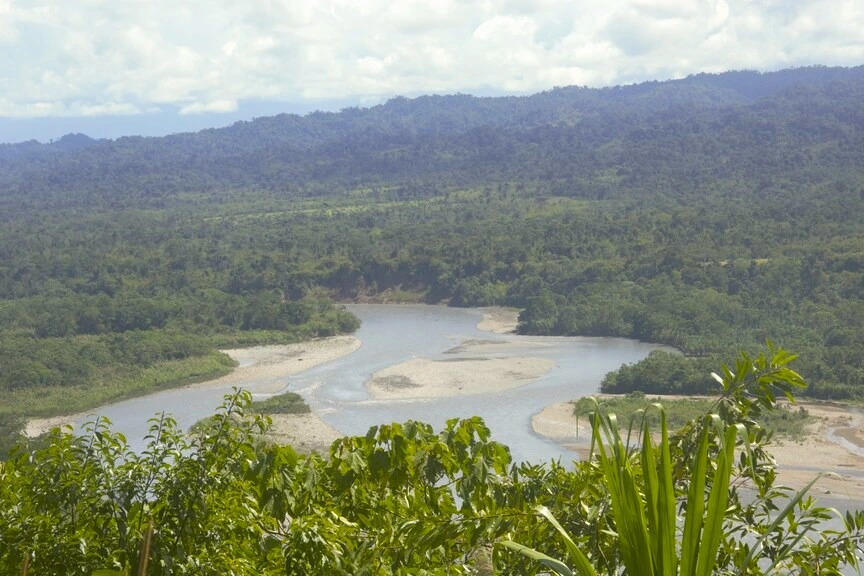
I was due to return to Cusco that night from Pilcopata, the capital of the Kosñipata district (province of Paucartambo). Warm and surrounded by lush greenery, the town lies on the route to the Manu Biosphere Reserve, one of the lungs of the planet. I was wandering about when, over breakfast, I learned that a group of local authorities and residents was heading out to visit an Indigenous community.
True to the principle that “the only request you regret is the one you don’t make”, I approached the group and asked if I could join them. I convinced them — and they agreed. Minutes later, I was standing in the back of a pickup truck bumping along a dusty track towards the Queros Wachiperi Indigenous community, officially founded on 4 October 1974 on the left bank of the Alto Madre de Dios River.
That unexpected journey turned into a full adventure, including crossing a branch of the river on a handmade, wobbly raft. Years later, I returned to the community and don’t recall going through anything similar. Perhaps the group took an alternative route? Whatever the case, when I arrived at my destination I was welcomed with full honours, and for a moment I felt important — almost like an official (Time: 30 minutes, distance: approx. 9 km from Pilcopata.)
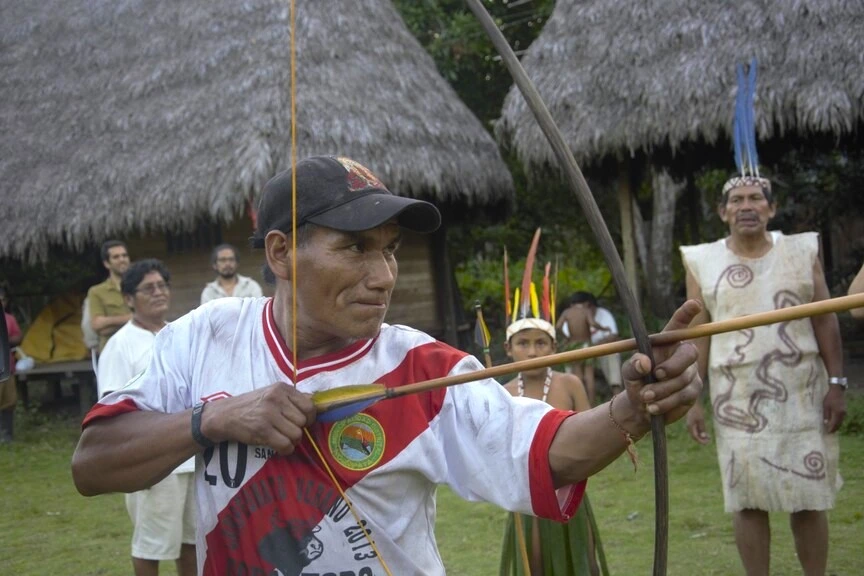
Well, I’ve never been an authority figure — but my companions were. They were attending an assembly or something of the sort. That part has faded from my memory. What I haven’t forgotten are the calm faces of my hosts, their skill with bow and arrows (good aim is essential for hunting in the forest), and their rustic wooden homes. Nor have I forgotten the greenery and the fresh, pure air that fills the community.
During my visit I learned that the Queros Wachiperi are part of the Harakbut Amazonian people, who live along the banks of the Madre de Dios and Inambari rivers, among others. Guardians of the forest and nature, they preserve their spirituality and ancestral traditions. As evening fell, I returned to Pillcopata and later to Cusco, convinced once again that it’s always worth leaving a free day in your travels.
November 19, 2025