


Cusco: Strategic plan for visiting Pisac
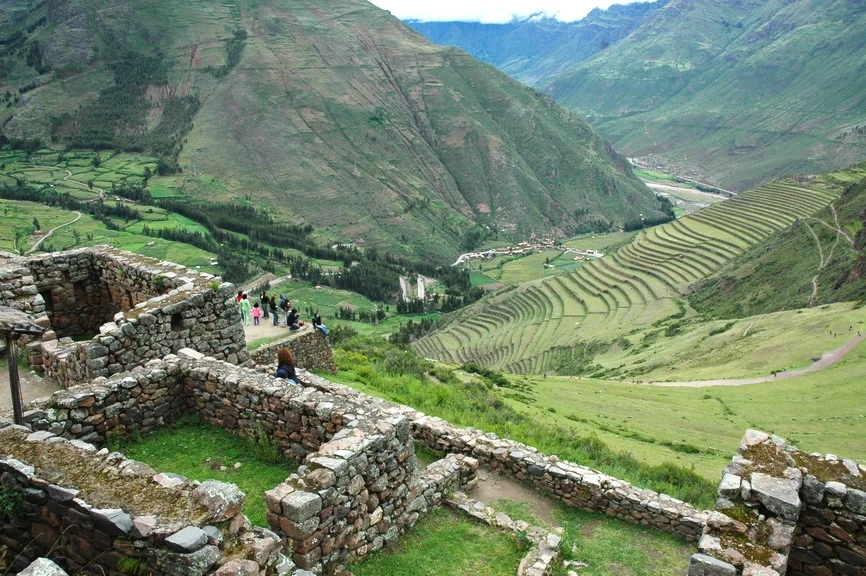
Without a guide and without being part of any group. I would set off completely on my own, on a little getaway free from the rush and demands of the clock. I’ll admit it wasn’t a difficult journey, but it was going to be very revealing. I was sure of that, because during my previous visits to the archaeological park I’m now slowly approaching, I was left with the feeling that there was still so much more to discover.
That curiosity led me to devise a strategy, one I would carry out in several stages. The first phase was simple — at least in theory. After all, it’s never easy to leave the historic and original heart of Cusco, declared a Cultural Heritage of Humanity in 1983 by UNESCO for being “a representative example of the meeting of two distinct cultures: Inca and Spanish”.
Well, it wasn’t exactly a tragedy either. The plan involved heading to one of the favourite destinations of travellers and tourists who visit Peru. So any sadness about leaving the city founded in mythical times by Manco Cápac and Mama Ocllo wouldn’t last long. Quite the opposite — it would vanish as soon as I boarded the bus or van taking me to the Sacred Valley of the Incas.
The second stage involved finding a simple and welcoming place to stay the night. The next day I would wake up early — and, as the saying goes, the early bird catches the worm — ready to fully explore the Andean landscape and the architectural heritage of the “Children of the Sun”. I would also enjoy the traditions of Pisac, the town and archaeological site I planned to visit entirely at my own pace.
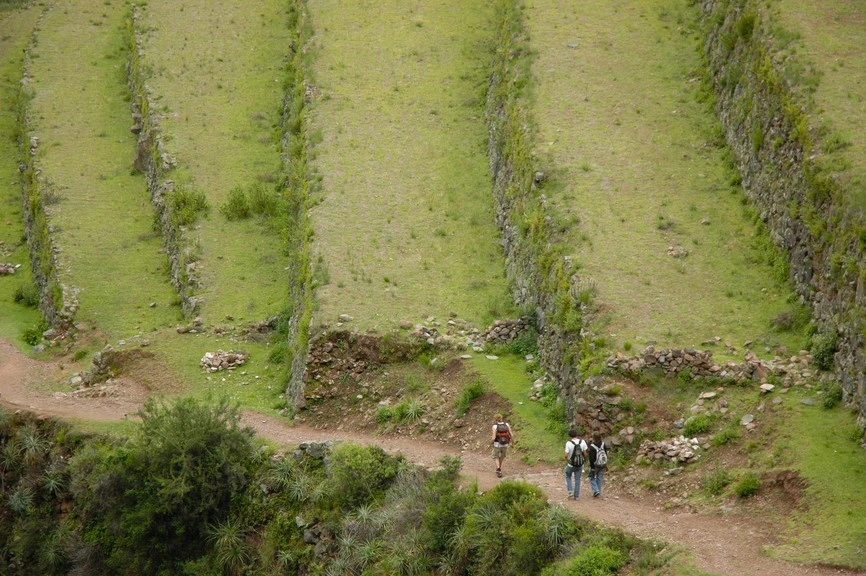
Yes, those were my ultimate goals: to explore the terraces, temples, houses, pathways, and aqueducts of one of the most impressive monuments of pre-Hispanic Peru; and, while I was there, to wander through the colourful and varied Pisac market. A hands-on experience where the streets become the stage for lively exchanges of agricultural and artisanal products.
Cusco, the starting point
Goodbye to the Plaza de Armas, to the Qoricancha or Temple of the Sun, to the Twelve-Angle Stone, to the artisan quarter of San Blas, and to the colonial churches built upon Inca walls. It’s time to set off. Time to leave the vibrant streets of Cusco behind — its restaurants bursting with flavour, its bars, pubs and clubs that keep cosmopolitan travellers awake long into the night.
I left with the promise of returning. It’s my habit — I always do when I depart from what was once the “Navel of the World” in the Andean universe (3,400 metres above sea level). My destination is the district of Pisac (Calca province) in the Sacred Valley of the Incas, shaped by the waters of the Vilcanota–Urubamba River. Its splendid geography and cultural legacy make it an unmissable destination.
The easiest, quickest and most comfortable way to discover the valley’s towns is to hire the services of a local operator. Full-day excursions include itinerary stops in Pisac, the “Town of Terraces”, Ollantaytambo, the “Living Inca City”, and Chinchero, the “Land of the Rainbow”, celebrated for its textile art. The tours include a buffet lunch and a professional guide.
An excellent option if you’re short on time or prefer to free yourself from the responsibility of organising every step of your trip. But if that’s not your situation, then follow the plan I’m sharing with you. It will allow you to start discovering the Sacred Valley on your own. With that explained, I grab my backpack and head to Puputi Street, located about 25 minutes on foot or 15 minutes by car from Cusco’s Historic Centre.
From here, buses and vans set off towards Pisac (Distance: 33 km / Time: roughly 1 hour). The fare ranges between 10 and 15 soles (3 to 5 US dollars). I recommend taking a seat on the left-hand side of the vehicle so you can enjoy the views of the valley along the way. Once in the town, you’ll find plenty of restaurants and hotels. You’ll also catch your first glimpses of the pre-Hispanic terraces.
A day in Pisac
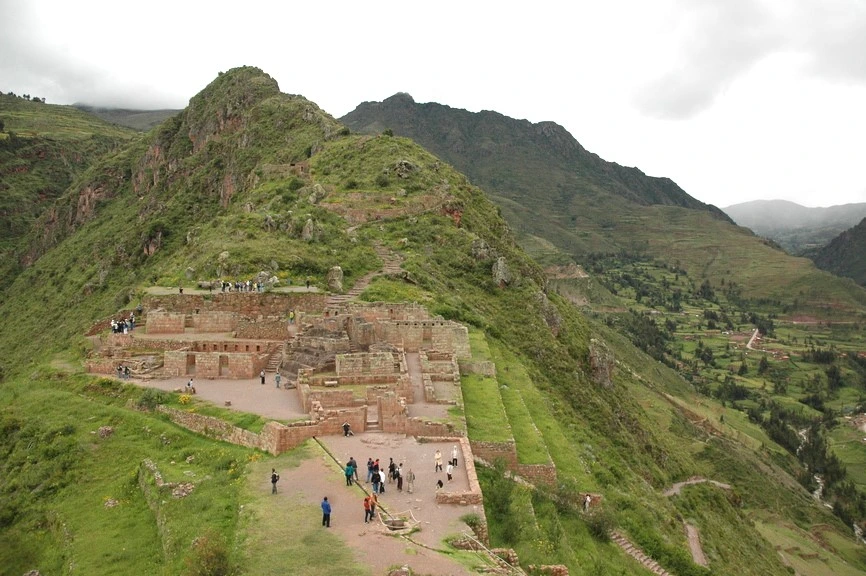
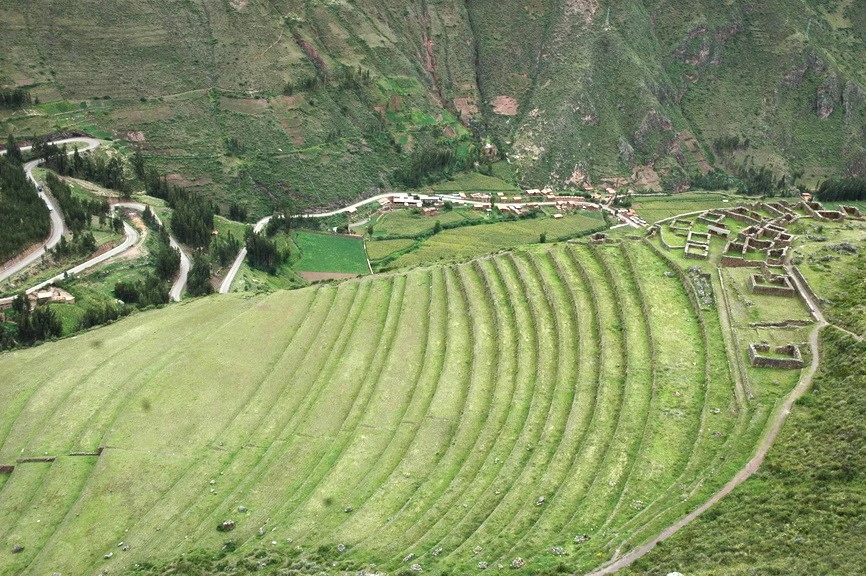
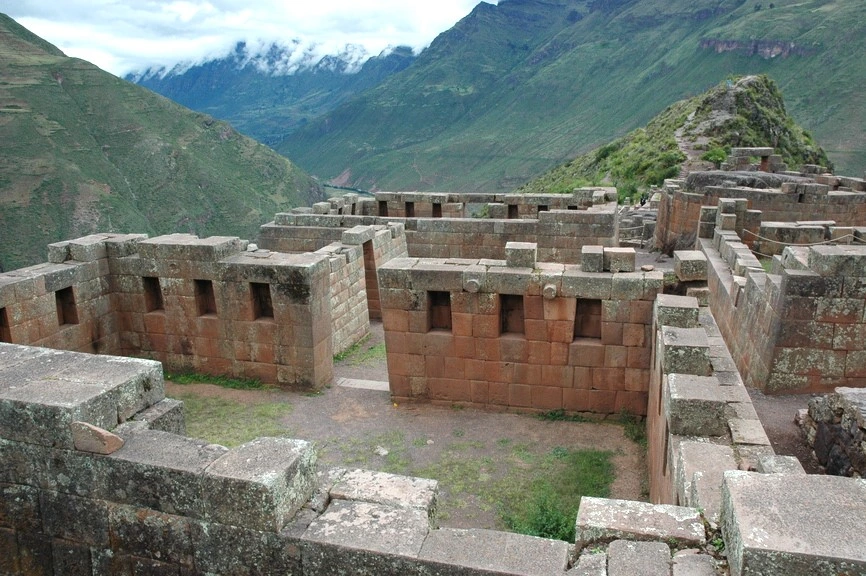
Pisac: Andean visions, Inca past. It was Pachacutec, the ninth “Child of the Sun” and the “Transformer of the World”, who ordered its construction in the 15th century. Agricultural, religious, military and astronomical purposes justified this majestic complex on the summit of a mountain. On its slopes, pre-Hispanic engineers “sculpted” striking terraces that continue to amaze everyone who sees them.
Pisac: uncertainty and chaos. In 1532, the Spaniards invaded the Inca llaqta (city). Destruction and plunder. They were searching for riches — they wanted gold and silver. The Quechua people couldn’t understand what was happening. Their world was ending. Their society collapsing. They fled, abandoned the stone compounds, and took refuge on the lower slopes of the mountain. That is where they stayed — and where the colonial town would later emerge.
Pisac: an early start at 2,972 metres above sea level. Time to check whether I’ve packed my Full Tourist Ticket or Partial Ticket III (important: if you don’t have it, buy it before entering). A dilemma arises: should I take a taxi to the main entrance of the archaeological park, or walk along Intihuatana Street (which borders Constitución Square — the urban heart of the district) to the checkpoint and entry gate (distance: 400 metres)?
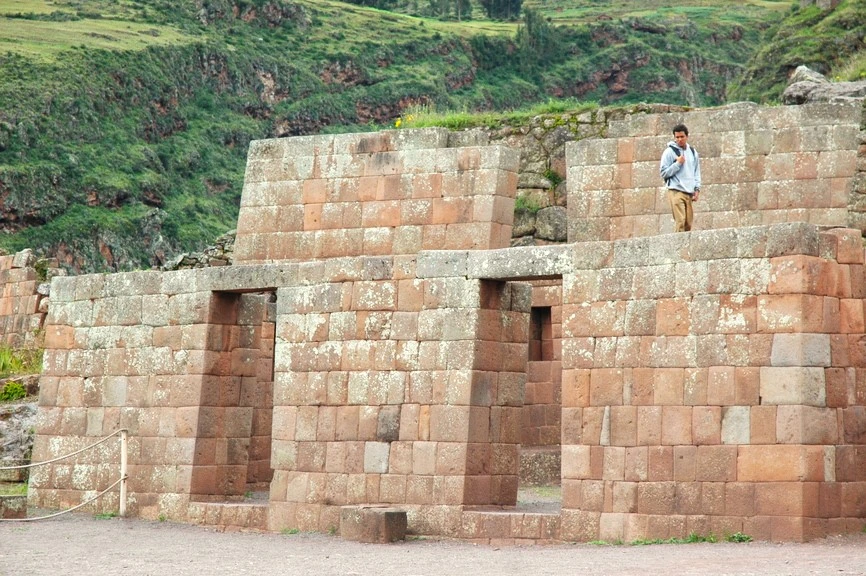
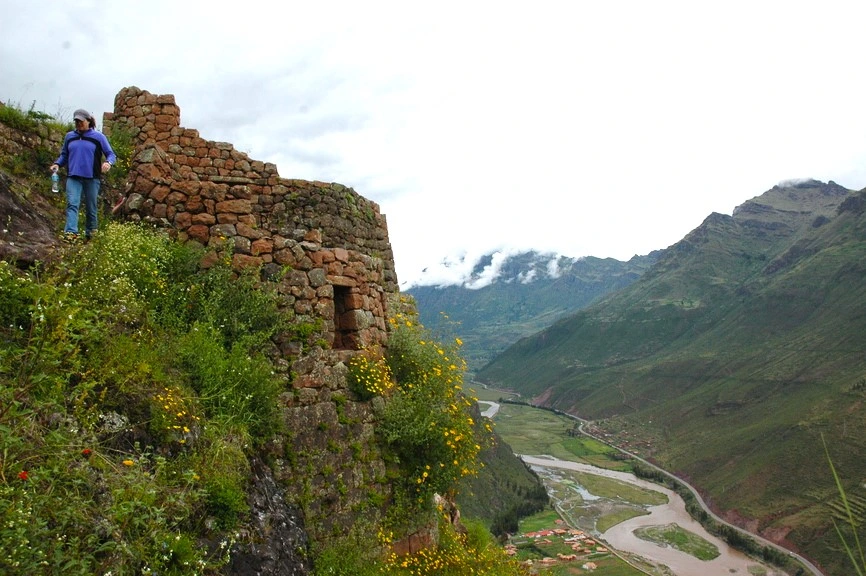
I decide against any motorised help: I’ll get there under my own steam. It doesn’t matter how long it takes. I won’t let tiredness defeat me, nor the 3,300 metres above sea level I’ll be climbing to. I move forward. The path rewards me with fantastic views of the terraces, the urban layout, and the winding river below. The trail brings me closer to stone watchtowers, to the five neighbourhoods of the llaqta, and even to a tunnel carved through the mountain.
My destination takes me by surprise — its stunning landscapes, its splendid architecture, its plazas, temples and palaces, and its Intihuatana (“where the sun is tied” in English), which served as an astronomical observatory in Inca times. The fineness of its carved stone walls aligns perfectly with the rising sun during the June solstice — the arrival of winter in the Andes.
Go on, treat yourself, my friend!
I hadn’t heard that. I would only read it later in the Tourism Resources Inventory of the Ministry of Foreign Trade and Tourism (Mincetur). Remember, my plan was to observe without receiving explanations or worrying about the passing of time. I wanted to fully enjoy the fleeting, momentary advantage of being at the archaeological park long before the tourist buses arrived.
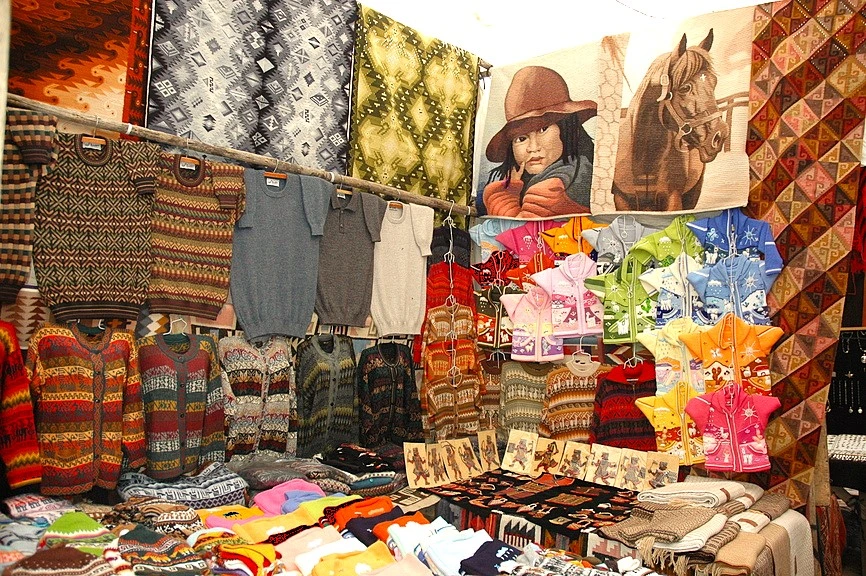
The early bird catches the worm, I recalled at that moment. The same thing happened to me while exploring the local market of Pisac. Although fresh produce and beautiful handicrafts are sold every day, Tuesdays, Thursdays and Sundays are special market days. On those days, there’s more colour and movement: more sellers and buyers, more voices bargaining in Quechua, in Spanish and in English.
Pisac on market and fair days. Streets overflowing. The main square surrounded by vendors who come down from the highlands, who arrive from the valley communities, who cross the mountain range from the rainforest to buy, sell and exchange native potatoes, giant corn, coca leaves, medicinal herbs that cure all ailments, and many other products gifted by the generous Mamapacha (Mother Earth).
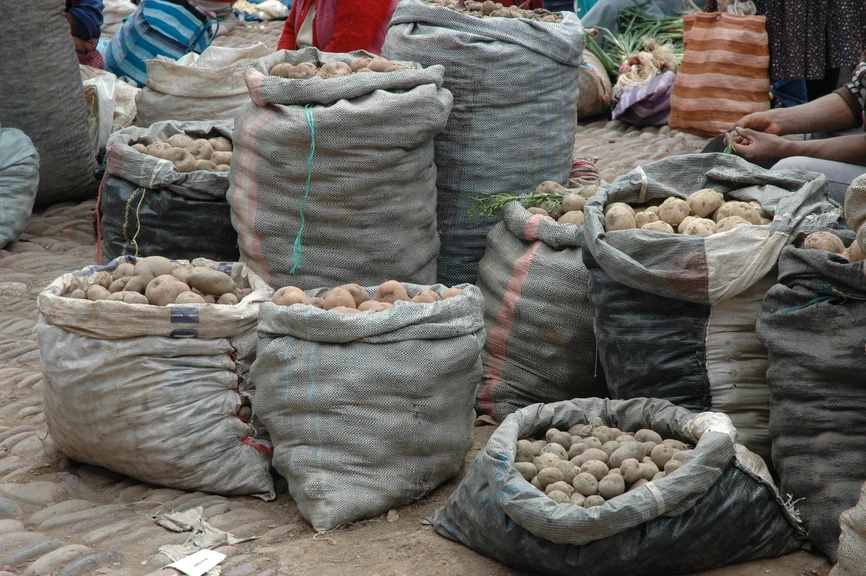
The range of products is broad and varied. A little bit of everything in one corner of the Sacred Valley. From natural dyes to clay pots. From spondylus shells — the pututus once blown by the chasquis to announce their arrival — to mobile phone SIM cards. The old and the new together in a different kind of market: lively, local… and yes, also touristy. I wander through it at my own pace, eyes and ears wide open.
And so, among stalls selling vegetables, tubers and everyday essentials, among ponchos, blankets, sculptures, jewellery and a wonderful variety of inspired handicrafts, my travel plan in Pisac came to an end. A solo adventure that I invite you to repeat in this ancient town or in any other community or district of Inca and Hispanic Cusco — a destination where there is always something to discover, without rush or pressure.
October 25, 2025