


San Blas: The artisan neighbourhood of Cusco
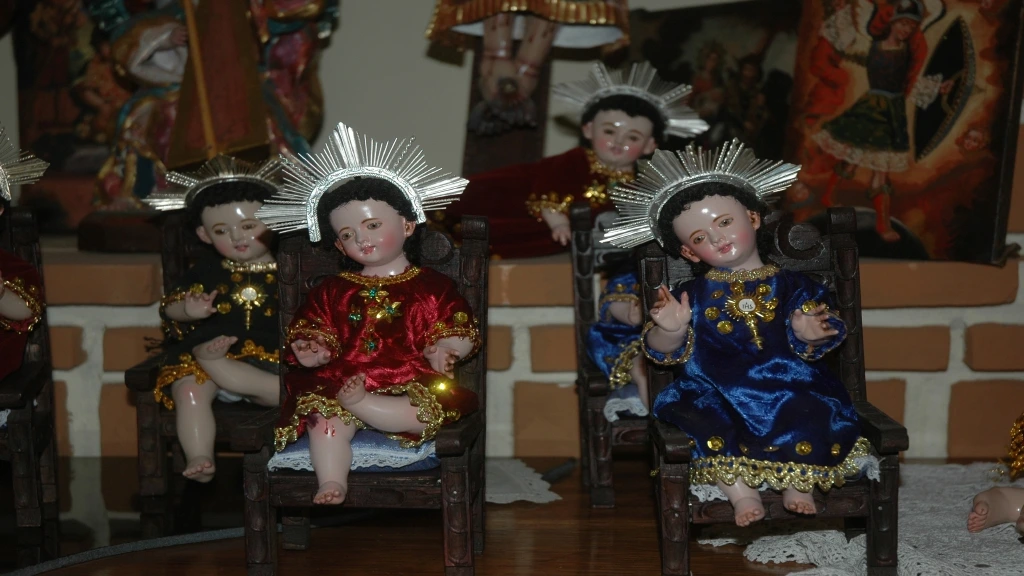
In a neighbourhood named after a saint, the child Jesus goes by the name Manuelito. And while he is the Son of God, he doesn’t behave like an angel. He’s not a devil either, but like any little one, he’s playful and a bit cheeky. So much so that he slips out of his throne-like chair to run barefoot across the fields. Ah, but in his mischievousness, good little Manuelito ends up with a thorn in his tiny foot.
In a neighbourhood of slopes and narrow streets, the saints, the virgins, and the angels aren’t quite like those that grace the altars or take part in processions during festive days. They would be, if not for one detail. Here, they have long necks, very long necks, as long as those of llamas, vicuñas, guanacos, and alpacas—the beautiful Andean camelids grazing in the desolate plains.
In a neighbourhood of workshops and galleries, art takes on a unique character. Yes, let’s say it’s “mischievous” and “playful” like little Manuelito. It escapes the conventional. Yes, let’s say it’s different, just like the images of those saints and virgins with elongated necks, thanks to the inspired artists who blend Andean and Hispanic influences in all their works.
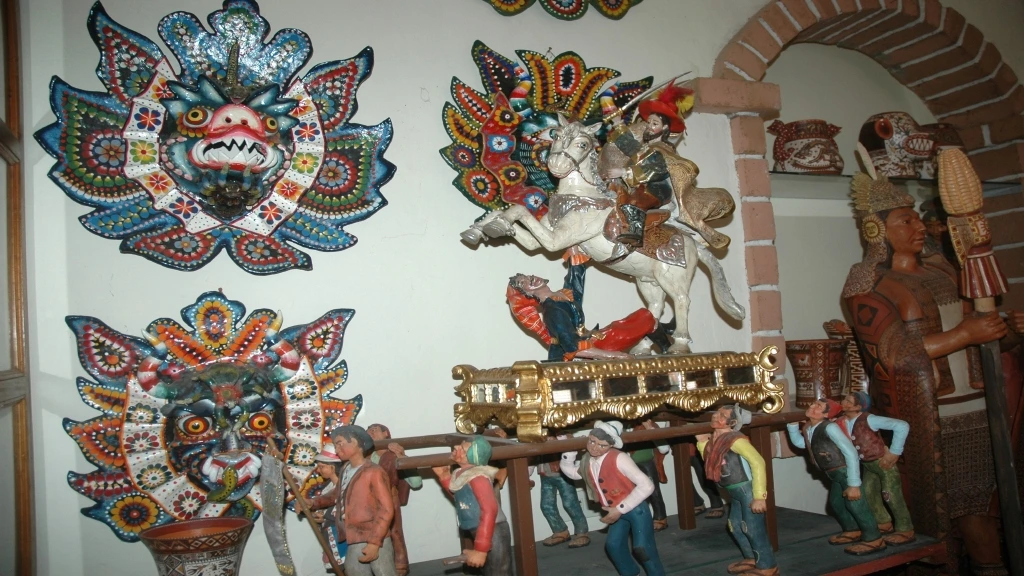
row streets, workshops, and galleries has been a refuge of art and creativity for centuries. It was so when Cusco was the capital of the Incas and Peru was a viceroyalty. It was so when the cries for freedom echoed through the Andes and Peru became an independent nation. It is so now, as Cusco is a cosmopolitan city and Peru your next destination.
Welcome to San Blas, one of the traditional neighbourhoods of the Historic Centre, where there’s not just art. In its streets, you’ll find spectacular attractions, such as the Stone of Twelve Angles in one of the walls of the old Inca Roca palace (now the Archbishop’s Palace) and the San Blas Church, built in 1563 and considered the oldest in Cusco.
A doctor in a neighbourhood of artisans
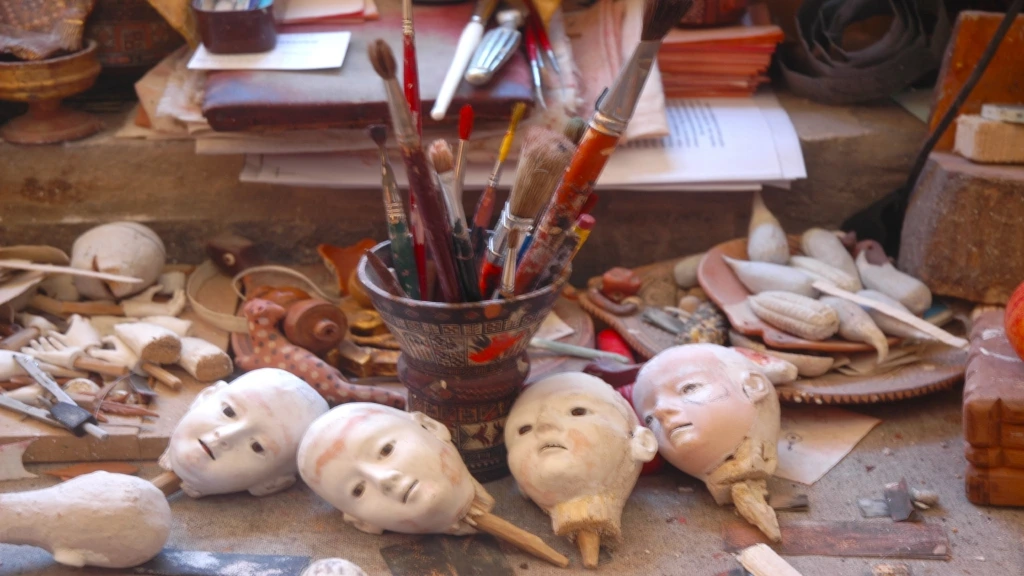
San Blas of Sebaste was a physician, bishop, and Christian martyr who lived in a cave on Mount Argeus (modern-day Turkey) in the 4th century. Patron saint of otolaryngologists, but not of artisans like Saint Joseph, it’s somewhat peculiar that his name identifies the neighbourhood where the artists of Peru’s Historic Capital live, create, exhibit, and sell their works. It’s not that this neighbourhood was ever inhabited by doctors, religious figures, or martyrs. Quite the opposite—before the Spanish arrived, this hill to the northeast of the Plaza de Armas was home to the finest artisans of the Tawantinsuyu. The “children of the Sun” brought masters from various parts of their territory to the “navel of their world” to teach their techniques.
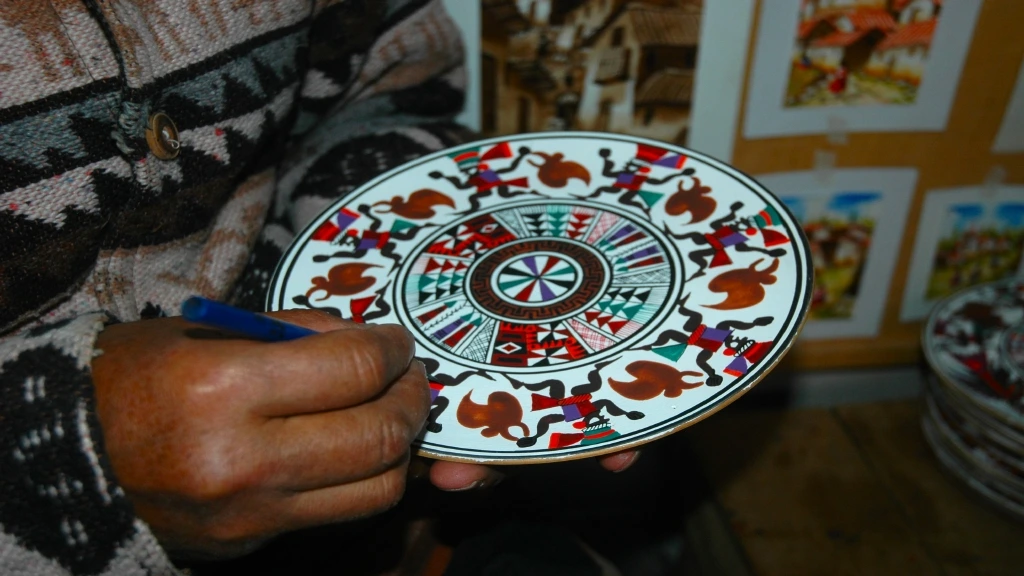
In San Blas, which was then called T’oqokachi (“Salt Cave” in Spanish), weaving, shaping clay, carving wood, and crafting jewellery from gold, silver, and various stones took place. The latter were entrusted to goldsmiths from the northern kingdoms of Peru, experts in creating beautiful utilitarian and decorative pieces, as evidenced by the burial treasures of the Lord of Sipán.
Neither a salt cave nor a refuge for martyrs, “The Balcony of Cusco,” as it is also known, has always been a neighbourhood filled with inspiration. In every workshop and gallery, in every weave or sculpture, you’ll find that it wasn’t a mistake to name this urban space San Blas. Here, ancestral art, the art of all time, becomes a remedy for the soul and the senses.
A stone in the road
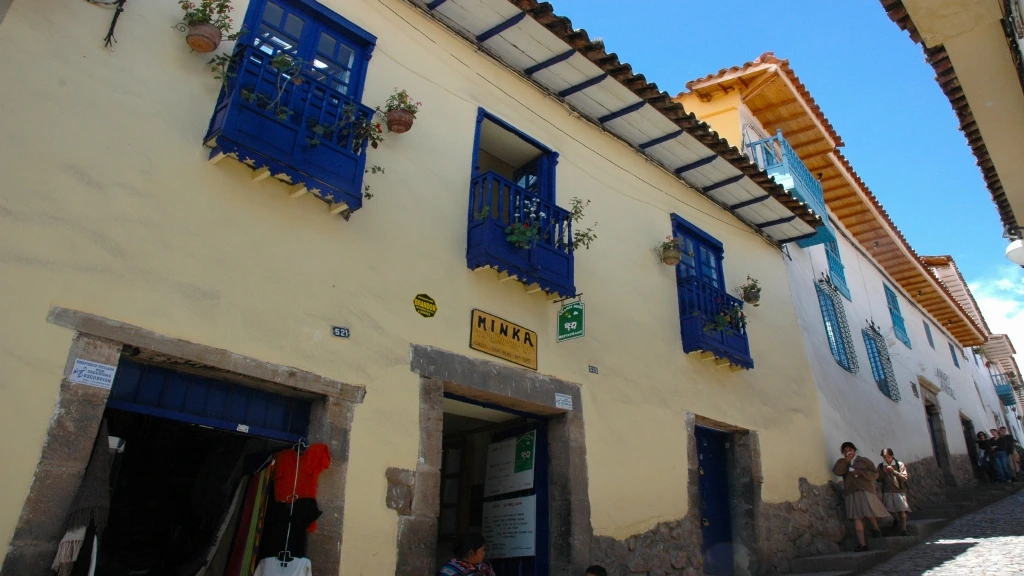
Walking. That’s the best way to explore the neighbourhood. Due to its proximity to the Plaza de Armas (just 600 metres away, accessible via Calle el Triunfo, Hatun Rumiyoc, and the Cuesta de San Blas), you’ll want to wander through its streets every time you venture into the Historic Centre. San Blas captivates and draws you in with the art displayed inside its houses—once Inca and now colonial—that have been transformed into workshops and galleries.
Or you may find yourself retracing your steps along Hatun Rumiyoc, the street of the “house with the large stones” (as its name translates in Spanish). Beneath the sun’s rays or illuminated by the lanterns that break the darkness of the night, this path, lined with Inca walls, will always transport you back to pre-Hispanic Cusco.
In one of these streets lies the famous Stone of Twelve Angles. When you see it, you’ll stop in your tracks. That’s inevitable. There’s no way to remain indifferent to that block of diorite perfectly fitted into the wall of what was once the palace of Inca Roca, showcasing the skill of its builders. They didn’t need mortar to raise their colossal walls.
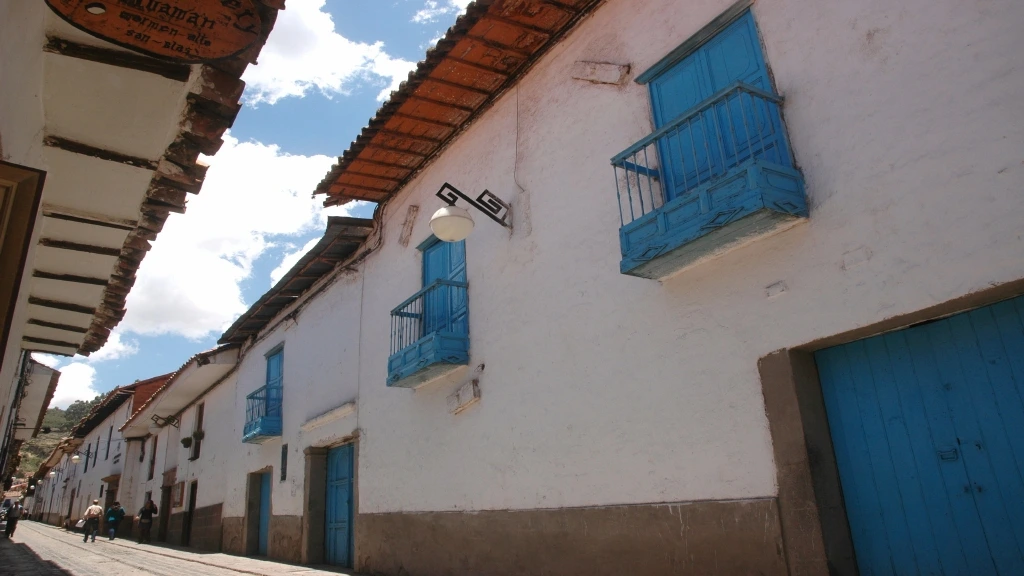
But it won’t be your only stop. The San Blas square is another charming spot. Surrounded by houses with white façades, red tiles, blue balconies, and windows, here a fountain stands out alongside the colonial church of the same name. Built over the temple of Illapa, the Inca god of war and thunder, you’ll be moved by the beauty of its 17th-century pulpit, made of wood and believed to have been carved by local artisans.
Maestros artesanos
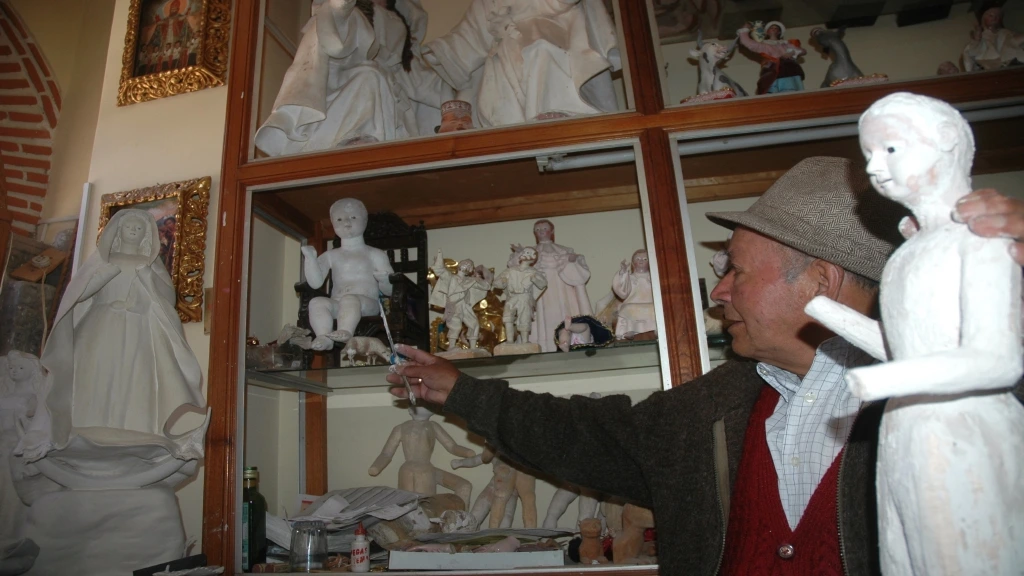
There are names that have become part of the modern history of San Blas. Great masters whose work created a style and a form of expression that renewed the neighbourhood’s art. Their teachings and knowledge nourish and inspire new generations. This is the legacy, contribution, and significance of Antonio Olave, Hilario Mendívil, and Edilberto Mérida, among other renowned popular artists.
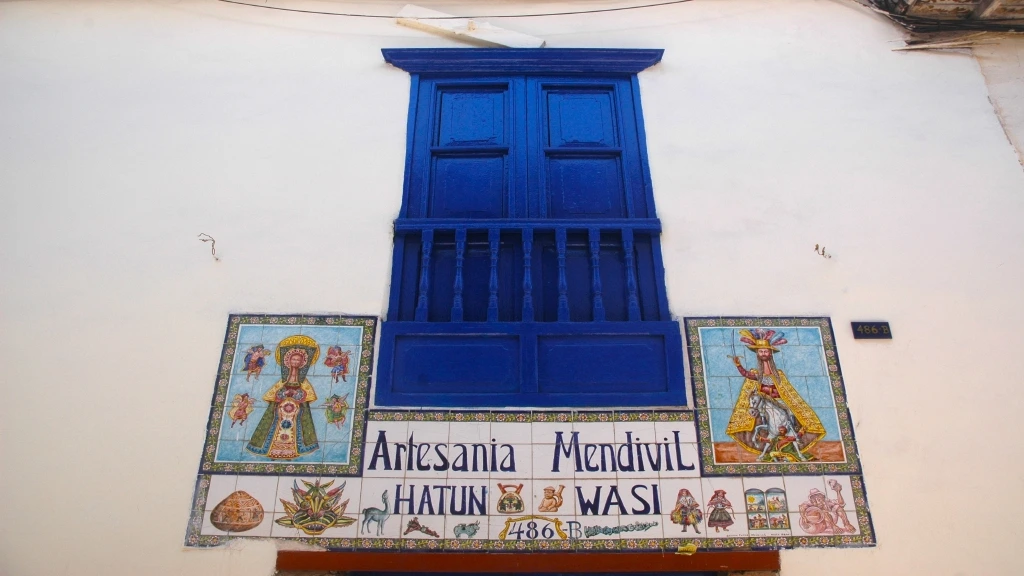
Don Antonio Olave (1928-2016) is the “father” of the Manuelito figures and their various versions (the Dormidito, the Sentadito, and the one with the Thorn), representations in which Jesus has rosy cheeks, like the children of the Andes. He is not the only artist who left a mark. Hilario Mendívil (1927-1977) drew inspiration from camelids to create his distinctive religious figures with elongated necks.
An emblem of San Blas, because the beauty of its saints, virgins, and angels has transcended the borders of Cusco and Peru to become universal, much like the expressionist sculptures of Edilberto Mérida (1927-2009). He transformed the clay and earth he used in his works into a form of social protest and an artistic testament to the hard and suffering lives of his Andean brothers.
Though they are no longer here, new creators are forging their own paths in the artisanal heart of Cusco. Embrace the cultural heartbeat of this picturesque neighbourhood. Step into its workshops and galleries, purchase more than one image, a textile, a sculpture, or a souvenir. Relax in its restaurants and cafés, or spend your nights in one of its hotels, so that even in your dreams, you’re inspired by the spirit of San Blas.
October 13, 2024