


Paucartambo: Experiences on the Route to Manu
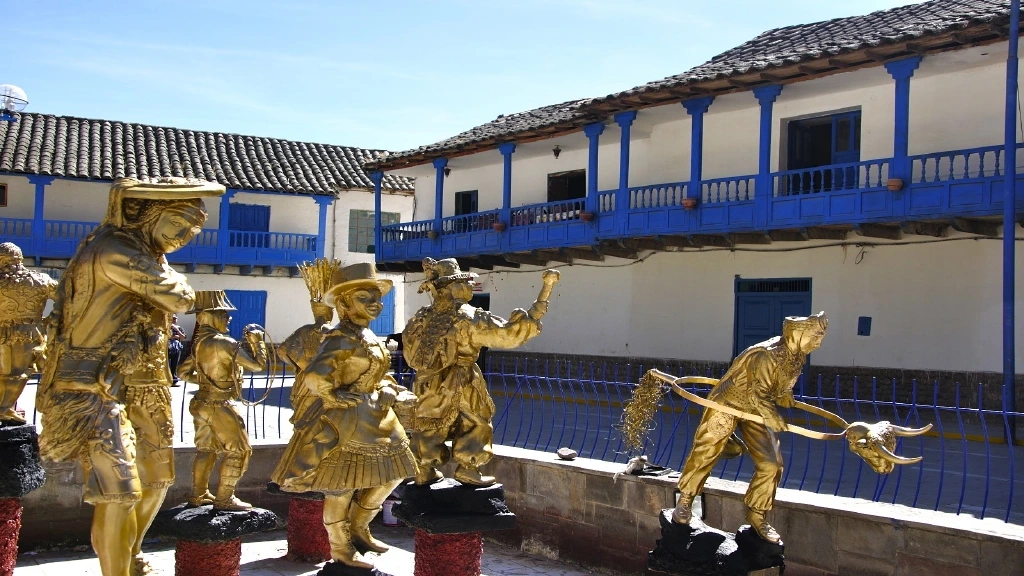
“Let’s go,” is my succinct reply. There’s no hint of doubt in my voice. I’m determined, even though that “let’s go” means changing my plans. It’s a risk. Perhaps the two places described with overflowing enthusiasm by an unexpected adventure partner will end up being a disappointment. Sometimes that happens. I know, but it’s always worth letting curiosity lead the way.
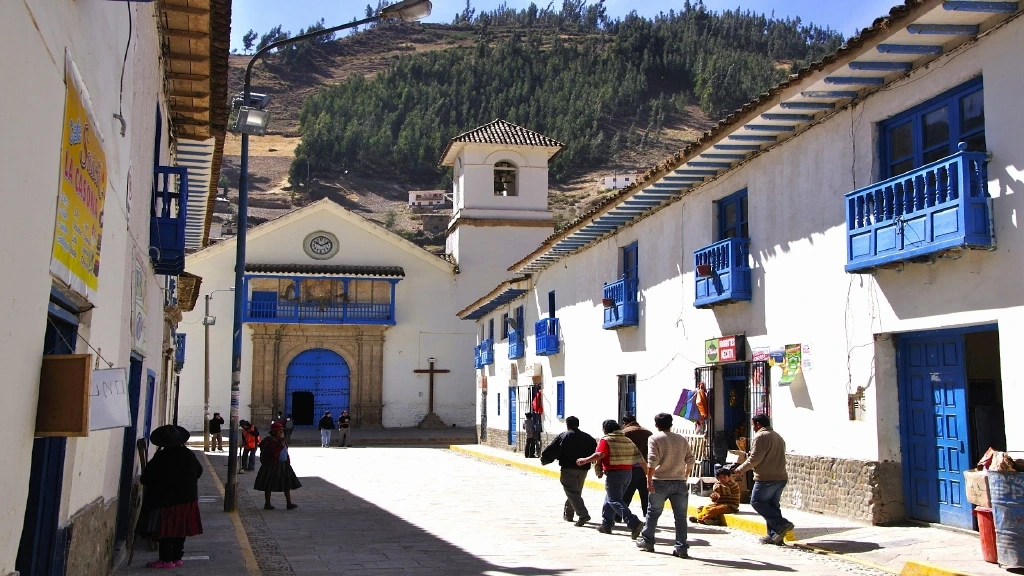
That’s what I’ll do. I’m leaving the picturesque village with its white houses and blue balconies. I’m stepping away from the streets filled with masked dancers celebrating their faith. I cross a colonial stone bridge in search of my next destinations: “two ruins that will leave you speechless,” declared my new companion in the main square of Paucartambo (3017 m a.s.l. ).
Or perhaps it was during breakfast with roasted pig, traditionally prepared by the local women outside the market, located along the road coming from Cusco (about 110 km, 3 hours) and continuing on to Atalaya (in the Kosñipata district). That’s where the road ends. That’s where the river journey begins for those venturing into the green heart of the Manu Biosphere Reserve.
But let’s not get ahead of ourselves. All of that would happen after the “let’s go” that would disrupt my itinerary. It often happens on journeys. It happens in Cusco and throughout Peru, where you’re always recommended a somewhat hidden, less-promoted attraction, perhaps reserved for the more seasoned outsiders. Those who—like you—are willing to “escape” to other places.
Paucartambo: Days of Celebration
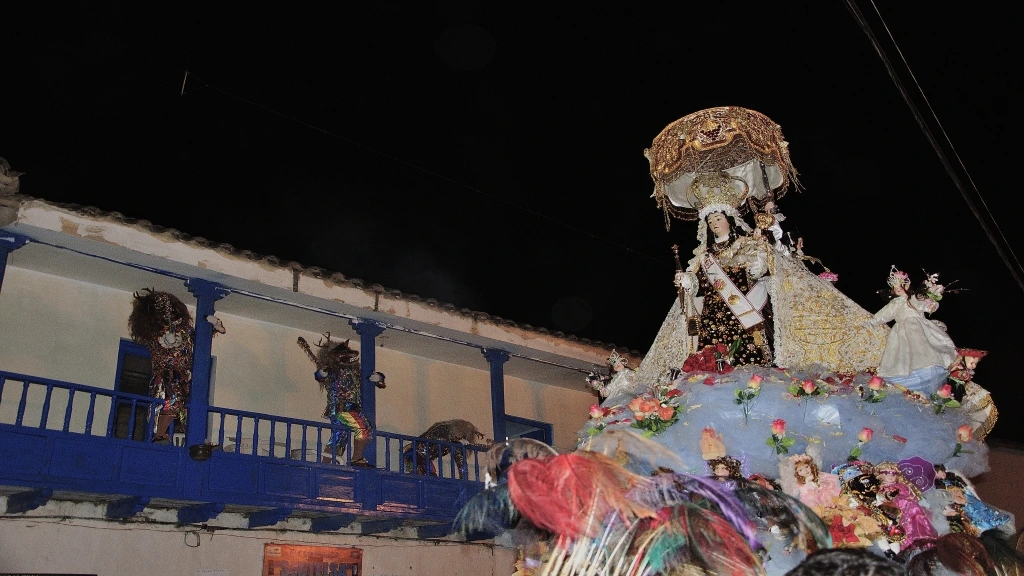
Was it in the square or the market? I can’t quite remember, but what I won’t forget are all the experiences I had in Paucartambo, accompanying the dancers during the Mamacha Carmen festival; waiting for dawn at the Tres Cruces de Oro viewpoint; getting to know the Cusco side of Manu, and being amazed by the chullpas of Ninamarca and the stone enclosures of Watoqto.
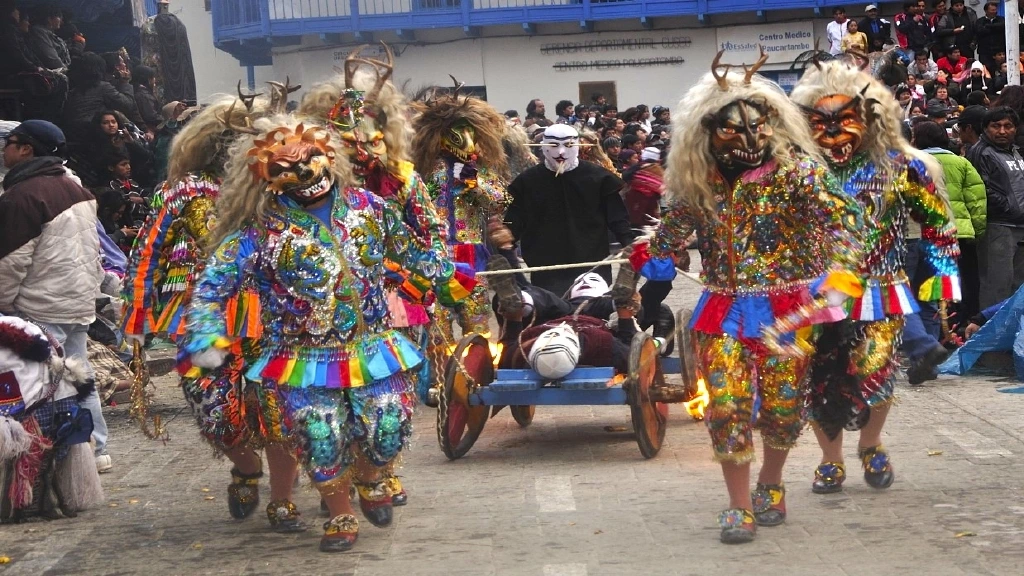
These aren’t my only memories. Paucartambo, the capital of the province of the same name, is etched in my mind. Its urban area—serene and sleepy for most of the year—comes alive with faith, music, and dance from July 15 to 18. It’s the celebration of the Virgin of Carmen. Fireworks. Sermons, prayers, miracles, and processions. Devotees dance in the square, in the streets, and even in the cemetery.
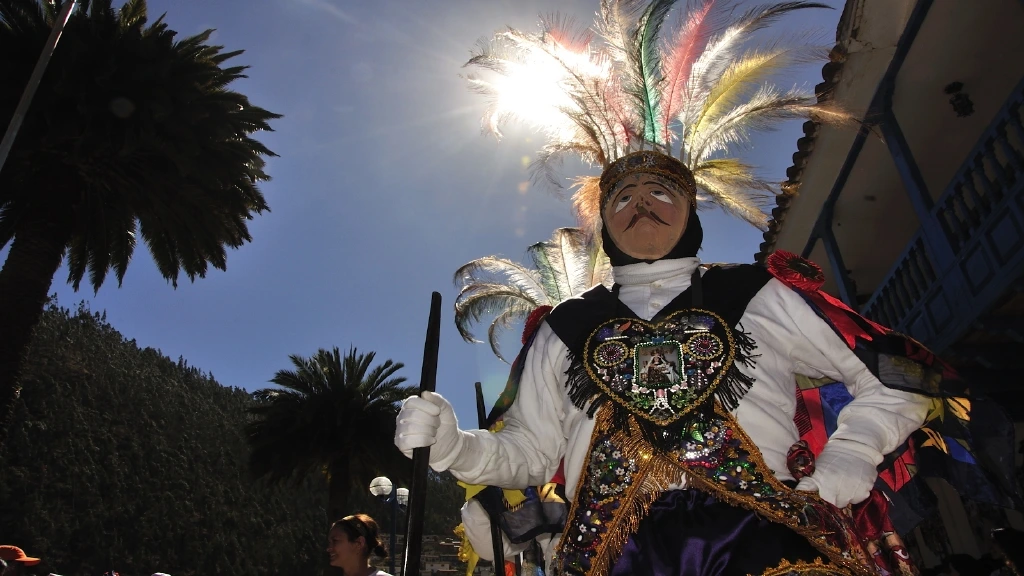
You have to be there to understand it. You have to be there to see the saqras (devils) tempting the Virgin from the balconies and rooftops. You have to be there, always alert, to avoid the whips of the maqt’as. They represent the young farmers. They are both jokers and stern. They play with the audience but will punish you if you block the dancers’ path.
Days of processions—the Mamacha crossing the colonial bridge, Rey Carlos III, which ‘flies’ over the Mapacho River—days filled with folkloric scenes—19 different groups dancing for the Virgin—and the ‘guerrilla’—the struggle between the qhapaq qolla (highland merchants) and the qhapaq chunchos (jungle warriors) for possession of the miraculous image.
The Viewpoint of the Three Suns
The chunchos are the victors, while the qollas are taken to ‘hell’ by the saqras in carts with wheels engulfed in flames. This is how a ‘guerrilla’ ends, symbolically revealing Paucartambo’s geographical position as a transitional zone between the Andes and the Amazon, between the mountains and the forest, between the regions of Cusco and Madre de Dios.
The landscape, climate, and even the scent of the wind change. The mountains shrink until they disappear, and the vegetation overflows; thus, the journey that began on a bus departing from the Cusco district of San Jerónimo (heading to the province of Paucartambo) would transform into a patronal festival, a discovery in Ninamarca and Watoqto, and a moment of contemplation at dawn in Tres Cruces de Oro.
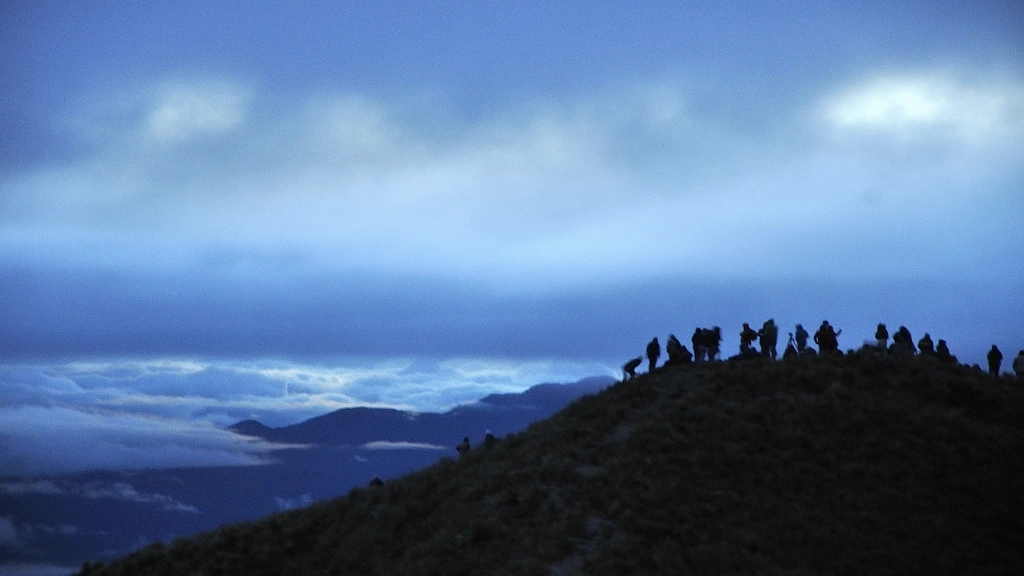
Waking up early (at 2 a.m.). Bundling up well to withstand the cold of a viewpoint that sits above 3700 m a.s.l. Heading out into the streets to find the rented vehicle from the day before at the Paucartambo bus terminal, as there’s no public transport to the lookout for magical sunrises where the sun rises over the Amazon.
Ninety minutes of travel along the road to Manu. Arriving and waiting. It’s cold, very cold, but the anticipation and hope for a clear sunrise help endure the low temperatures. And you check the clock: 4:30 a.m., the time for the display of lights and shadows, halos and glows, to begin at what is also known as the “Balcony of the East.”
On the route to Manu
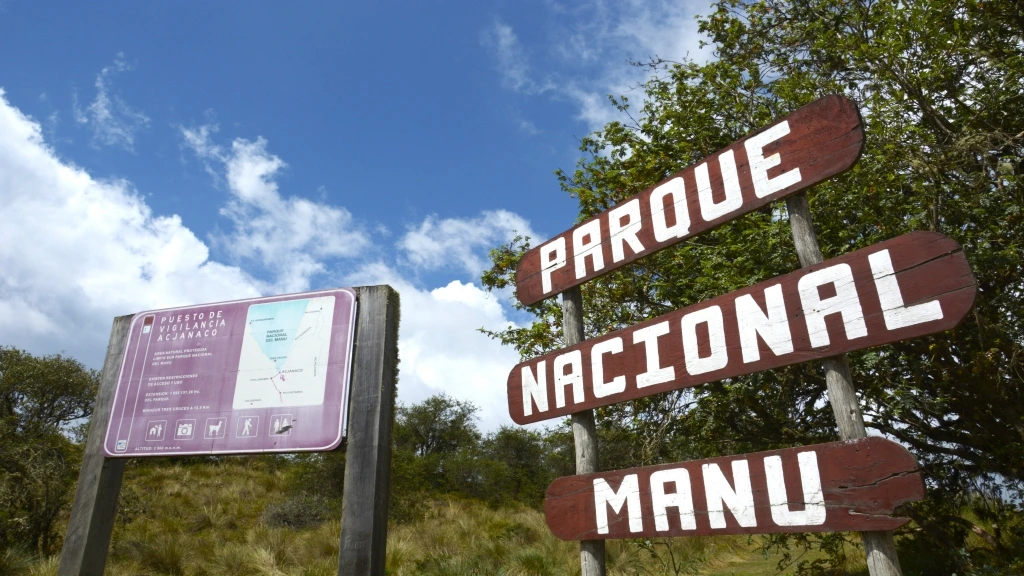
There are few places in the world where the phenomenon known as the “white lightning” occurs. Tres Cruces is one of them, and you can witness it in Peru, in Cusco, along the route and at the borders of the Manu Biosphere Reserve and National Park, with its highlands, mountains, cloud forests, and Amazonian plains. Its vastness is the ancestral territory of native peoples and a refuge for uncontacted Indigenous groups.
If you want to immerse yourself in a green world of gigantic trees, mighty rivers, and cochas (lagoons) taken from paradise, Manu is waiting for you. You can reach Atalaya by road on your own, but if you want to go further, hire the services of a specialized operator in Cusco. They will offer you tours ranging from four to eight days of adventure, exploration, and a closer connection to nature.
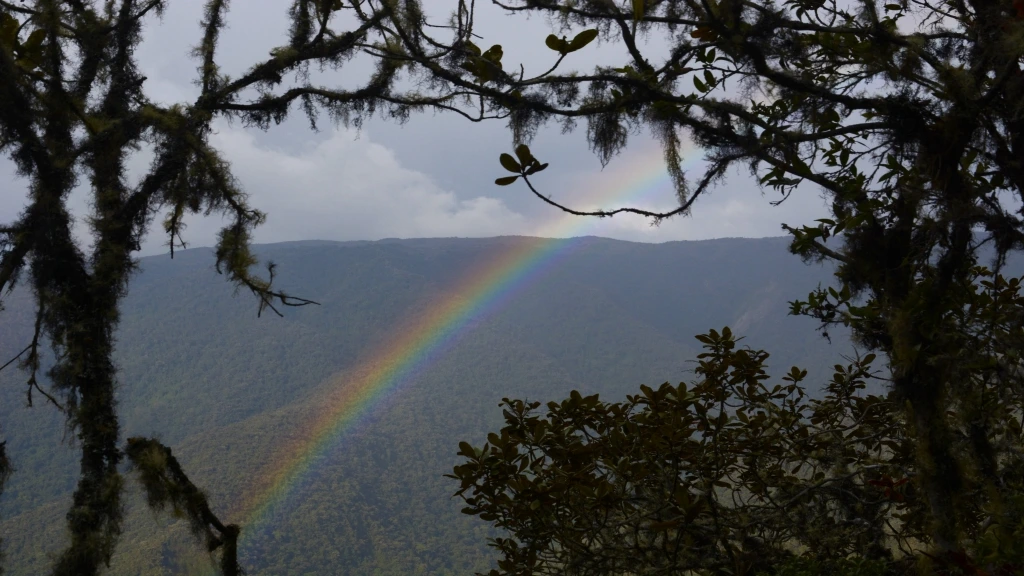
Navigating by boat and canoe, watching the mountains fade away, walking along muddy trails, and sleeping in tents, rustic lodges, or simple platforms. Sharpening your gaze to spot some of the 160 species of mammals, 1000 species of birds, 50 species of snakes, 140 species of amphibians, and 30 million species of insects recorded in this planet’s lungs.
But before all that, it’s a great idea to take in the panoramic sunrise from the Tres Cruces de Oro viewpoint, where the cold will soon be forgotten when three suns appear in the sky. Upon seeing them, you might think it’s an illusion or a dream—never a nightmare—because this distortion created by the interplay of light and the humid sky is so beautiful that it feels unreal.
Ninamarca: Pre-Hispanic Chullpas
Not every day do you witness the spectacle of repeated suns (May and June are the ideal months). Not every day do I say ‘let’s go’ and head out to the chullpas that I only glimpsed between yawns from the window of the bus that took me to Paucartambo (costing between 40 to 60 soles from Cusco). Not every day do I listen to a stranger and accompany them to an archaeological site that I “mostly didn’t know about,” as they say in Peru.
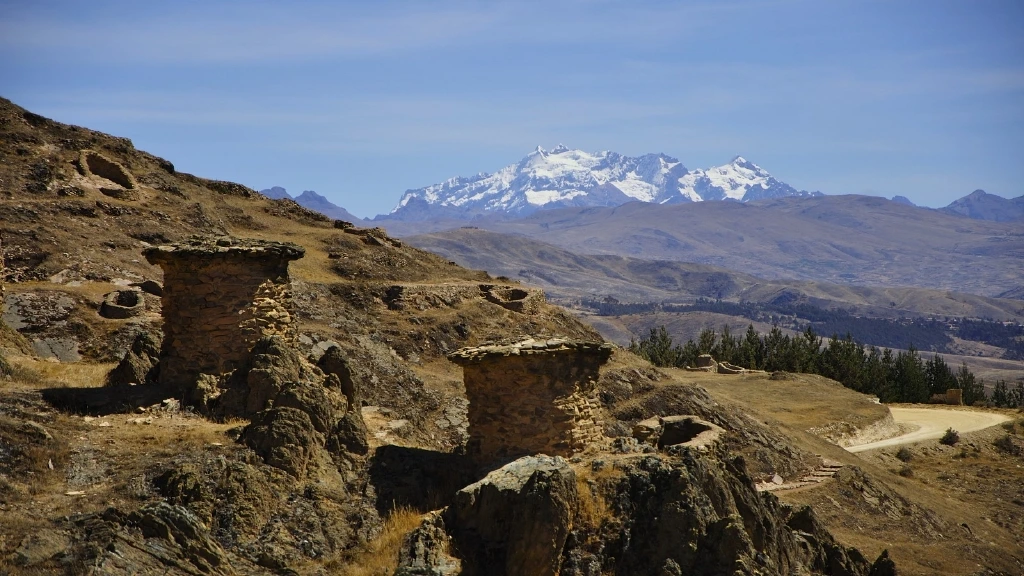
Ninamarca (3690 m a.s.l.) is the name of the twenty or so circular chullpas perched on a small hill at kilometer 83 of the Cusco-Paucartambo road. Built by the Lupacas (a pre-Inca culture) for the eternal rest of their dignitaries, these stone structures, reaching up to 2.5 meters in height, have the majestic silhouette of the snow-capped Pitusiray as their natural backdrop.
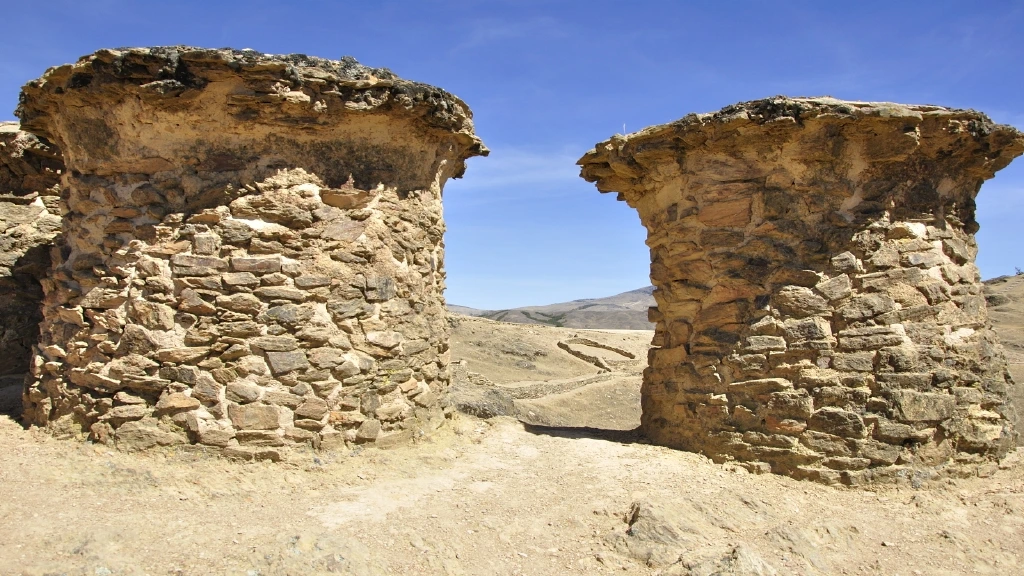
Good call. My new companion hadn’t lied. Ninamarca was an excellent getaway. My ‘let’s go’ had been a success so far. Would it continue to be so in Watoqto? Soon I would find out. I returned to the road, to the rented vehicle that would take me to a small village and an archaeological site on the banks of the Mapacho River, which most tourists overlook in their rush to reach Manu or return to Cusco.
Before we continue, let me propose a pause to explain the itinerary. Paucartambo was the starting point, Ninamarca (on the road to Cusco) the first stop. From there, the vehicle would turn back in search of the turnoff to Watoqto (18 km from the centre of Paucartambo), the gateway to Antisuyo (one of the four regions of the Inca Empire) and the areas of production for the sacred coca leaf.
Watoqto: Inca Heritage
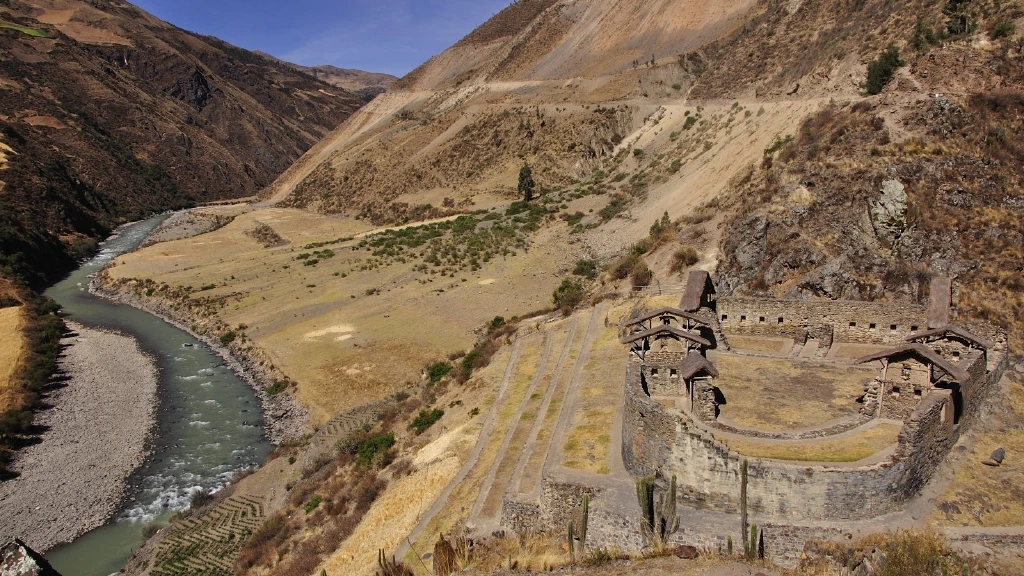
Enough explanations. I arrived, we arrived. An imposing stone entrance welcomes us to a refuge from the past, to an Inca structure restored to reclaim its essence, grandeur, and stony beauty. My ‘partner’ smiles with satisfaction. He didn’t lie in the square or outside the market, and he was right when he said I would be left speechless by the recommended places.
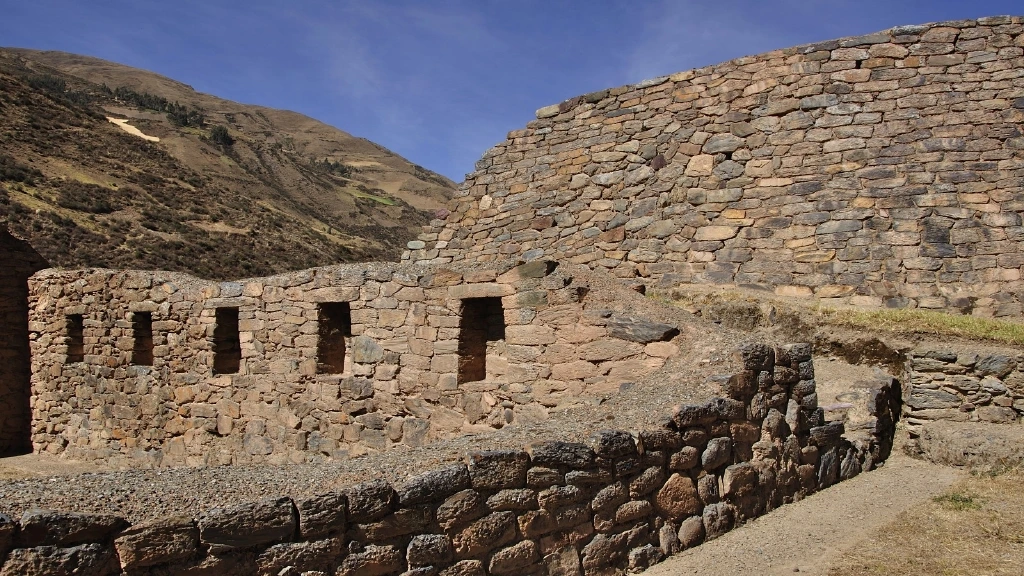
He had been here before and wanted to return; that’s what he told me when he suggested we go together. Now I understand why, because even without leaving Watoqto (2930 m a.s.l.)—with its administrative enclosures, its rectangular temple, and its views of the river—I feel the traveler’s call to return and photograph its five-meter walls, trapezoidal niches, and double-jamb doors once more.
Paucartambo, Cusco, Peru, awaits you to join the dancers who worship a virgin, to challenge the cold at a viewpoint where the sun triples, to embark on jungle excursions feeling like a pioneer, and to dare to seek cultural, archaeological, and natural attractions off the beaten path.
I return to the village. I hear the music of the bands and the blast of a firecracker. I bid farewell and thank my unexpected ‘partner.’ The festival is reborn. I escape from the jokes and whips of the maqt’as. I approach the church. The Virgin is in the atrium, guarded by her ‘favoured ones,’ the qhapaq chunchos. I see her and softly ask her to allow me to return. I know she will grant it. Sooner or later, I will be back!
Shall we go?…
October 7, 2024