


Cusco: Inti Raymi, the impressive Festival of the Sun
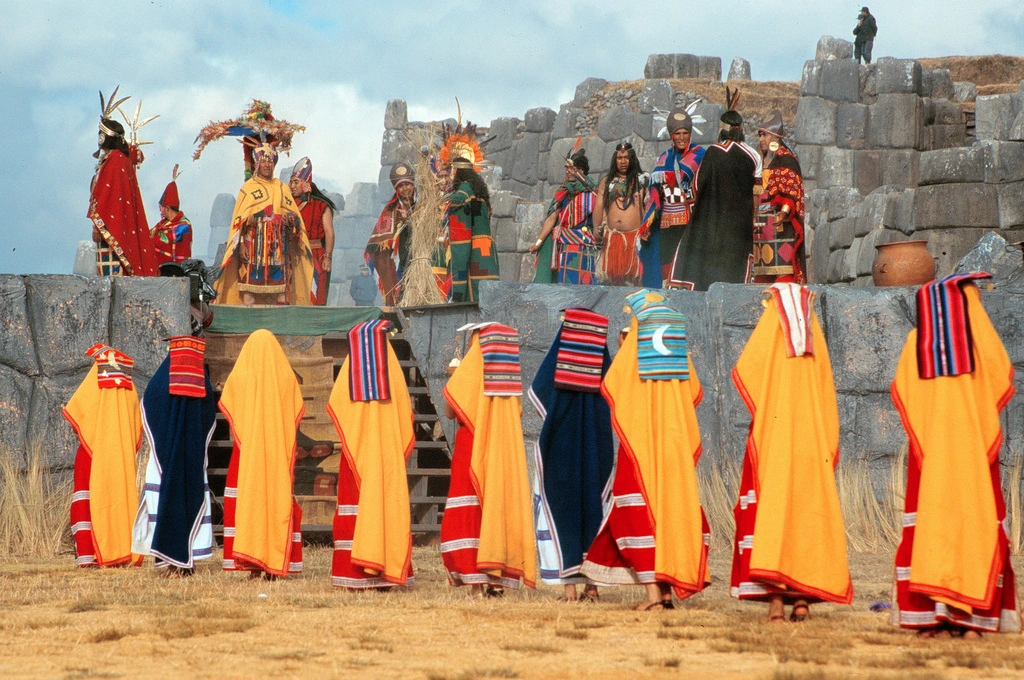
It’s a day of celebration, yet the guest of honour hasn’t appeared. His absence is noticeable on the morning when hundreds of people gather to celebrate him. The problem is that the honoured one prefers to ignore his children and all of us who have come to Cusco to witness and take part in this grand and vibrant festival in his name.
“Patience, he’ll come. He always does,” predicts an elderly Cusqueño beside me, noticing my concern over the no-show of the “star” of the day. Despite this—or perhaps because of it—his name in Quechua is invoked in the courtyard of Qoricancha, the Inca temple that was converted into a Catholic church and convent during the colonial era.
There, among the gardens and stone walls, are the Sapan Inca (the great Inca), his Qoya (wife), the Willaq Umu (high priest), the Acllas (chosen women), and delegations from the four suyu, or regions, of the Inca Empire. Musicians and dancers are also present, among other figures of the imposing entourage of the powerful Andean ruler.
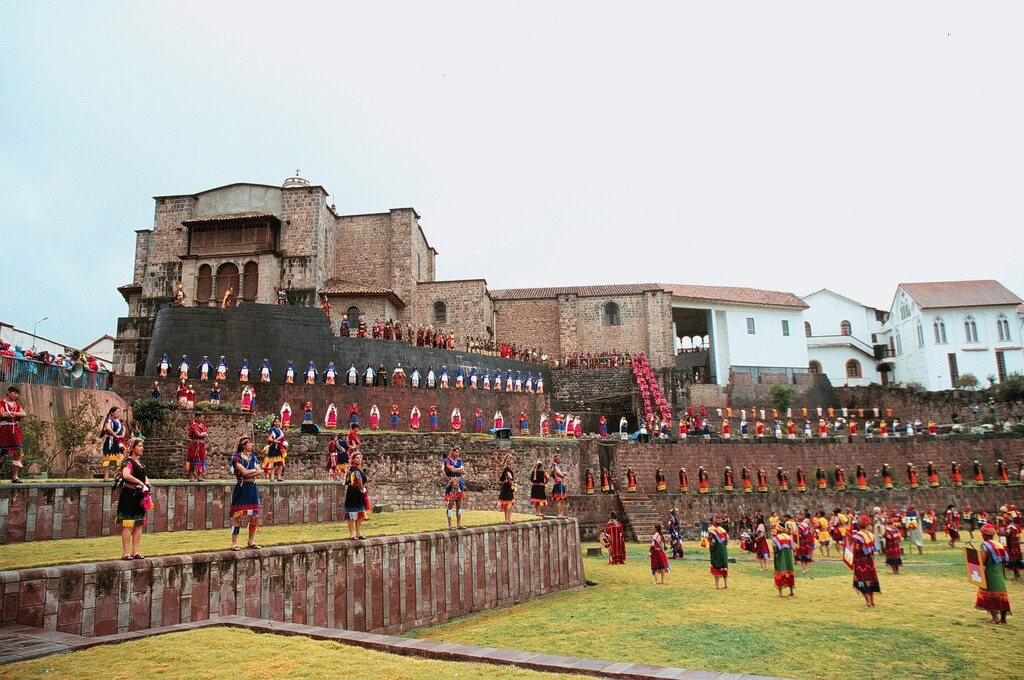
All of them stand before a diverse and cosmopolitan crowd. Peruvians from both the cities and the countryside, alongside tourists from every continent, watch with the same interest and admiration the opening ceremonies and rituals of Inti Raymi, or the Festival of the Sun—the most important celebration of ancestral Cusco. It takes place on 24 June and is linked to the winter solstice, the shortest day of the year.
Legend has it that Manco Capac and Mama Ocllo, the founders of Inca society, were children of Inti (the Sun in Quechua). The mythical couple emerged from the waters of Lake Titicaca with the mandate to “plant” a civilisation wherever the golden staff they carried sank into the earth. They carried out their father’s orders, laying the foundations for the largest state structure in this part of the world.
June: Cusco’s Jubilee Month
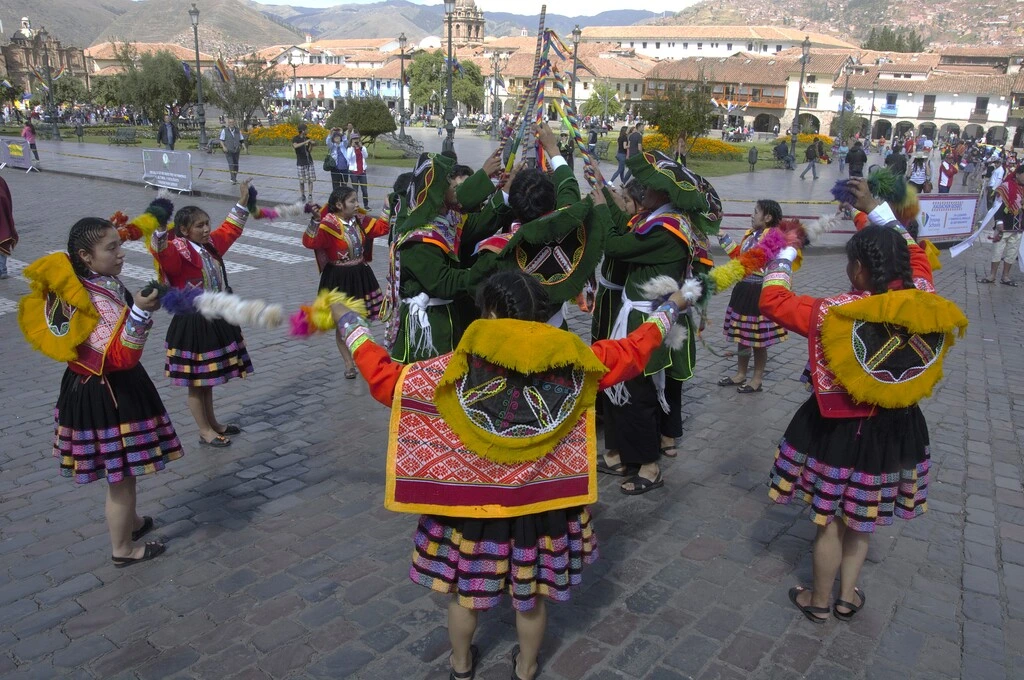
Exploring Cusco is always a great idea, an excellent choice. Rain or shine, cold or warm, whether battling altitude sickness or already acclimatised, the “Historical Capital of Peru” captivates visitors with its historical, archaeological, architectural, scenic, and cultural heritage. All these elements—and many more—make it a tempting destination for travellers.
But, like any destination, there are always special dates and moments. From that perspective, visiting Cusco in June is an excellent idea. Although it is one of the coldest months of the year—nothing that a good coat can’t fix—there are plenty of festive, cultural, and earthy activities that “warm up” the atmosphere of the ancient Inca capital.
June, Cusco’s jubilee month. June, a month of celebrations, music, dance, and mysticism. June, the month of Corphus Christi and Qoyllur R’iti , and the enactment of Inti Raymi at Qoricancha, the Plaza de Armas, and the Saqsaywaman archaeological park. June, a month of tributes to the earth and sunlit walks, as well as parades and processions that fill the Historic Centre with colour.
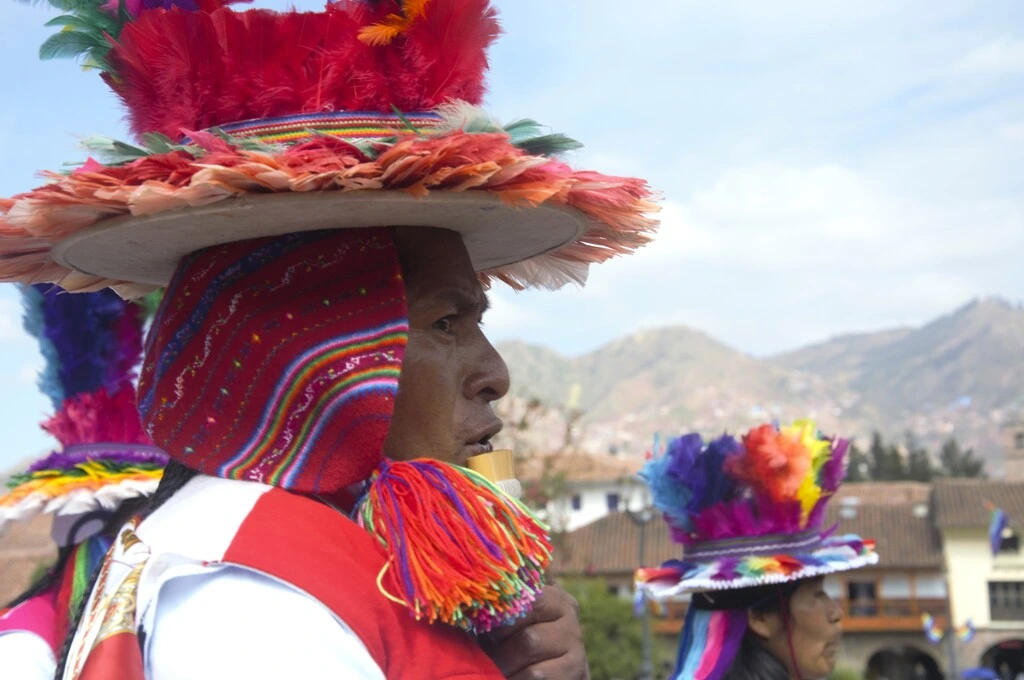
There’s so much to see, feel, and experience when a city, town, or region celebrates and reclaims its roots and its past as the centre and navel of the Andean world. It is precisely that cultural heritage and those ancestral knowledges—once disregarded and even banned during the Spanish dominance—that began to be recognised as a symbol of identity and pride by a group of intellectuals in the 20th century.
This way of thinking led to the jubilee celebrations being moved in the calendar. From 23 March, marking the Spanish foundation of the city in 1534, to 24 June, the day on which the Incas paid tribute to their father, the Sun. In this way, Inti Raymi was reborn and revived. Today, it is one of Peru’s most iconic festivals.
Meeting at the Plaza de Armas
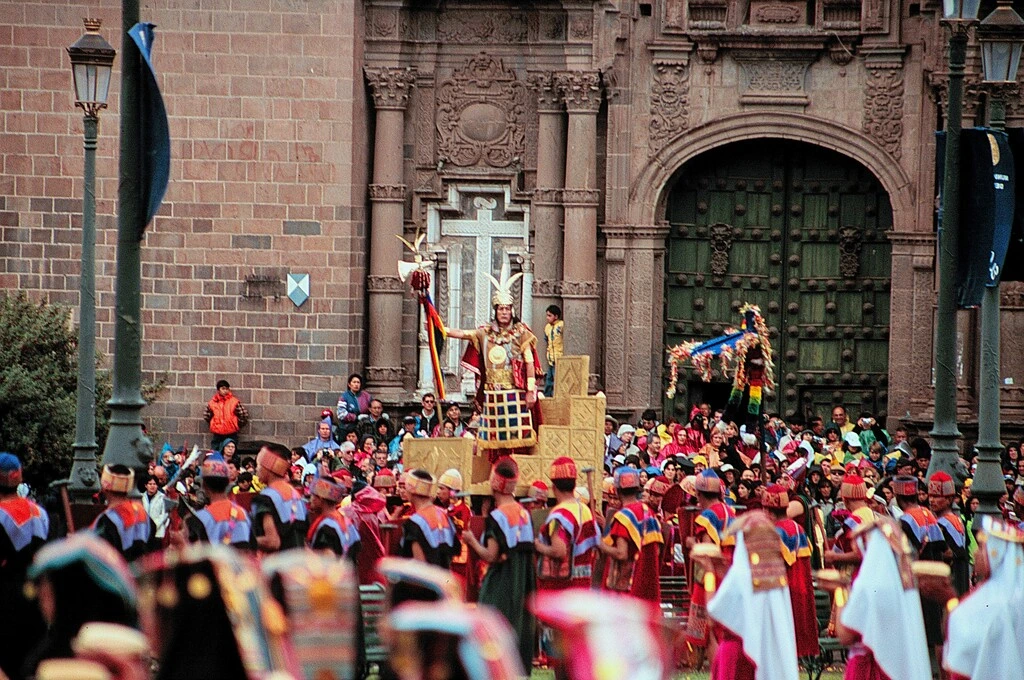
The sun still hasn’t appeared at the festival that started at 9 a.m. Its rays haven’t illuminated the Inca and his retinue at the Qoricancha, the main temple of pre-Hispanic Cusco. “Patience, it will appear,” repeats the elderly spectator who stayed by my side throughout the ceremony. I listen, but I doubt his words, as time passes and the sky remains grey and gloomy.
The situation worsens. A fine drizzle prompts spectators to search for their raincoats or buy makeshift plastic covers for a few soles—the national currency, not the sun, which still refuses to wake. It won’t show up either at Huacaypata (the Plaza de Armas), where the second act of Inti Raymi is staged from 10 a.m. onwards.
Access is free, just like at Qoricancha. You simply need to arrive early and find a good spot to watch the Andean ruler’s entrance. His litter, along with that of his qoya, is carried slowly and majestically along Calle Loreto or Intikijllu, a street “flanked” by tall stone walls that opens into the heart of today’s Cusco—the Cusco of always.
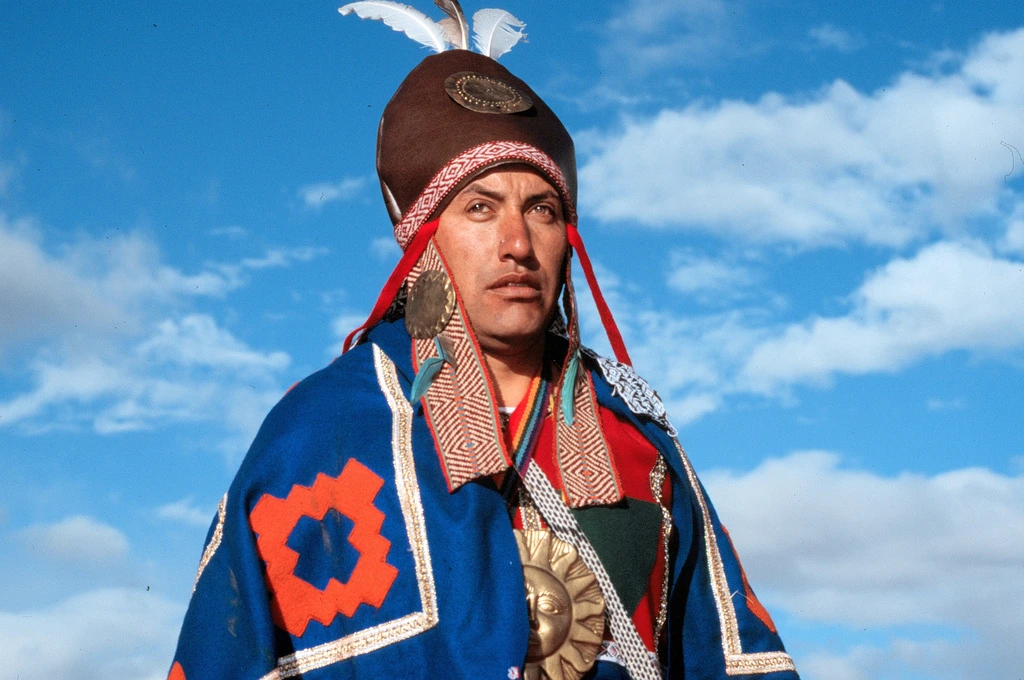
The anticipation builds. The spectacle dazzles. It’s thrilling when the Inca approaches his people, displaying his power and authority; when the willaq umu “reads” coca leaves to glimpse the future; when the protective mountains (apus) of the region are invoked; when offerings are presented to Tayta Inti; and when delegations from the four suyus dance in honour of his radiant divinity.
All this unfolded in the Plaza de Armas during that cloudy morning, making me feel like a traveller through time. Yes, I knew it was a performance and that those men and women were following a script. But, well, that didn’t matter. I let myself be carried away by the essence and spirit of a festival that was revived in 1944. That distant year saw the first staging of the modern version of Inti Raymi.
End of the Festival: A Rainbow over Saqsaywaman
There’s magic in the rituals I witness. There’s pride in the eyes of the Cusqueños, fully aware of their extraordinary past. There’s admiration in the tourists who can’t stop filming and taking photographs. Showing the world the Andean cultural roots was one of the main goals of the intellectuals led by the writer Faustino Espinoza. They revived a festival that had been banned for centuries.
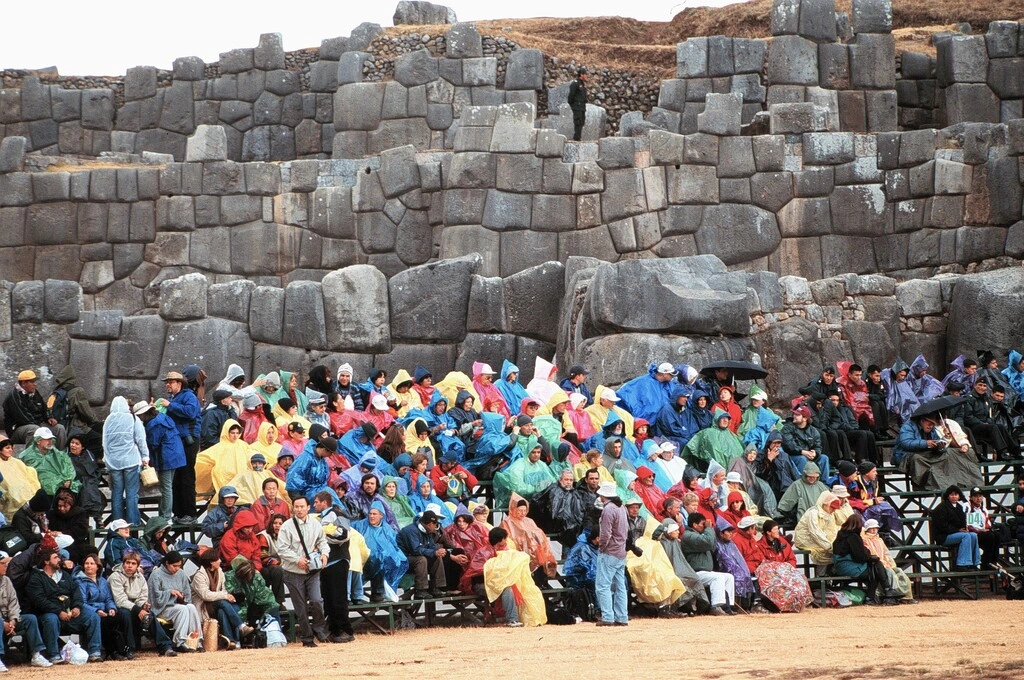
This festival doesn’t end in Huacaypata. It concludes at Saqsaywaman. A change of scene—from the Historic Centre to an archaeological site with enormous stone blocks (just 3 km away). Here, paid-access stands are set up. But don’t worry—if you don’t want to pay, you can find a spot nearby to watch the spectacle, which begins at 1:30 pm.
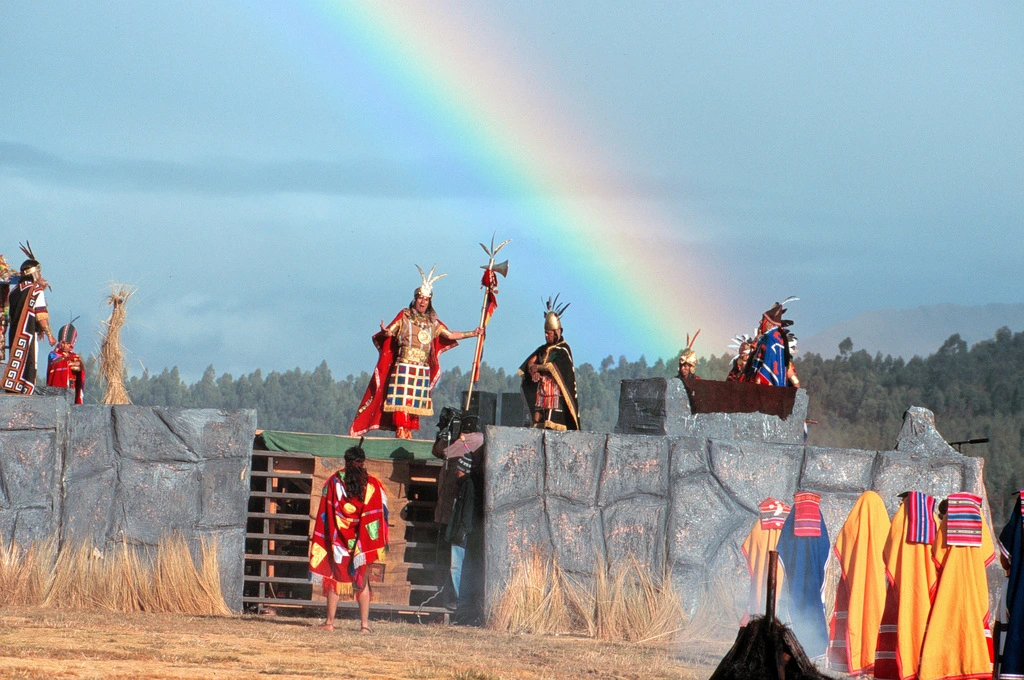
More rituals, more offerings, more words in Quechua, more chants, dances, and music. The Inca once again honours his father and speaks to his people, conveying a message of unity and hope. His figure looms larger against the gloomy, rainy afternoon. The patter of raindrops doesn’t intimidate him. On the contrary, he appears even more vigorous and commanding.
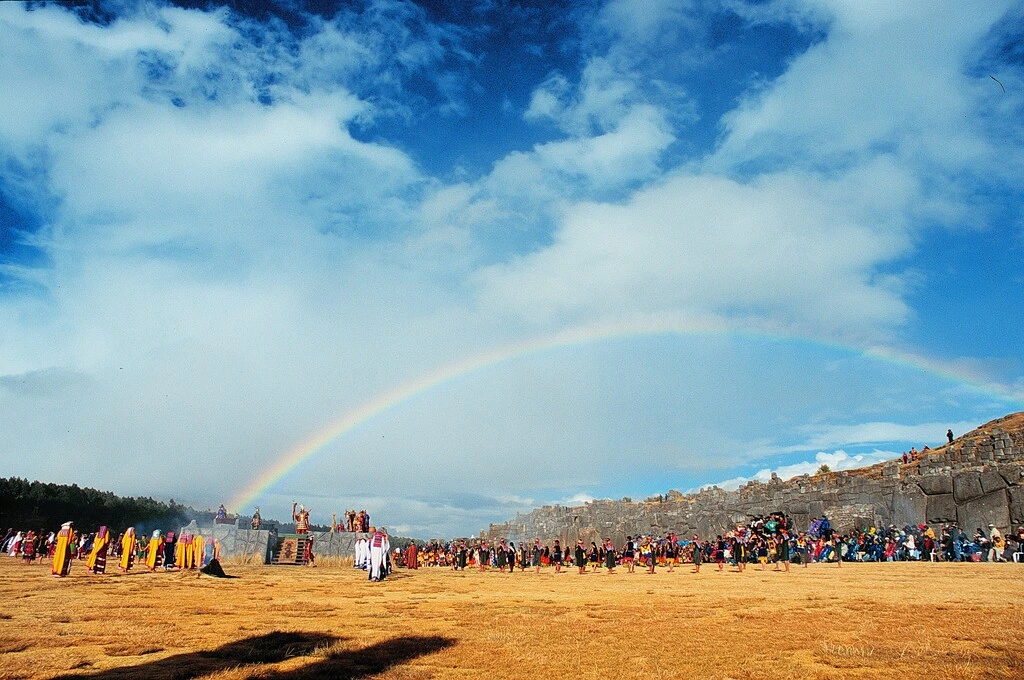
Suddenly, the Son of the Sun stretches out his arms and lifts his face to speak to his father. He does so with respect and humility. What no one expected at that moment was for a rainbow to appear on the horizon. It wasn’t in the script, nor was it a special effect. I know it sounds incredible, but it really happened. I’m not lying, nor am I exaggerating. I was there, and I watched it, completely captivated and astonished.
After that unexpected moment, I was convinced that Inti Raymi is far more than a performance. It is history, heritage, belief, and feeling. Something truly happens when the Inca, his qoya (queen), his acllas (beatiful girls), his priests, and the entire entourage reappear on June 24th in the streets, squares, and plazas of Cusco—the city you must visit, the city that awaits you, whether it’s cold or hot.
September 20, 2025