


Cusco: Travel reflections in the Plaza de Armas
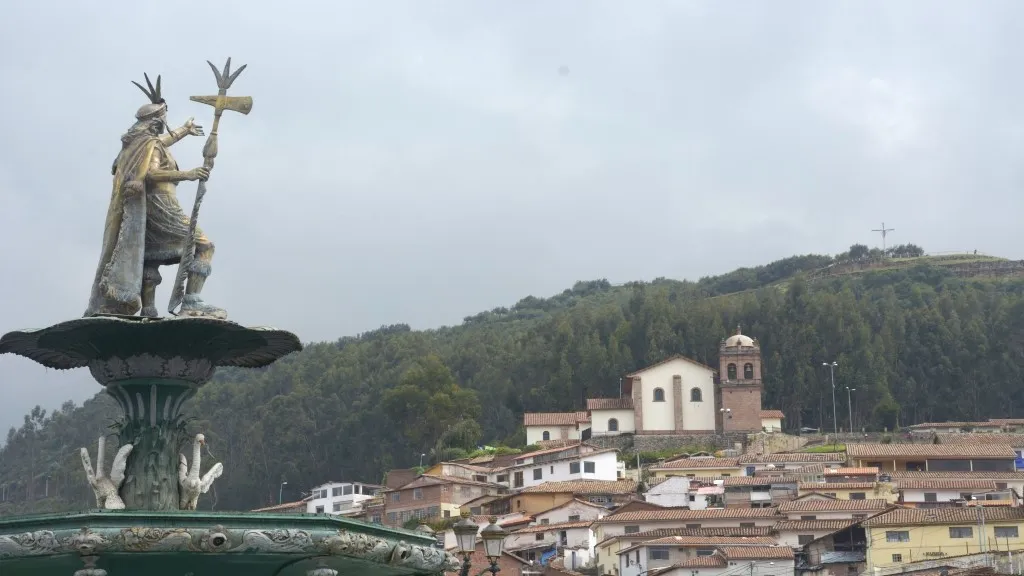
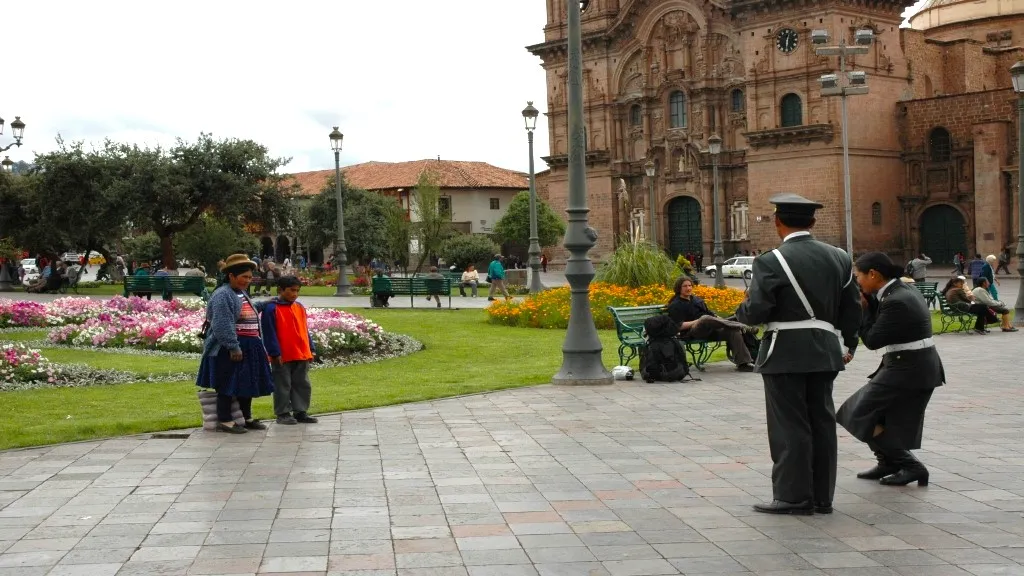
Sitting on one of the benches in the square, you hear conversations in different languages. Some you understand, others not so much, yet you still grasp the essence of those words. You don’t need to be a polyglot to interpret the joy of those laughing and joking as they recount their adventures or map out their next itineraries on this pleasantly sunny afternoon.
You too have many journeys to share and new excursions to plan, but you prefer to remain silent and observe what’s happening in the square, which is no ordinary square. You know it. So do all those who laugh, joke, and converse in different tongues, turning this historic and monumental space into the “bellybutton of the world.”
Yes, “the bellybutton of the world,” as envisioned by the founders of this city high in the Andes (3400 m above sea level), as believed by the powerful rulers who expanded their dominion over thousands of kilometres of valleys and plains, mountains and ranges, as longed for and remembered by the descendants of those men and women who proclaimed themselves “children of the Sun.”
That very sun illuminates the bench where you rest after wandering through narrow streets, exploring a craftsman’s neighbourhood, discovering perfectly fitting stone walls, and listening to the tales, myths, and legends that recount a glorious past, uncertain times, the cries of struggle and freedom, among other events that shook Cusco, the Historical Capital of Peru.
So many visions and experiences that you now reflect upon in the Plaza de Armas, a meeting point for wanderers visiting the country’s main tourist destination and for the locals who go about their daily activities, yet always take a moment to guide newcomers or share a smile.
One square, many names
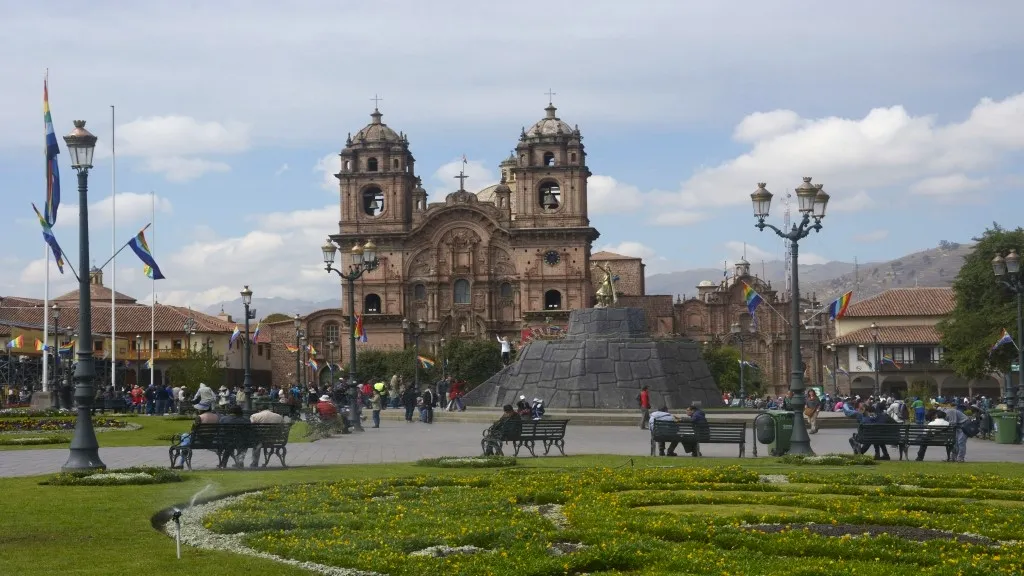
They called it Aucaypata (“place of the warrior”) because victories that glorified the Tawantinsuyo were celebrated here. Or perhaps it was Huacaypata (“place of weeping”) in memory of the dark times when the Chanca warriors—another Andean civilisation—threatened the city. Maybe it was Huacapata (“sacred place”) because the Sun and other pre-Hispanic deities were honoured here.
No one knows for sure. Researchers cannot agree on the Quechua name for the Plaza de Armas. What is certain is that the discrepancies reveal it has been the stage for various political, social, and religious manifestations. This underscores its significance from foundational times, which extended through the colonial period and solidified in the republic.
So many events have marked Andean history. The mythical origin of Manco Capac and Mama Ocllo in the 13th century, who were tasked by their father the Sun to found a city and create a civilisation in fertile land. The splendour of Inti Raymi, the Festival of the Sun that the Cusqueños revived from oblivion in the 20th century to show the world that their culture remains vibrant, still alive.
The fear and chaos that accompanied the arrival of the Spanish conquerors. The fall of the empire, the desecration of temples, the so-called eradication of idolatries, cultural resistance, the death of thousands of Indigenous people, the rebellion of Manco Inca in 1536 and of Tupac Amaru II in 1780, who was executed by the colonial authorities near the very bench where you rest and relax.
A city with memory
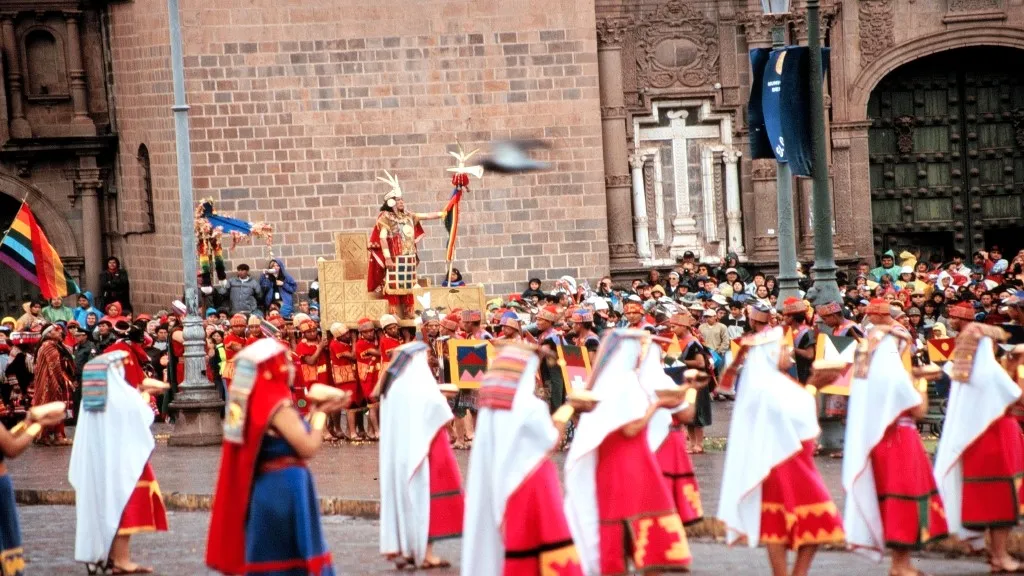
Time to think and reflect on the violent “encounter” between the Andean and Western worlds in 1533. This painful process is the genesis of modern Cusco. The “bellybutton of the world” transformed. Gradually, the stone walls became the façades of large houses, convents, and temples where the Inti (Sun) was replaced by a God who is Father, Son, and Holy Spirit.
And so, the residence of Pachacutec would become the home of Francisco Pizarro, the conqueror of Peru; and the palace of Inca Roca, where you find the famous Piedra de los 12 Ángulos—yes, you’ve seen it, photographed it, and stood in awe as it fits perfectly into a pre-Hispanic wall—now serves as the archbishop’s office and the Museum of Religious Art.
The same fate befell Qoricancha, which is now the Church and Convent of Santo Domingo, along with the stone walls of Suntur Wasi (“House of Government”) and Kiswarkancha (the palace of Inca Viracocha), which formed the foundation for the Basilica Cathedral of Cusco, whose origins date back to the construction of the Church of the Triumph in 1539.
Come on, get up and take a few steps to see its baroque-style façade up close. If you are observant and meticulous, you’ll find a plaque on its front in honour of José Gabriel Condorcanqui, Tupac Amaru II, which reads: “In this plaza of the Incas, the martyrs and leaders of the great Revolution of 1780 were executed, a precursor to continental emancipation.”
Cusco holds in its collective memory the greatness of its founders and the sacrifices of all those who rebelled against Spanish rule. The city honours its ancestral roots because beyond its colonial architecture, beyond the processions and the “Our Fathers” that resonate in its temples, the essence and imprint of the Inca is evident in the Historic Centre.
The final stroll
The break is over. You return to walking along the cobbled streets. You leave with the promise to come back and explore the baroque interior and religious art of the Cathedral, then stop by the Church of the Company of Jesus, built over the Amaru Cancha of Huayna Cápac, the father of Huáscar and Atahualpa, the brothers who waged war for power when Pizarro began the conquest of the Tawantinsuyo.
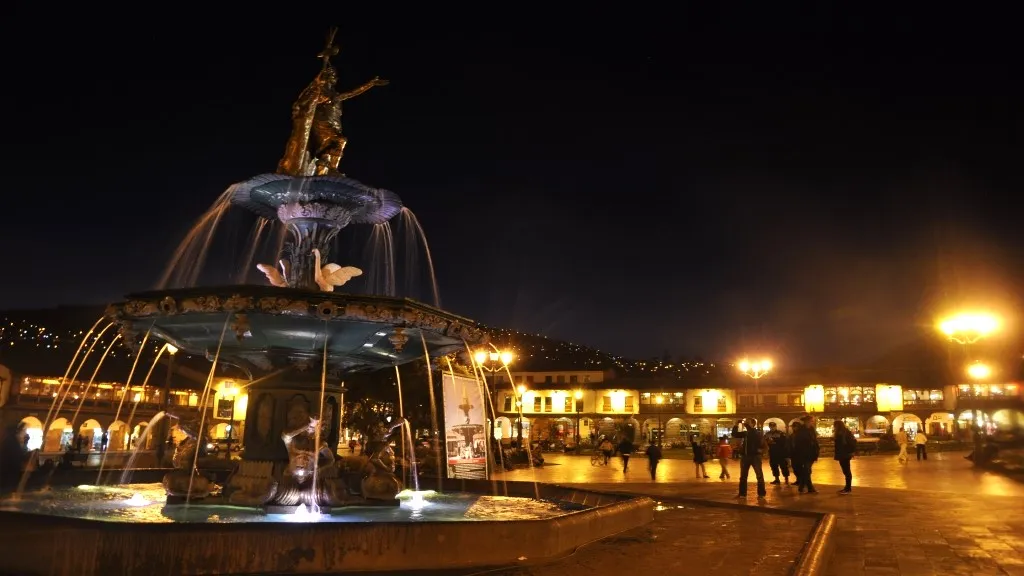
You will return to nibble or have a drink in the restaurants and cafés sheltered under the porticoes and arches that line the square. You’ll come back tired but satisfied with the crafts you bought in the San Blas neighbourhood, with the photographs you took in the Plaza Regocijo or Kusipata (“space of joy”) and in the 16th-century house of Inca Garcilaso de la Vega, the first mestizo writer of the New World.
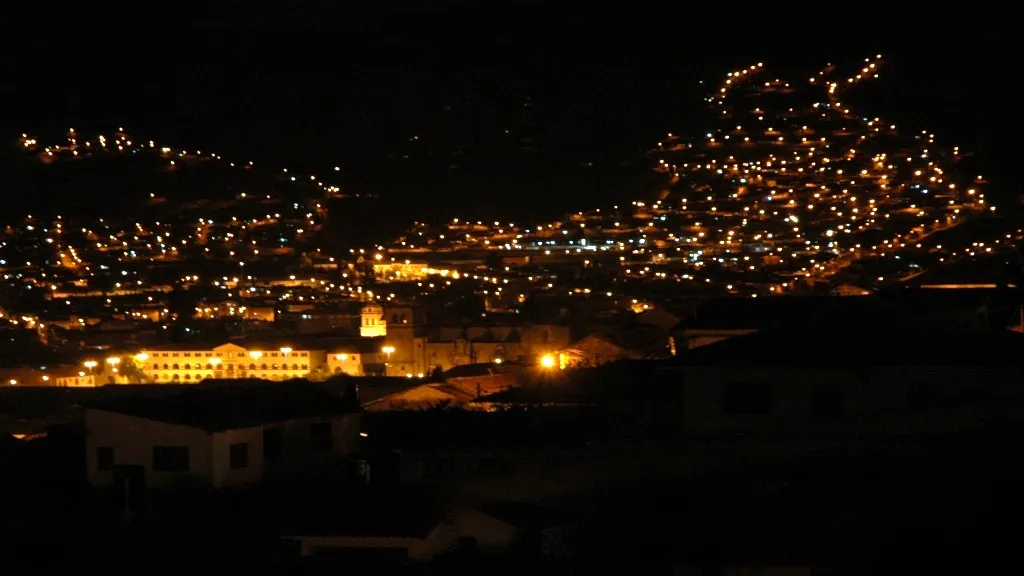
And when you return, seeing the night lights that give a different character to the Historic Centre, you will once again be convinced that Cusco will always be the “bellybutton of the world.” You realised this when you heard those words in various languages, when you strolled without haste, when you paused in front of a magnificent stone wall, when you listened to all that has happened and been lived in this little corner of the planet.
A little corner of the planet of which you felt a part from the moment you arrived, and of which you will remain a part no matter where you find yourself. You will carry Cusco in your heart, and Cusco will keep a little bit of you. This is what happens in places that are much more than a destination, in places that find a way to leave a mark on your wandering soul.
Tips and advice
- Enjoying the streets and architectural monuments of Cusco won’t cost you a penny. There are no restricted areas, and taking photographs of the façades is allowed.
- Entry to some large houses and museums requires a fee. Check the costs before you embark on your journey.
- Calmness is your best companion in Cusco. Walk slowly, and remember that the city’s altitude (3,400 m above sea level) can make you feel breathless and unbalanced.
- Always carry warm clothing and a waterproof jacket, as the Andean weather can be quite deceptive.
September 15, 2024