


Cusco: The Circuit of the Four Lagoons
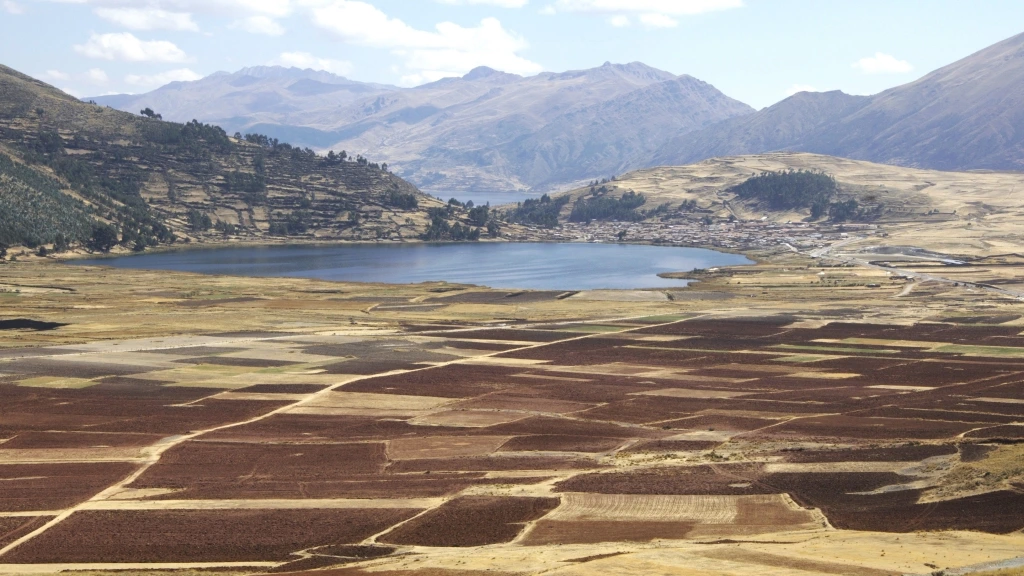
Four Lagoons in the Heights of Cusco: A royal flush of lagoons, four mirrors of water along a single route, in a round-trip excursion. Nature, scenic beauty, biodiversity, and the contemplation of Andean geography are the “four aces” that will grant you a wealth of experiences, memories, and stories along the paths of the provinces of Acomayo and Canas.
But a question arises: Would you dare to “bet” a day of your holiday in Peru, exploring a route that’s still not popular, or would you rather secure your day in a more well-known destination? To go or not to go? That was the travel dilemma I had to solve when I first heard about Pomacanchi, Acopia, Asnaqocha, and Pampamarca, the string of lagoons that make up the circuit.
You won’t face that dilemma. Here, I’ll tell you everything you need to know about the route, so you’ll realize that in this “bet,” there’s no loss. Everyone wins. Everyone comes out a winner—from the travelers tired from previous journeys (because here, you’ll walk little or not at all) to the adventurers seeking an intense cycling escape.
From lagoon to lagoon, by car or on pedal power, head towards one of the most attractive circuits for observing Andean geography and nature in the Cusco region. Take the plunge and explore it. You’ll feel the serenity of the four water mirrors, while you breathe in the bold air of the heights and renew your energy with the warm rays of Inti, the father and god of the Incas.
Pomacanchi: The First Lagoon
My plan had only one goal: to go to Waqrapukara, the fortress or ceremonial center perched atop a horn-shaped mountain. That was the reason I left Cusco early in the morning, heading towards Pomacanchi (in the province of Acomayo), where I would catch transportation to the community of Santa Lucía, the starting point for the hike to my archaeological destination, built by the Canchis and Incas.
Upon returning, I decided to spend the night in Pomacanchi. The next day, I would visit the vast lagoon that “welcomes” the village (at 3696 m a.s.l., and 101 km south of Cusco). Its name refers to the Andean puma (poma) and the Canchis, a pre-Inca culture that developed in the Andes and Altiplano. Their origins trace back to the pre-ceramic period (from 5000 to 1500 BC).
I planned to visit the lagoon early to take a look at its 2120 hectares of extension and then return to Cusco (approximately 2 hours 30 minutes). That was my plan, but if there’s one thing you learn on the road, it’s that itineraries can—and should—be adjusted, especially when you discover that there are three more lagoons nearby waiting to be explored. The city would have to wait.
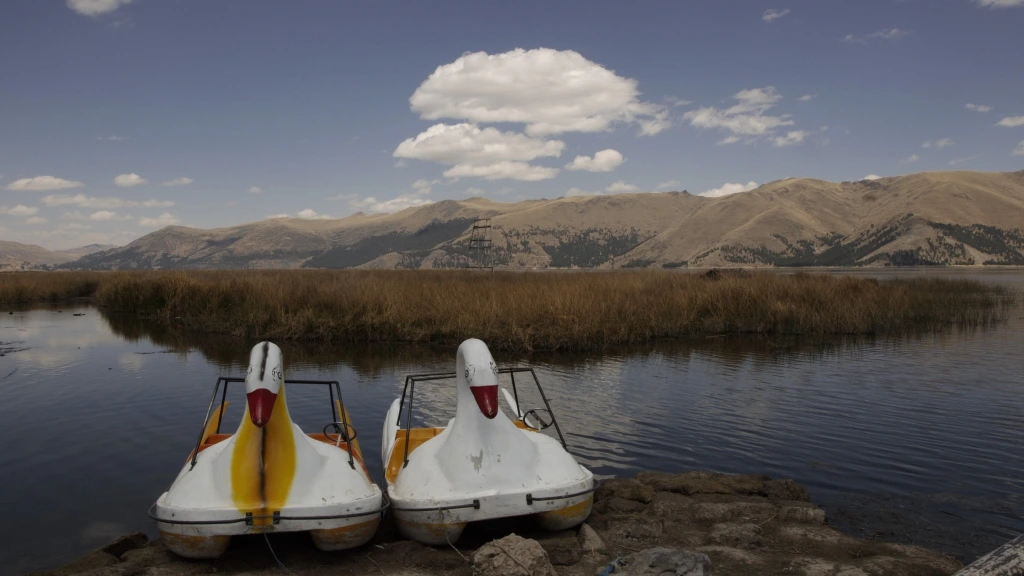
Yes, wait for me to finish exploring Pomacanchi, where there are trails, camping areas, natural pastures, and reed beds; where 11 species of endemic birds have been recorded, including Andean flamingos (parihuanas); where it’s possible to fish for silverside fish and practice various water activities. So much to do. So much to see. And to think, this is just the beginning of the circuit!
An Accessible Circuit
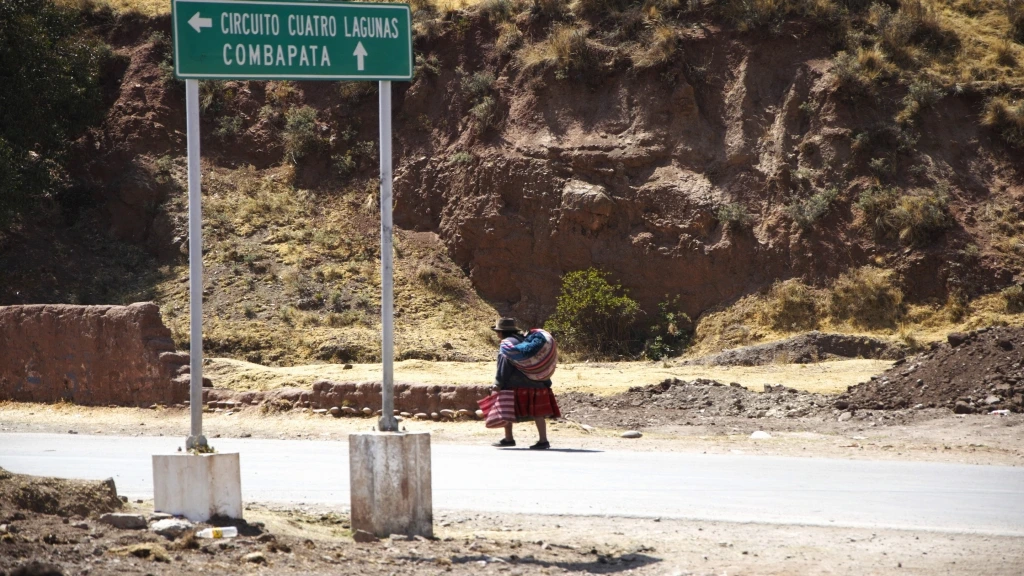
Four lagoons in 24 kilometres. That’s the distance separating Pomacanchi from Pampamarca (3750 m a.s.l.), the final water mirror of the itinerary. Between them are the other two lagoons: Acopia (3707 m a.s.l.) and Asnaqocha (3800 m a.s.l.). All of them are located by the roadside, making it easy to visit by motor vehicle or bicycle.
If you’re already in Pomacanchi, hire the services of a local taxi driver. Before you set off, agree on the price and service conditions (duration, waiting times, start and end points of the itinerary). The cost ranges from 80 to 120 soles, depending on your negotiation skills, the driver’s mood, the vehicle’s condition, and the number of passengers, to name a few factors.
If you’re leaving Cusco, take the public transport heading to Sicuani (departing from Wanchaq, near the closed coliseum) and get off in the village of Cusipata or at the Chuquicahuana Bridge (about 2 hours, ticket price: 15 soles, as a reference). In both places, you’ll find shared taxis and colectivos heading to Pomacanchi (cost: 10 soles, travel time: less than an hour).
However, the easiest way to visit the lagoons is to hire a local tour operator. Agencies will offer transportation and the company of a specialised guide who will explain various aspects of the route. For example, they will tell you about Tupac Amaru II and the influence the rebel leader had in this area, as he was the chief of Pampamarca, Tungasuca, and Surimana.
Acopia: The Musical Lagoon
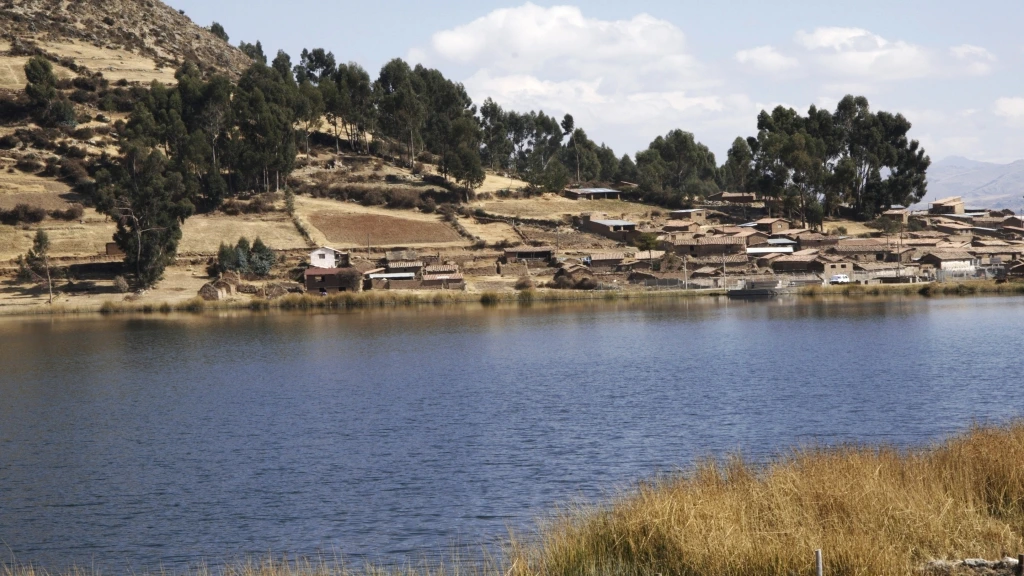
Time to leave. Heading towards the second stop. The taxi moves forward, but Pomacanchi doesn’t fade; it remains on the horizon. A travel companion, I see it through the window. Its tranquil blue waters enhance the landscape, marking much of the journey towards the small lagoon of Acopia, in the district of the same name (approximately 12 kilometres, 17 minutes).
We get out to admire it. A feeling of calm and freedom. Andean beauty, always mountainous, always inspiring. Acopia is a haven of stunning waters with birds fluttering around and vegetation typical of the highlands. Here, if you’re with a guide, they’ll tell you about Valeriana Huillca Condori, the woman born in this land who inspired one of the most famous huaynos in Peru.
Valeriana, known in her village as “La Valicha,” stirred the heart of her young teacher, Miguel Ángel Hurtado. Her parents didn’t approve of the romance and sent her to Cusco. Heartbroken, Hurtado—who would go on to become a renowned musician—composed the melody and lyrics of a tusuy in 1942, dedicated to her. In 1945, he used the same tune to create a huayno version.
But the lyrics differ in language and content. The tusuy, written in Spanish, highlights Valicha’s beauty—“the little flower of the land”—and describes the sorrow of the lover who is “suffering and crying.” Meanwhile, the verses of the huayno reveal the author’s heartbreak, as in Quechua, he claims that in Cusco, the beautiful Valeriana ground corn in the picanterías and stole hearts in the barracks.
Asnaqocha and Pampamarca: The Last Stops
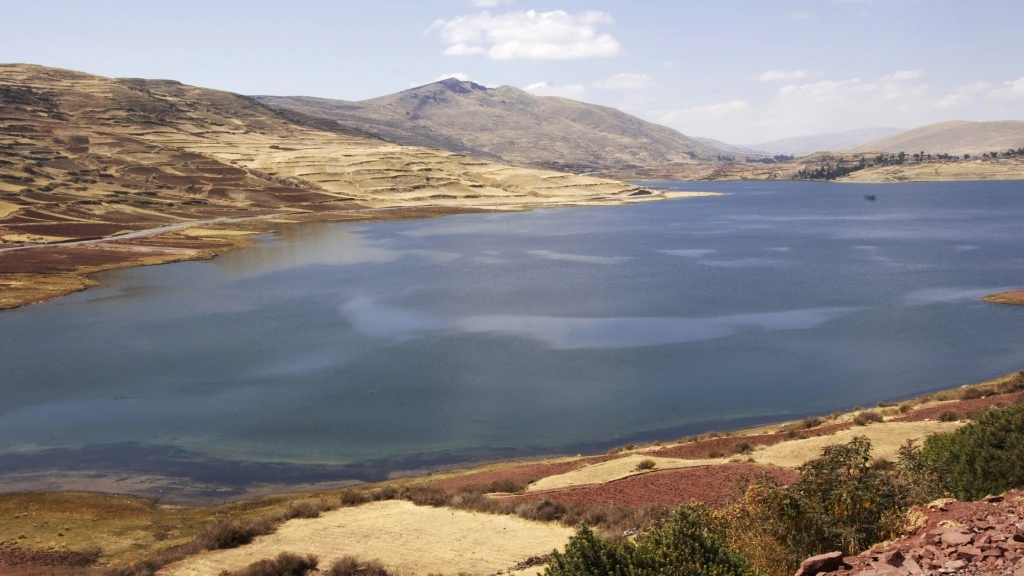
Enough with the songs. Let’s head to the third stop: Asnaqocha, or Asnacocha, in the district of Mosoqllacta (Acomayo province). Getting there is easy. The vehicle continues along the same road, and after about 15 minutes (9 km), you’ll arrive at the “smelly lagoon.” Yes, that’s the meaning of its name in Spanish, but don’t worry—you won’t need a gas mask to visit it.
Its “peculiar” aroma comes from the action of the sun on the algae that grow in the waters. The smell isn’t harmful, and it won’t stop you from enjoying this destination. In fact, some travelers even camp along the shores of this lagoon, which spans 3.199 km², making it the eighth largest water mirror in the upper Vilcanota or Urubamba basin, the sacred river of the Incas.
It’s almost over, very close to the end of the circuit. Pampamarca is just 5 km away from Asnaqocha. The lagoon, located at the entrance to the district of the same name (Canas province), is also known as Tungasuca, due to its proximity to that town. The trip takes less than 10 minutes. Along the way, you’ll catch different views of the beautiful, yet smelly, lagoon.
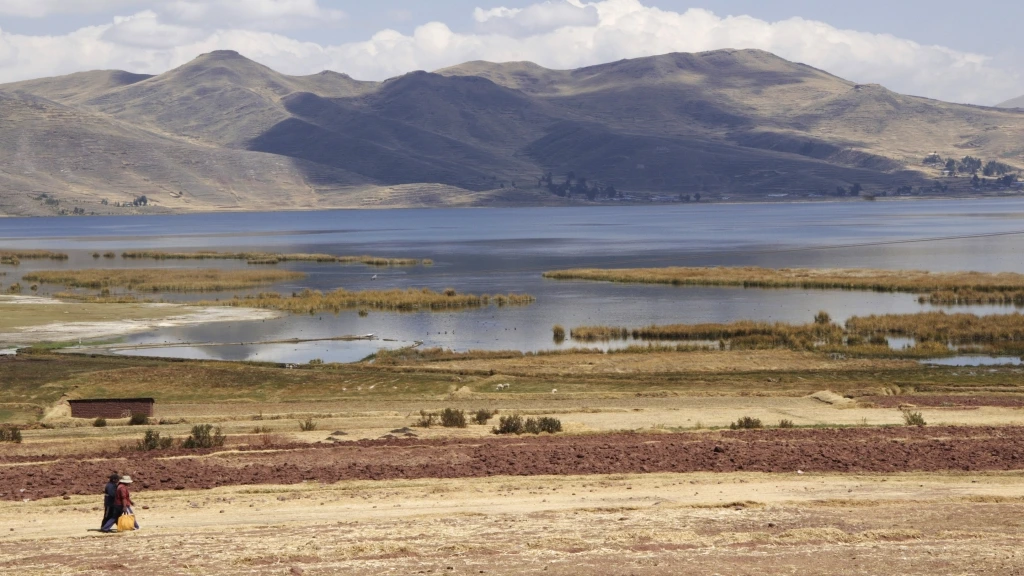
Once in Pampamarca, you’ll notice the abundance of totora reeds on its surface, an aquatic plant with which locals craft rustic boats, just like in Lake Titicaca (Puno) and on the beaches of Huanchaco (La Libertad) and Pimentel (Lambayeque) on the northern coast of Peru. Its use is ancestral, dating back to the origins of Andean civilizations.
Here, you’ll see flamingos (parihuanas) and wild ducks, among other bird species that bring Pampamarca to life. Its waters are used for both human consumption and agriculture. Before heading back to Cusco, take the opportunity to visit the urban centre of the “pueblo de la pampa”—its name in Spanish. You’ll be in for more than one surprise.
Yes, it’s another winning bet.
January 1, 2025