


Machu Picchu: Memories of a Train Trip
In the front seat, two children kept repeating the word “chicharrón” like a broken record. They said it with a peculiar accent — one that didn’t belong to Peruvian Spanish, nor to any Spanish spoken anywhere in the world. Their mother burst out laughing every time she heard them. Their father, on the other hand, wasn’t laughing quite as much — he had the same pronunciation troubles. He tried his best, but just couldn’t get it right.
More laughter — lots of it — filled the old train carriage as it lazily pulled away from a monumental city. Now, the mother, who was Peruvian and from Cusco, turned into a language teacher: “Chi-cha-rrón,” she said slowly, exaggerating her lip movements. Her “students” repeated the tricky word in chorus. “Terrible! I’ll have to punish you,” she scolded them affectionately.
And that’s how my first journey to Aguas Calientes began — listening to the “failures” in pronunciation of the children and their father, from a family that was half Peruvian and half… French? German? Aguas Calientes, of course, is the small town you must reach before heading up to Machu Picchu, whether on foot or by bus. Back then — more than 25 years ago — the train carriages were like the United Nations on rails. Travellers from all over the world shared the seats, the aisles, and every bit of free space.
The excess of passengers, the wardrobe-sized backpacks of globetrotters, the bundles and parcels of the locals — all mixed with the chatter in different languages, the cheerful cries of vendors selling choclo con queso (corn with cheese), and the stories in Quechua and Spanish told by Inca Trail guides and porters — created a strange yet harmonious “international conflict” throughout the long journey.
Perhaps it’s because of those friendly skirmishes that I remember that trip so fondly — or maybe it’s just nostalgia, that feeling that everything in the past was somehow better, or at least more fun and chaotic — that makes me idealise the slow train ride I took early that morning from Cusco’s San Pedro station to fulfil one of my wandering dreams: exploring the greatest architectural legacy of the Incas.
The disappearance of Aguas Calientes
Everything changes. The memories of yesterday no longer match or fit with today’s experiences. Perhaps the only thing that remains unaltered is the majesty of Machu Picchu — although getting a ticket nowadays can turn into quite a drama during the high season (make sure to buy them in advance). And that’s not all. These days, visitors must follow strict schedules and designated circuits. It wasn’t like that before — you could spend the entire day there.
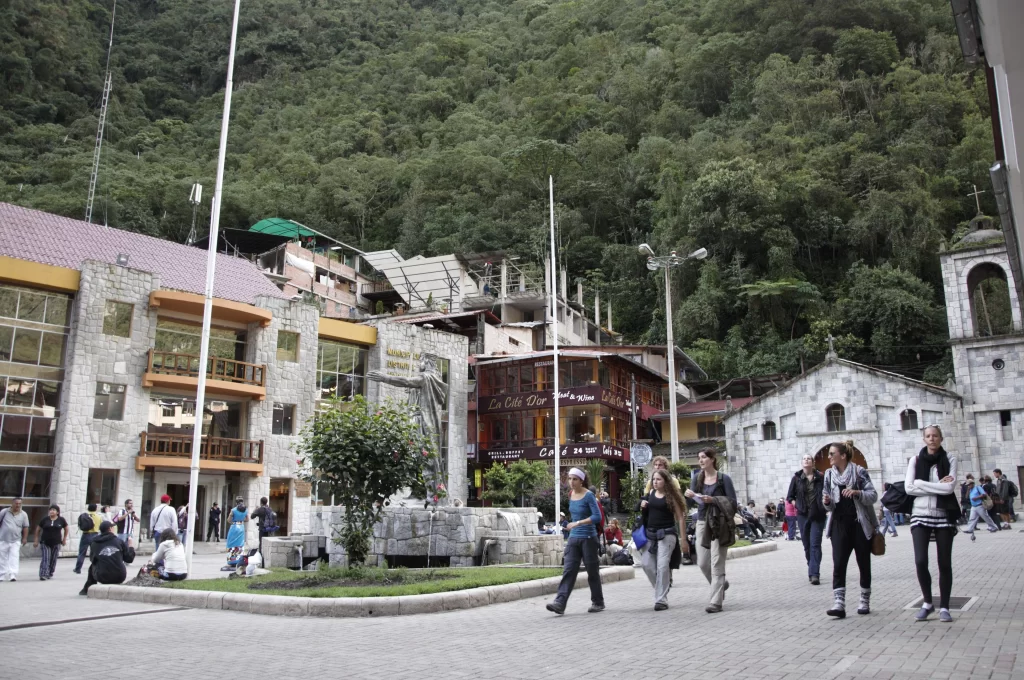
More changes, more nostalgia. On the train, there are no longer those harmonious “international conflicts”, as several types of services now exist — from the modest local train to the luxurious Hiram Bingham. Meanwhile, the name Aguas Calientes has taken refuge in the memories of seasoned travellers who —out of habit or perhaps pure stubbornness— refuse to refer to the place as Machu Picchu Pueblo.
“It’s Aguas Calientes, full stop,” they insist —we insist— on the popular name that remained in use until not so long ago. It doesn’t matter how many times they’re told —we’re told— that Machu Picchu Pueblo has been the official name of the capital of the Machu Picchu district (in the province of Urubamba) since 1 October 1941, the date when Law No. 9396 was enacted.
No law will ever change the fact that, either before or after your adventure —or if you prefer, both before and after— you’ll have the chance to unwind in the hot springs of a town born alongside the railway. The same railway that began construction in the early decades of the 20th century. The same train where I once heard some children say “chi cha rrón.” The same train that will take you close to one of the seven wonders of the modern world.
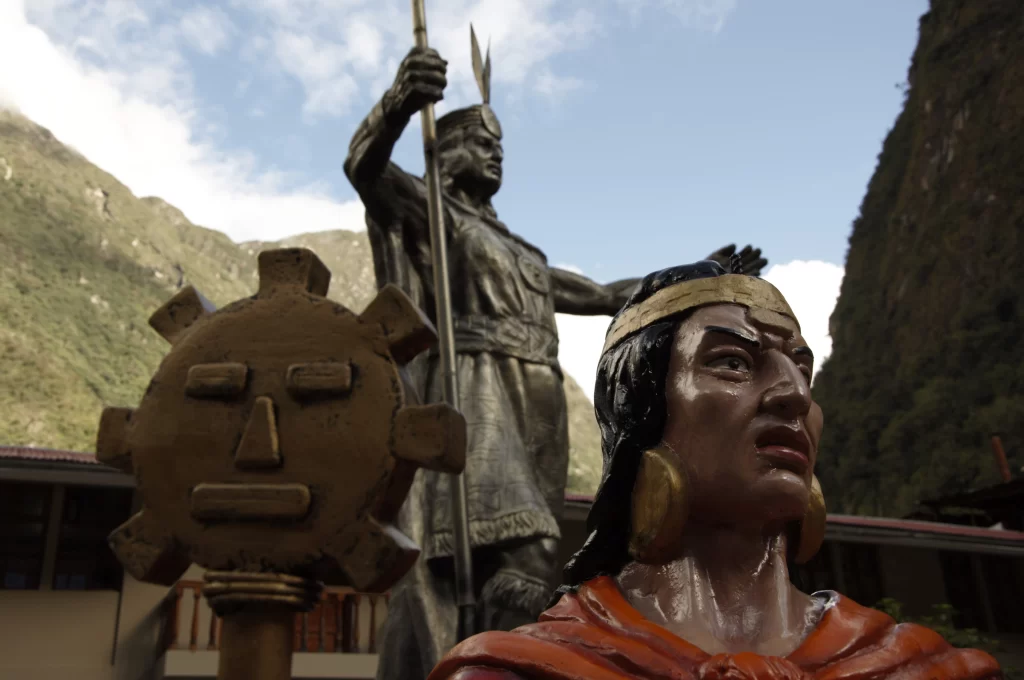
From railway camp to world-famous tourist destination — an unexpected transformation that began to take shape, without anyone knowing or imagining it, on 24 July 1911, when Hiram Bingham was guided by a young boy named Pablito Riccharte to an unknown pre-Hispanic city hidden among Cusco’s green mountains. An archaeological treasure that the American explorer would go on to share with the five continents.
Several trains to the same destination
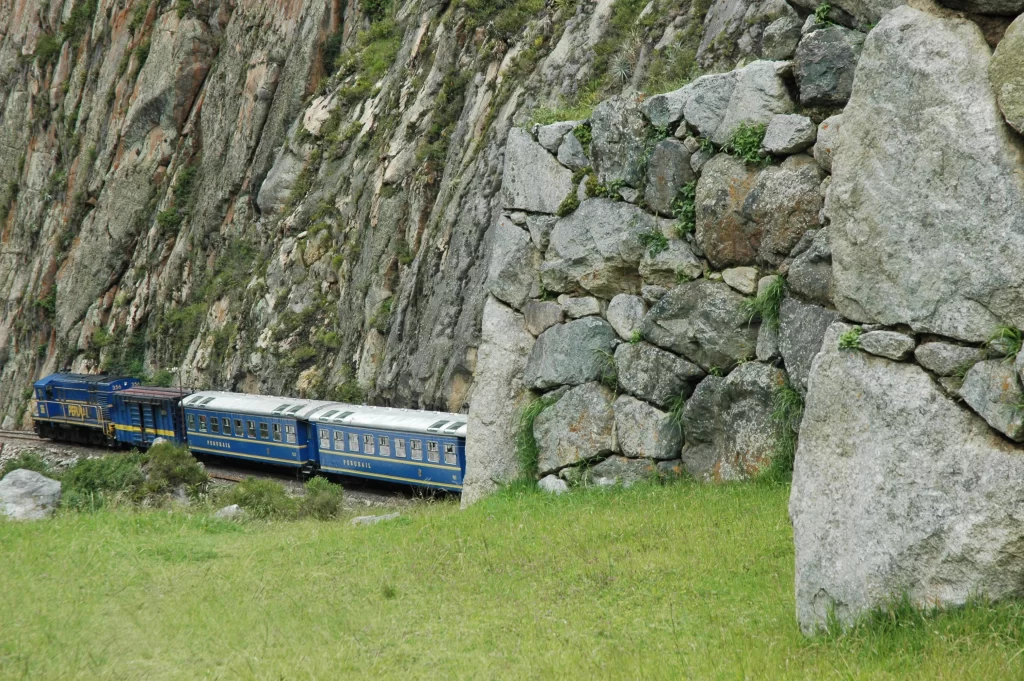
The presentation of Machu Picchu in National Geographic magazine (April 1913 edition) sparked the interest of researchers and travellers in this newly revealed archaeological gem. The desire to visit the llaqta, built in the 15th century by order of the Inca Pachacutec, remains alive to this day. Most visitors reach their longed-for destination via a railway built to connect the Andes with the edge of the jungle.
From Cusco to the Santa Ana estate farm (Quillabamba, La Convención province) — that was the plan and the project promoted by Congressman Benjamín de la Torre in 1907. Government neglect and bureaucratic sluggishness delayed the start of construction until 1914. By 1928, the rails and sleepers had reached Aguas Calientes. Then came new problems, more delays. Work towards the jungle resumed in 1950.
At this point, you might be wondering whether the works were ever completed or left unfinished. The answer is yes — they were completed. In 1978, after a long “journey” of 71 years, the Cusco–Quillabamba service was inaugurated. But this story doesn’t have a happy ending. In 1998, a huayco (landslide) caused the suspension of both freight and passenger services — a suspension that remains in place to this day.
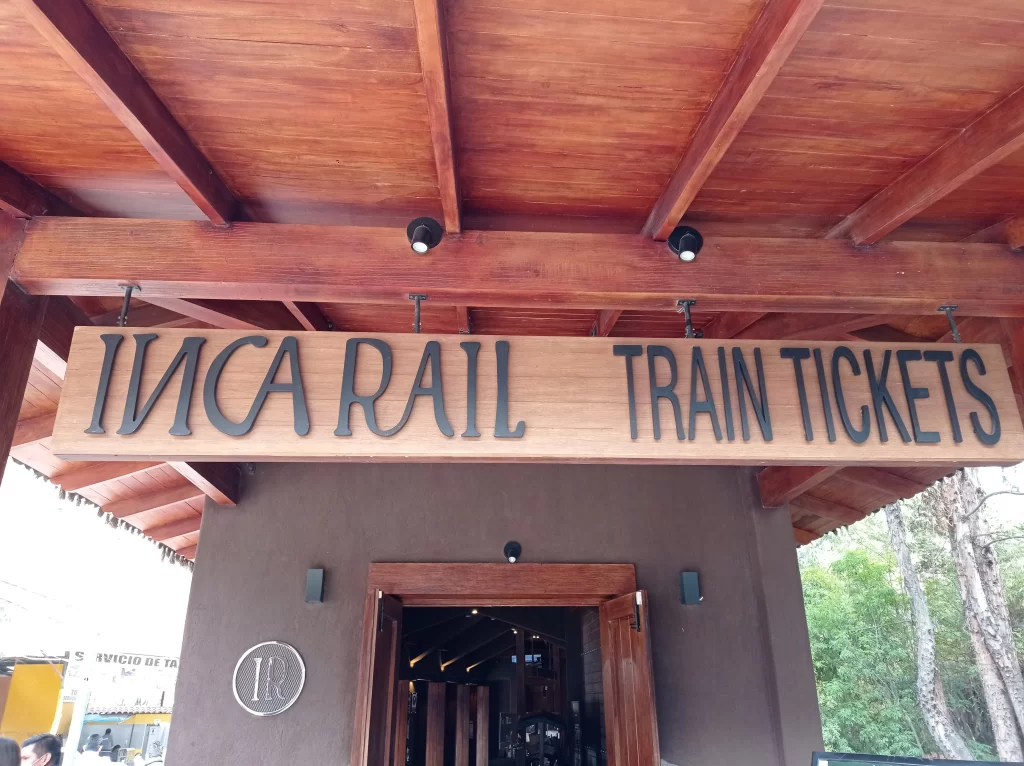
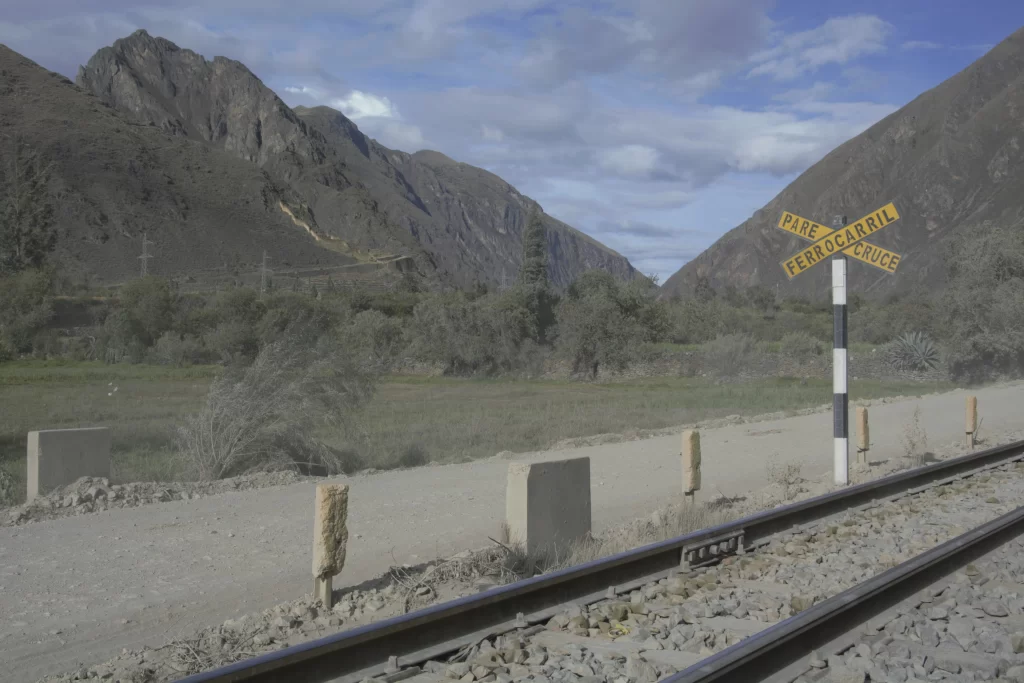
The situation is completely different on the stretch to Machu Picchu Pueblo. The route is operated by two companies — PeruRail and Inca Rail, — both offering a range of schedules and service types. Departures and arrivals take place at several stations, the most popular being Ollantaytambo (1 hour 30 minutes away). Prices range from 20 soles (local train, for Peruvians only) to 500 US dollars (one way on the Hiram Bingham).
Between the modest local train and the luxury of the Bingham, there are several appealing options: Expedition (US$57), Vistadome (US$91) and Vistadome Observatory (US$114) with PeruRail; and The Voyager (US$57), The Prime (US$91) and The 360 (US$98) with Inca Rail. The prices mentioned are based on Ollantaytambo as the departure station (about 1 hour 20 minutes from Cusco by road).
A dream come true
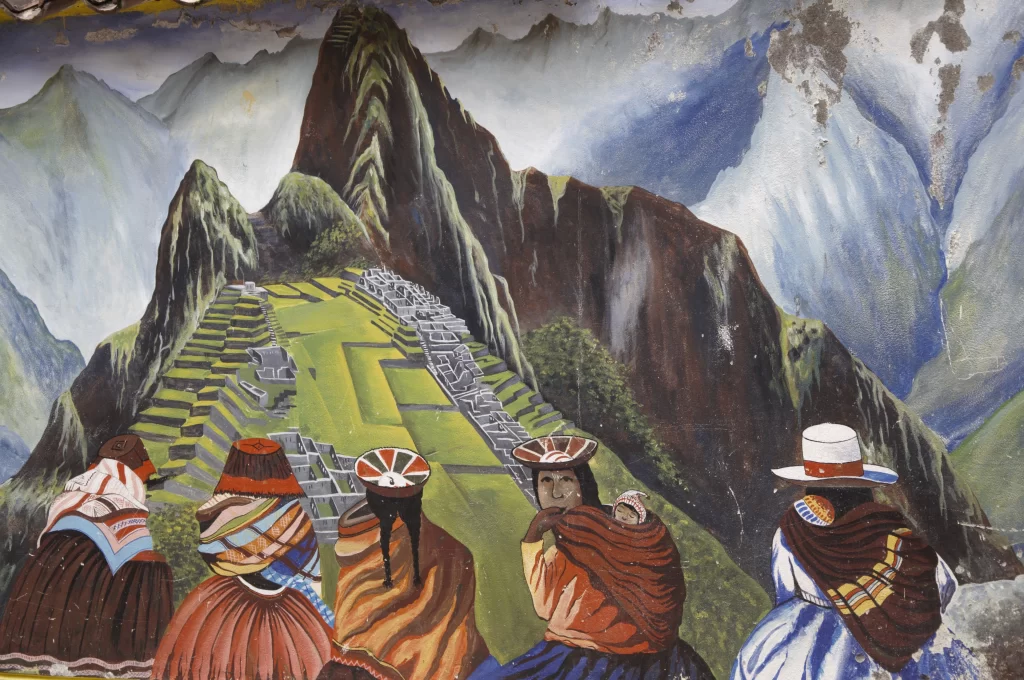
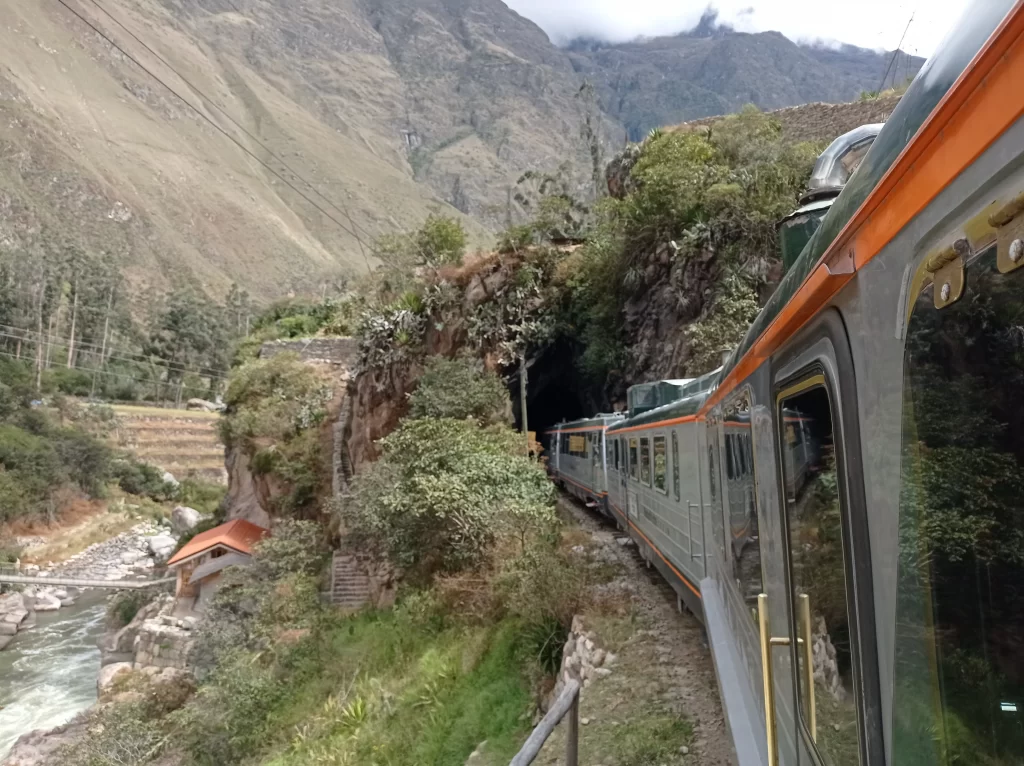
Back on the train of memories. The children are finally defeated by the constant rocking of the carriages. They rest while their parents gaze out at the scenery unfolding beyond the windows — beautiful and ever-changing. The imposing mountains, the flow of the Urubamba (or Vilcanota) River, the green farmland and the rustic charm of rural houses all help make the four-hour journey more striking and more pleasant.
That’s how long it takes for the train to travel “full steam ahead” from Cusco (3,400 m a.s.l.) to Machu Picchu Pueblo (2,040 m a.s.l.). The line stretches for 112 kilometres — narrow, winding, with plenty of bends and zigzags. The speed varies between 30 and 45 km per hour. Slow but steady — that’s the motto of the diesel or diesel-electric locomotives that lead the train convoys.
Patience — it’s just four more hours when you’re about to fulfil a lifelong dream. Ever since I was a child, I had wanted to visit Machu Picchu, a place so admired around the world that many who’ve heard of it couldn’t say for sure which country it’s in. The Old Mountain — that’s what its name means in Spanish — is more famous than Peru itself.
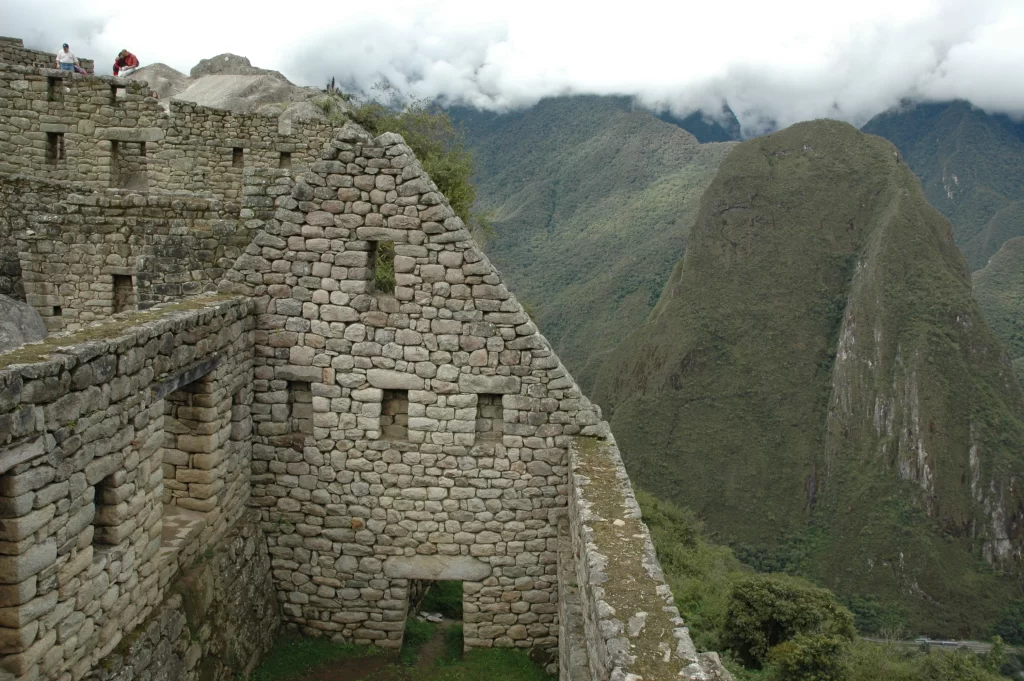
It is our icon, our symbol, our wonder — the marvel that inspired Nobel Prize winner Pablo Neruda to write these words: “After seeing the ruins of Machu Picchu, the fabulous cultures of antiquity seemed to be made of papier-mâché.” So how could I not feel excited and full of anticipation on my first journey to a human creation that seems almost divine in origin.
The train gives its final whistle. The children wake up. Their parents take them by the hand. A brief moment of chaos — the end of harmony. Everyone wants to get off first. Perhaps it’s the eagerness to begin the final stretch to the llaqta? I don’t know. I don’t want to know. My only aim is to stay alert, to remember everything. And I’m glad I did — because that’s how I can tell you this story more than 25 years later.
December 25, 2025