


Vinicunca: The Colours of a Viral Mountain
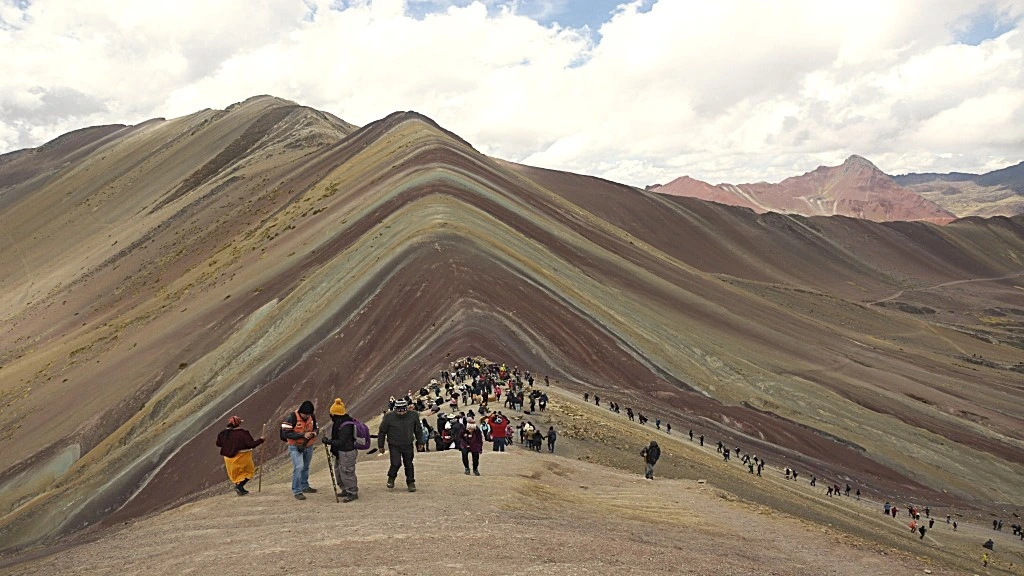
One day, it appeared in cyberspace. I don’t remember the year or who was the first to post the video. What I do know is that it all happened when “virals” weren’t as widely talked about, and Facebook was still the all-powerful network, because the tweets from Twitter’s little blue bird were barely heard, and no one imagined that one day a dynamic platform like TikTok would emerge.
It was on Facebook — unless my mental “hard drive” is damaged — where the global village saw, with incredulity, images of a colorful mountain, so colorful it didn’t seem real. Artificial intelligence, one might say in these times when everything is questioned, but that video was real. That place existed, and it was located in Cusco, Peru’s main tourist destination.
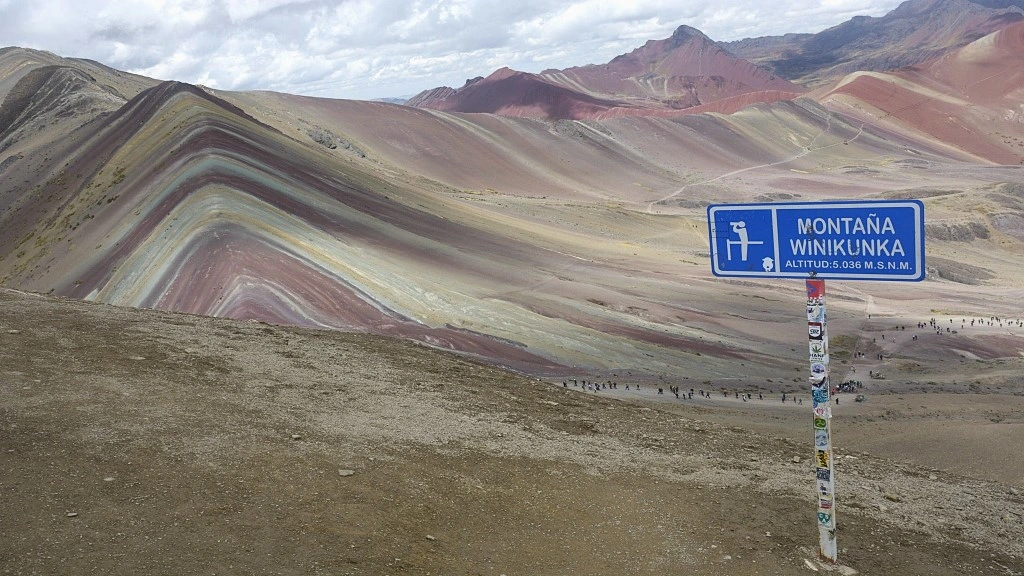
Yes, in the Cusco of Machu Picchu and Saqsaywaman, of Ollantaytambo and Choquequirao, of the Sacred Valley and the Inca Trail, of Inti Raymi and the Virgin of Carmen Festival. Yes, in that Cusco that, since the viral video, has also become home to Vinicunca or Winikunka, the spectacular “seven-colored” mountain that rises majestically in the district of Pitumarca, in the province of Canchis.
Expectation, curiosity, and the desire to be there. What would the mountain be like, and why was so little known about it before its appearance on the Internet? Would it be easy to visit, or was it a nearly inaccessible place, reserved for hardcore travelers? So many questions that could only be answered by traveling to a province I had never visited, exploring high-altitude paths, and discovering a mountainous geography.
I wasn’t alone. There were many of us who wanted to conquer the 5,200 meters of the “hill of the narrow neck” (one of the translations of its name in Quechua) to see up close its stripes of different colors, which are the result of the accumulation of sediment from various minerals such as iron sulfide, iron oxide, and magnesium, among others.
A Destination in Full Color
And so, thanks to a social network, a colorful mountain burst onto the tourism scene in Cusco, a region where new routes continue to be opened, natural attractions discovered, and archaeological sites once ignored are now being valued. This expansion allows for the renewal of itineraries and the broadening of circuits, becoming a tempting reason to return again and again.
How many have returned—or will return—to the “navel of the world” with the sole goal of visiting Vinicunca? How many others have changed (or will change) their plans to include it in their vacation itineraries? Are you one of them?… If so, take note of my advice and recommendations. They will help ensure that your excursion is a success and that you make the most of your time at Vinicunca.
The first piece of advice to prevent disappointment is that the colors are not as intense and bright as they appear in most photos and videos. Many overdo the editing, creating false expectations. This is unnecessary. Still, the “red hill,” as the local community calls it, doesn’t need Photoshop to be impressive.
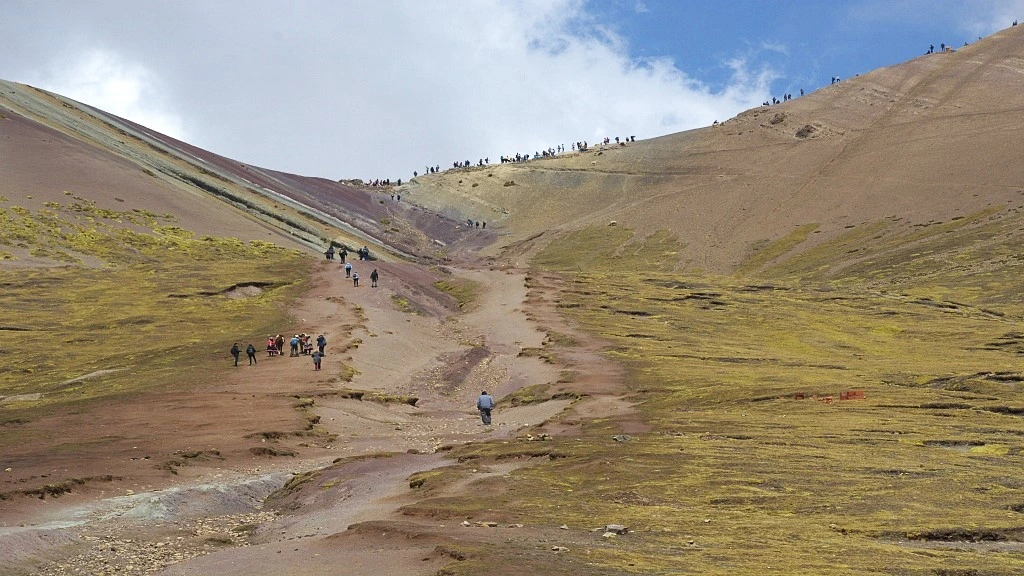
Altitude is another factor you must consider. If you’re not yet acclimatized and the symptoms of altitude sickness are creeping up on you, it’s best to postpone your trip. Remember that to reach your destination, you’ll have to walk for more than 2 hours, and the final stretch is a demanding uphill climb (45 minutes). Your travel experience could be terrible if your body doesn’t respond to the challenges of the path.
It’s also not recommended to stay up late the night before your departure. Tours to this mountain in the Vilcanota mountain range, dominated by the magnificent Apu Ausangate, start early in the morning. If you’re going on your own, you’ll still need to wake up before dawn, so don’t go partying the night before. Go to bed early, even though the Cusco night is fascinating.
A Bad Day on the Mountain
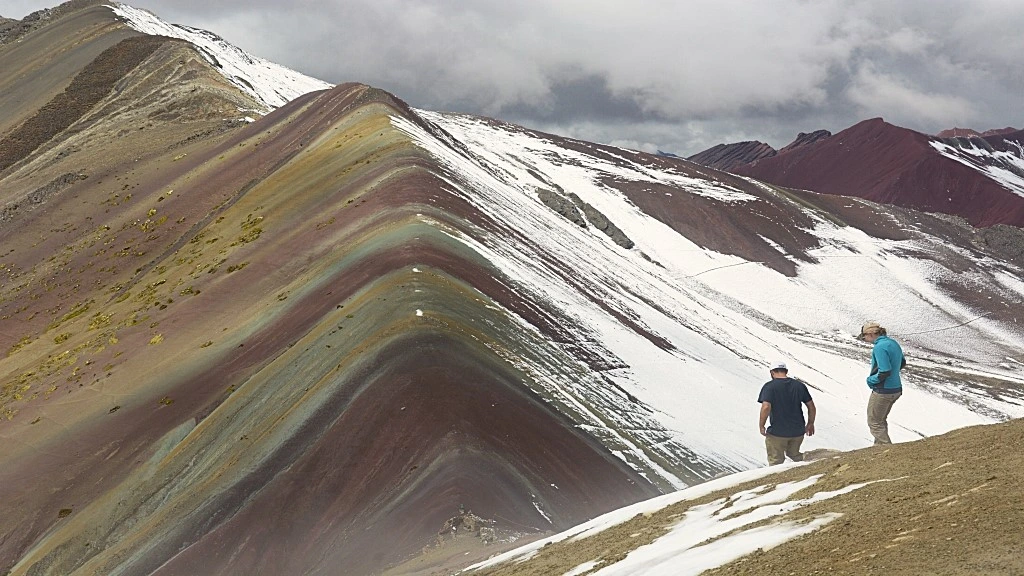
A video on social media. Now, the colors are not dazzling. On the contrary, the sky is overcast, and the mountain is shrouded in mist, while a tourist expresses her frustration. After so much walking, she’s seen nothing or very little. She feels deceived and shares her experience with the world through the internet. Her voice is heard, and the video garners both support and criticism.
Once again, Vinicunca goes viral, but this time for different reasons. The tourist wasn’t lying. She had a bad day. The weather in the mountains is unpredictable and uncertain, especially if you travel during the rainy season (October to March). Keep this in mind and try to schedule your visit for another time. If not, be aware that your destination is not an amusement park where everything is controlled.
Nature is unpredictable. Never forget that. Fog, rain, or hail could be your “companions” for a few minutes, a good while, or maybe throughout your entire journey. While the possibility of this happening decreases in the dry season (April to September), it shouldn’t intimidate you. In the end, these are the hazards of traveling, situations that happen when you leave home to explore the world.
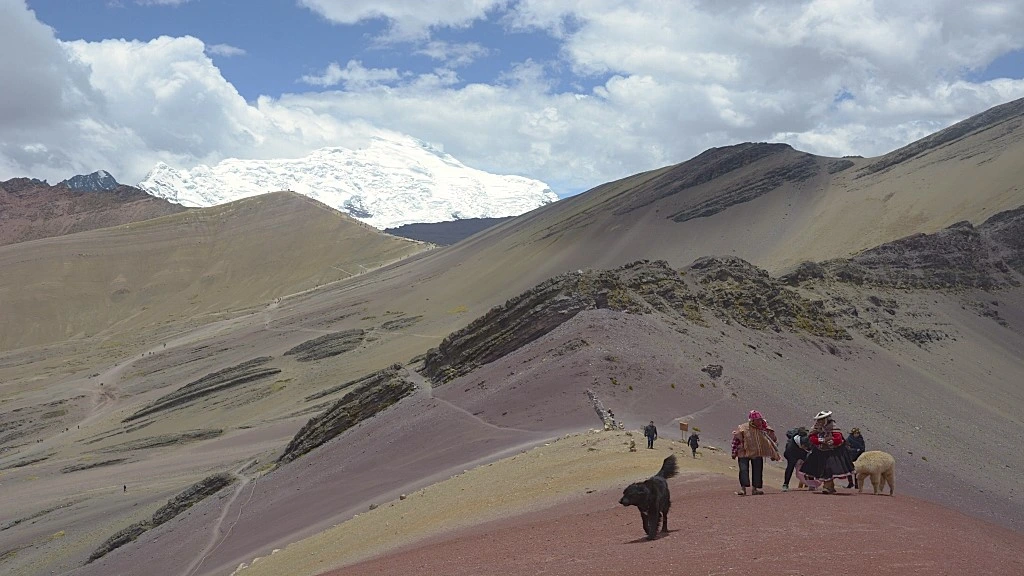
Don’t rule out Vinikunca just because someone visited it on a bad day; instead, think of all those who returned tired but happy after visiting it. The person writing to you is one of them. I’ve been to its summit twice. The first time was on the fourth day of the five-day trek to Ausangate, one of the most demanding and breathtaking hiking routes in Cusco.
That time, I arrived at the mountain very early. The tourist groups from the city had not yet started their pilgrimage on its multicolored slopes. At that hour, there were only a few of us ascending the “narrow-neck hill.” The air was thin, my heart beat like a drum, and my legs, though weary from the previous days’ travels, moved forward step by step, meter by meter.
Vinicunca Without Filters
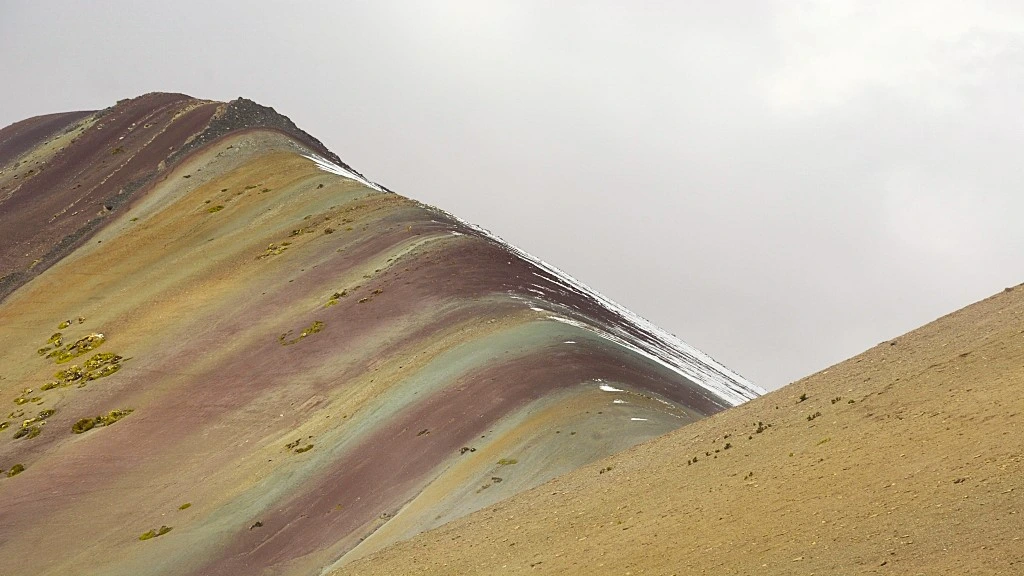
I made it that cold morning with little sunlight. It wasn’t the vibrant scene I had imagined when I first set foot in the realm of Ausangate, but I didn’t feel disappointed. There it was, the mountain. There were its stripes, just as I wanted to see them—without filters or edits. There, the full spectrum of its colors stood out, the result of “a complex geological history of marine, lacustrine, and fluvial sediments.”
This history, described in a document from the Cultural Landscape Office of the Cusco Decentralized Directorate of Culture and cited in a BBC Mundo article, explains that the “sediments, transported by the water that once covered the area, date back to between the tertiary and quaternary periods, that is, from about 65 to two million years ago.”
When the mountain range formed, the layers or stripes of sediments were pushed up to the surface. Over time, these “acquired their striking colors due to the oxidation of their minerals, caused by the humidity of the area, and by the erosion of the same,” explained César Muñoz, a member of the Geological Society of Peru (SGP), in the cited article.
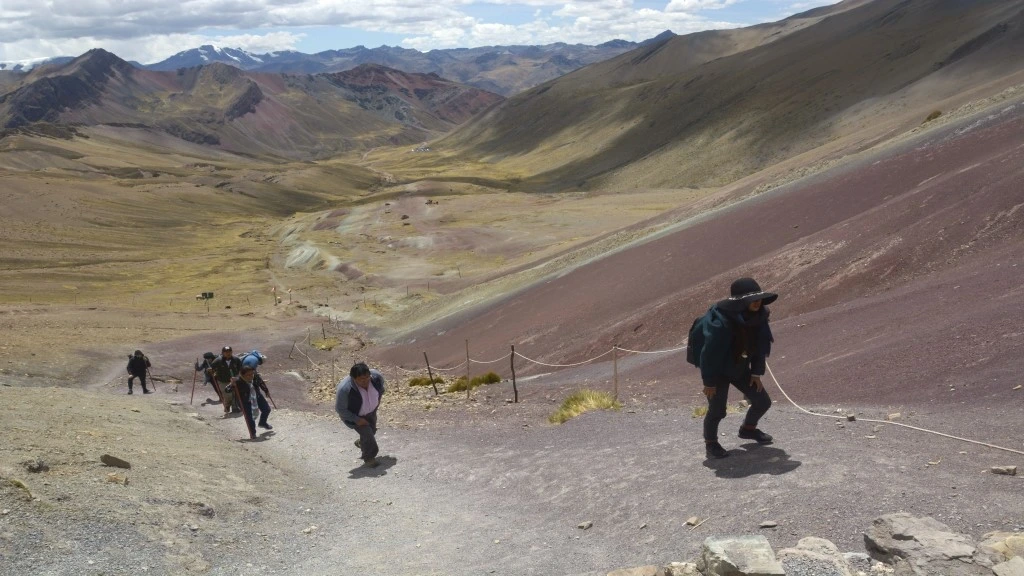
At the summit, a local community member told me that the colorful stripes weren’t visible before because the mountain was covered in ice. This version aligns with the opinion of Juan Carlos Gómez from the Geophysical Institute of Peru (IGP), who, in the cited article, mentioned that “the hill was partially covered in ice and received temporary snowfalls until the early 1990s.”
Was it climate change that “exposed” the mountain? Was it this global tragedy that allowed us to discover such geological beauty? There are no certainties, but it is a possibility. What is indisputable is that after the snowfalls in the Ausangate region, a white blanket covered the pink, whitish, purple, red, green, brown, yellow, and golden stripes of the now famous “rainbow mountain.”
The path to the mountain
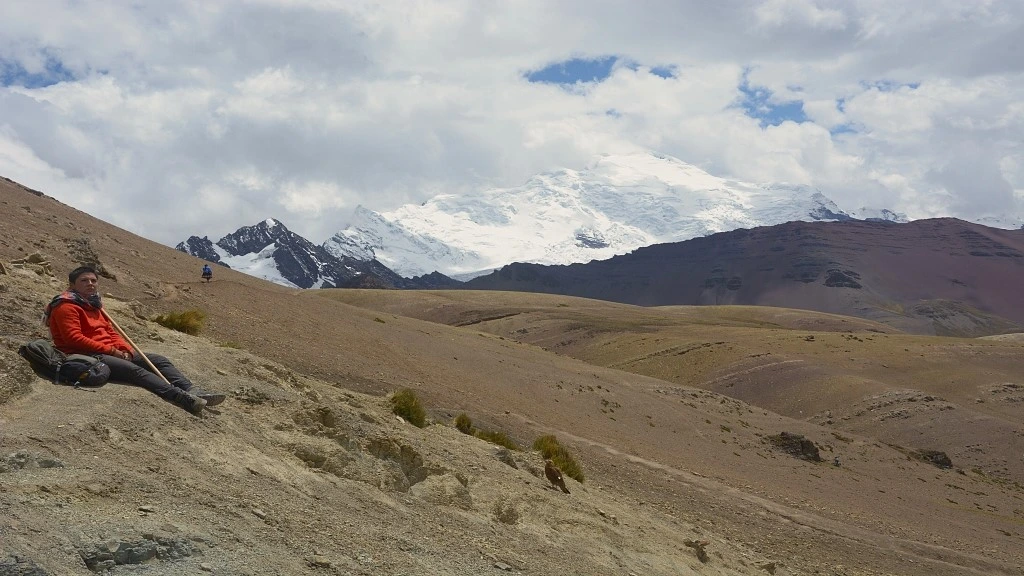
A day and two routes to reach and return from Vinicunca. Both start in Cusco at dawn (3400 m a.s.l.) and involve demanding hikes. You can do both independently or by hiring the services of a local operator. Both will take you to the 5200-metre summit and allow you to extend your journey to the Red Valley, a place where you’ll feel like you’ve stepped onto another planet.
But which route to take? From Cusco to Checacupe (Canchis province), then from Checacupe to Kayrahuira Alto (3 hours by road), and from there, a one-hour walk. The other option is to go from Cusco to Cusipata (Quispisacha province), then from Cusipata to the Llaqto community (4600 m.a.s.l. 3 hours 30 minutes), where the road ends and the walking adventure begins (2 hours).
Walking at high altitudes is a challenge. Start slowly, pace yourself, and find your rhythm. Try not to get too out of breath. If at any point you feel tired, stop, take a deep breath, have a sip or two of water, and carry on. During these breaks — which shouldn’t be too long — avoid lying down or sitting. It’s best to stay on your feet, “like the horses,” I was once advised.
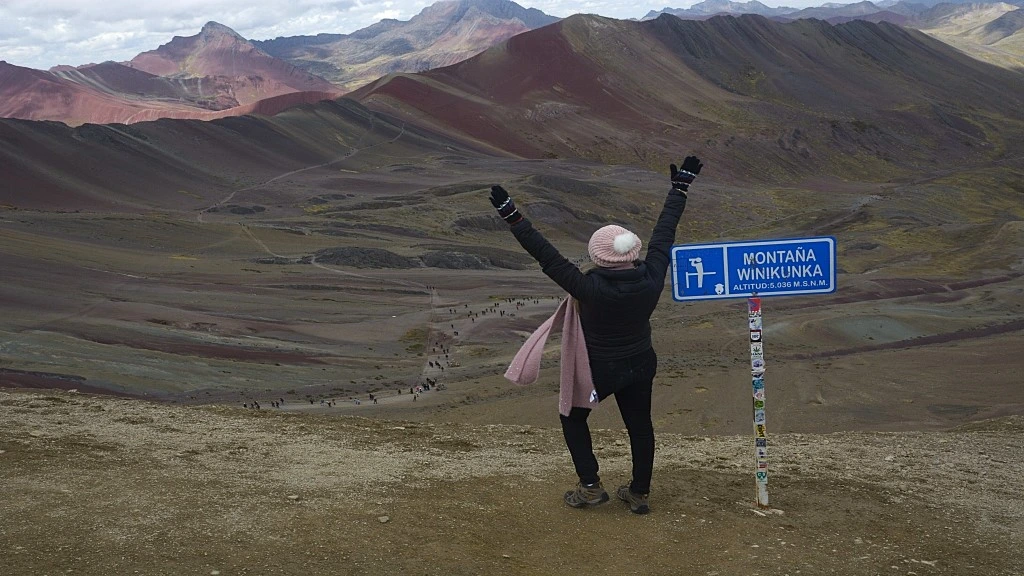
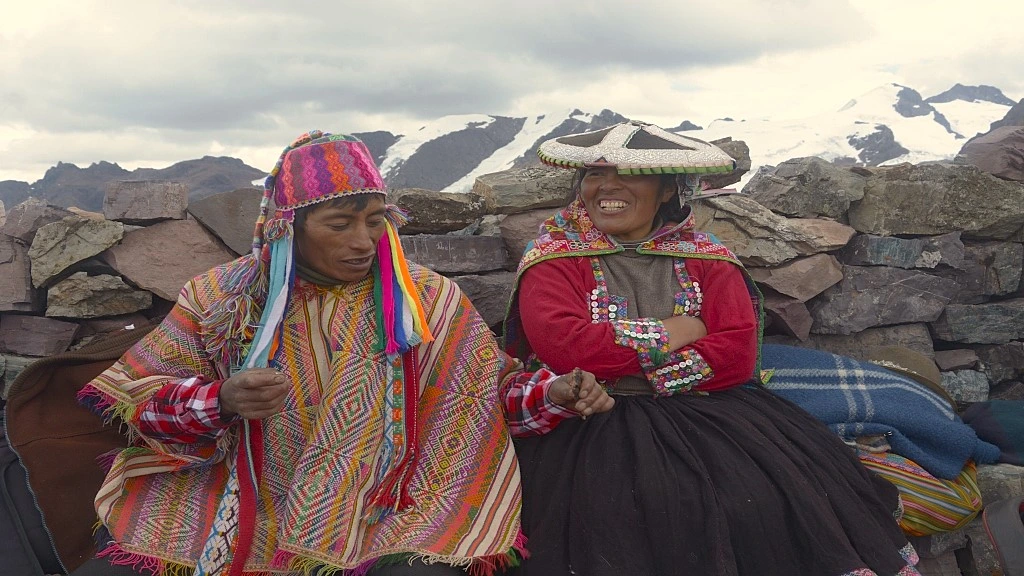
These tips won’t help you at all unless you’re convinced you will make it. Vinicunca is your goal, your aim, your multicoloured destination. Once you’re there, you’ll forget about the altitude, the cold, and the fatigue. All you’ll want to do is enjoy your travel success, take in the winding landscape, and admire the multicoloured stripes of the mountain, which looks as though it’s wearing a festive poncho, a poncho of a Cusco villager.
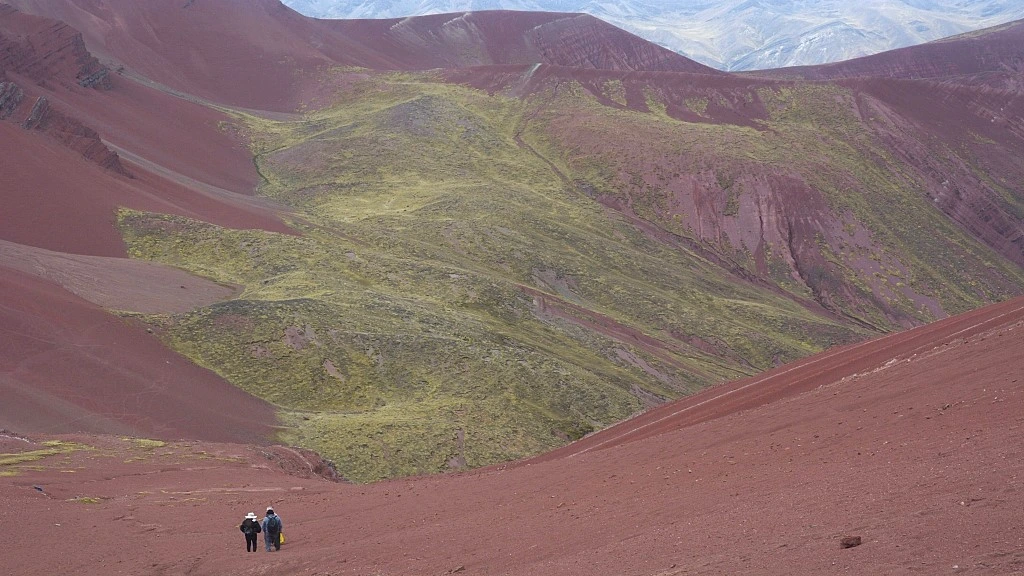
If at the summit you feel your energy recharge, take advantage of that momentum to continue to the Red Valley (an extra 4 kilometres). But if the “red hill” impacts you so much and you want to stay there for as long as possible, stay until the guide or common sense tells you it’s time to return. While you’re there, take plenty of photos and record lots of videos. Social media is waiting for a new viral moment.
December 2, 2024