


Cusco: Kusicancha, the “enclosure of joy”
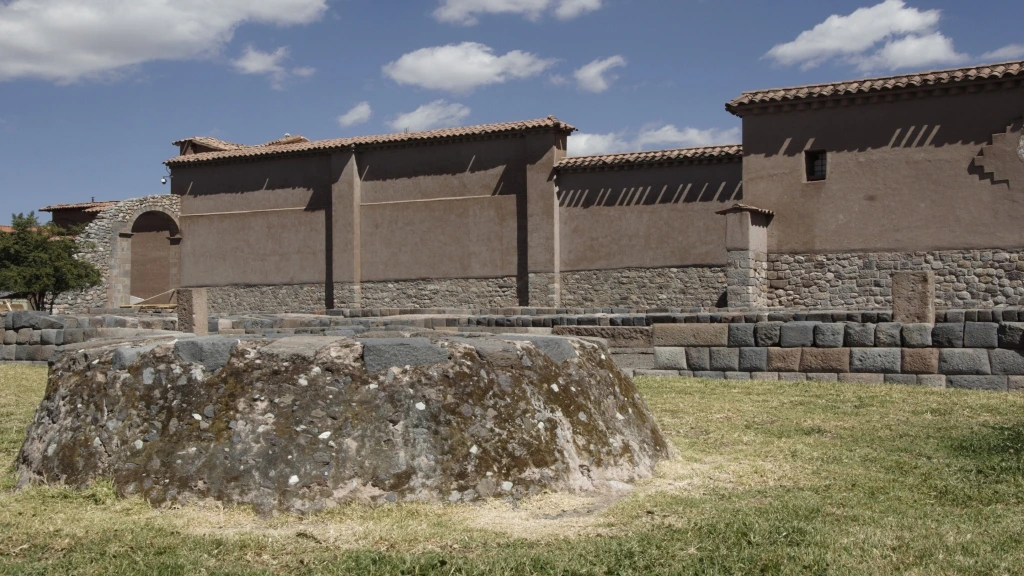
Imagine a sunny morning in Cusco, a morning with a clear sky, a morning with no scheduled excursions. Today, you want to relax because last night you returned from the famous Inca Trail to Machu Picchu, or from four days of trekking at Choquequirao, or perhaps you’ve just completed a circuit around the Ausangate mountain or gone to and from Vinicunca, the Rainbow Mountain.
You might also be recovering your strength after a memorable trip to the biodiverse forests of the Manu National Park or the Tambopata National Reserve — two escapes to the Madre de Dios region that will tempt you when you’re in Cusco. But let’s stop thinking about the places you might have just returned from and focus on what you’ll be doing in the morning we’re imagining.
A morning of relaxation. A morning to recover your strength and energy. A morning when, sooner or later, you’ll wander aimlessly through the Historic Centre of the ‘Imperial City‘. And during your strolls around the Plaza de Armas, the San Blas neighbourhood, the Stone of the Twelve Angles, and the San Pedro central market, among other places, your steps will inevitably lead you, perhaps without even realising it, to a ‘happy enclosure’
No, it’s not an amusement park with extreme rides nor a typical picantería (traditional restaurant) that delights the taste buds. Nor is it a pub where people toast in several languages or one of the lively Cusco nightclubs. None of that. Remember, this is a morning of stillness and tranquillity in the squares and streets of a city declared a UNESCO World Heritage Site.
If you want to know what the ‘happy enclosure’ is, which street it’s on, and whether you’ll have to pay to visit it, keep reading to find out everything about the sunny morning with clear skies we’re imagining, but which will become a reality when you decide to spend your holidays in Peru and Cusco, where you’ll not only be happy in one enclosure but in all its destinations and tourist attractions.
The way to Kusicancha
Plaza de Armas. The sun is shining. You sit on one of its benches. You see the fountain, the Cathedral, the arcades, the locals rushing to get to work, and the travellers taking photos or getting ready to start their tours. Not you, though. Today you stay in the old town to explore it on foot. It’s a great plan in a city like Cusco, where every corner has a story to tell.
You get up and take your first steps. You walk around the square. A narrow street next to the Church of the Society of Jesus catches your eye. ‘Corralled’ by magnificent Inca walls, this pedestrian street is called Loreto, but also Intik’ijllu (the ‘Alley of the Sun’ in Spanish). Don’t think twice. Walk down it, even if you’re a little tired. It’s not very long, and it will take you back in time.
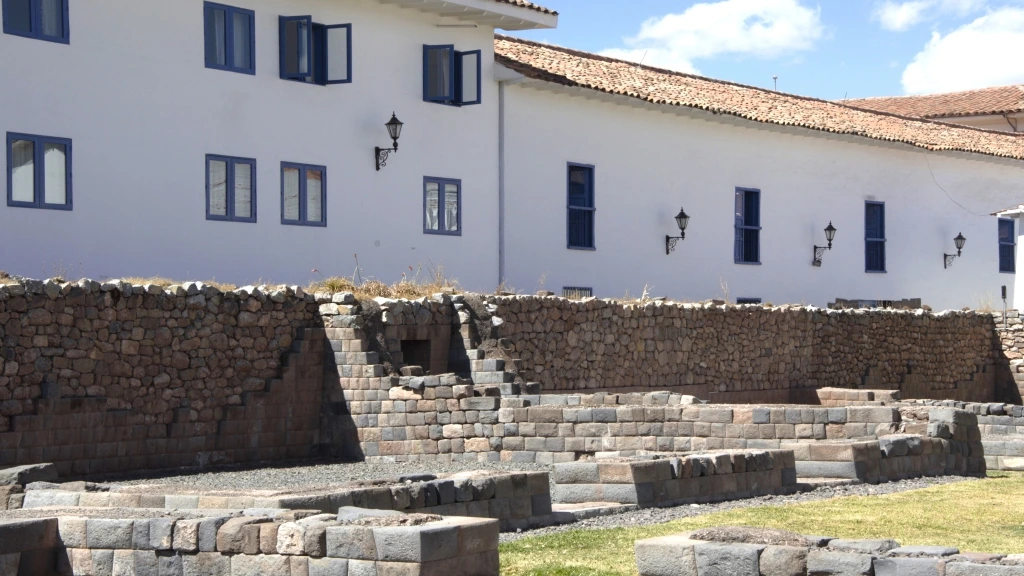
Through the Alley of the Sun, you will reach Maruri Street. At this point, turn left. As you walk, you’ll spot some large glass windows. Stop and approach this place, for it is no ordinary place. It is an archaeological site in the heart of the city. It is a building filled with history and symbolism, as it is the space where the Inca who transformed the world was born.
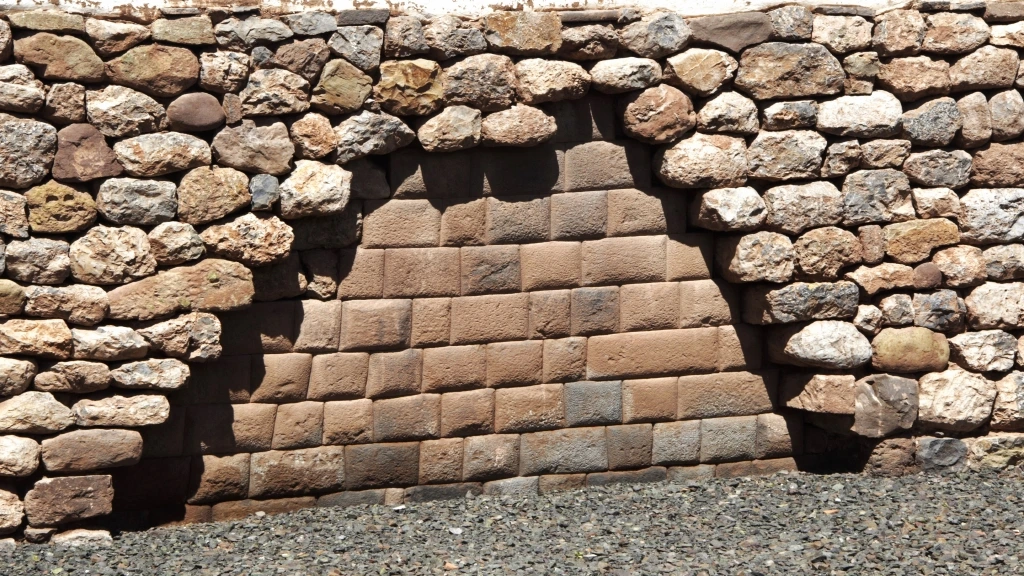
Such are the importance and significance of the various rooms of Kusicancha, the pre-Hispanic palace located between Qoricancha (the temple where the ‘children of the Sun’ worshipped their father) and Pukamarca (the ‘red place’ in Spanish), a monumental building that will amaze you with its imposing stone walls (it is now the headquarters of a banking institution).
Don’t stay outside the ‘happy enclosure’. Don’t settle for looking at it through the windows. Don’t worry if you don’t have the tourist ticket or if your budget is tight. Entry is free from Monday to Friday between 7:00 a.m. and 6:00 p.m. On Saturdays and Sundays, the doors open an hour later (8:00 a.m.), but the closing time remains the same. Go ahead and enjoy!
The home of the Inca Pachacutec
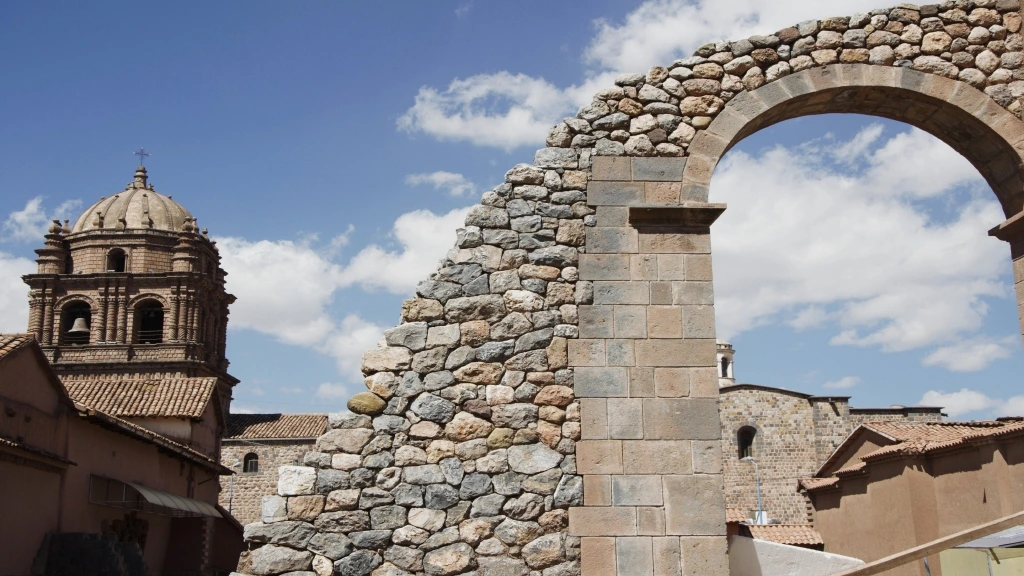
Pachacutec, the ninth Inca ruler, consolidated the empire of the “children of the Sun“. The man who transformed the Andean world was born and lived with his panaka (royal family) in the rooms of Kusicancha, according to the Spanish Jesuit chronicler, scientist, and missionary Bernabé Cobo (1582-1657), who travelled through the Andes evangelising and researching the nature and history of pre-Columbian peoples.
But the history of this archaeological site doesn’t begin with Pachacutec and his royal family. During the restoration and valorisation process of this palace, researchers found evidence that revealed the presence of pre-Inca cultures such as Cotacalle (500 BC), Lucre (from 600 to 1000 AD), and Killke (900 to 1200 BC), who inhabited this monumental space on what is now Maruri Street in the Historic Centre.
Research, excavation, discovery. A sense of wonder upon finding 17 funerary sectors during the recovery works, driven by the Cusco Decentralised Directorate of Culture. Two of them were from the Killke culture, while the rest belonged to the Inca period. These were not the only discoveries. Pottery and several metallurgical objects helped to clarify some of the mysteries surrounding Kusicancha.
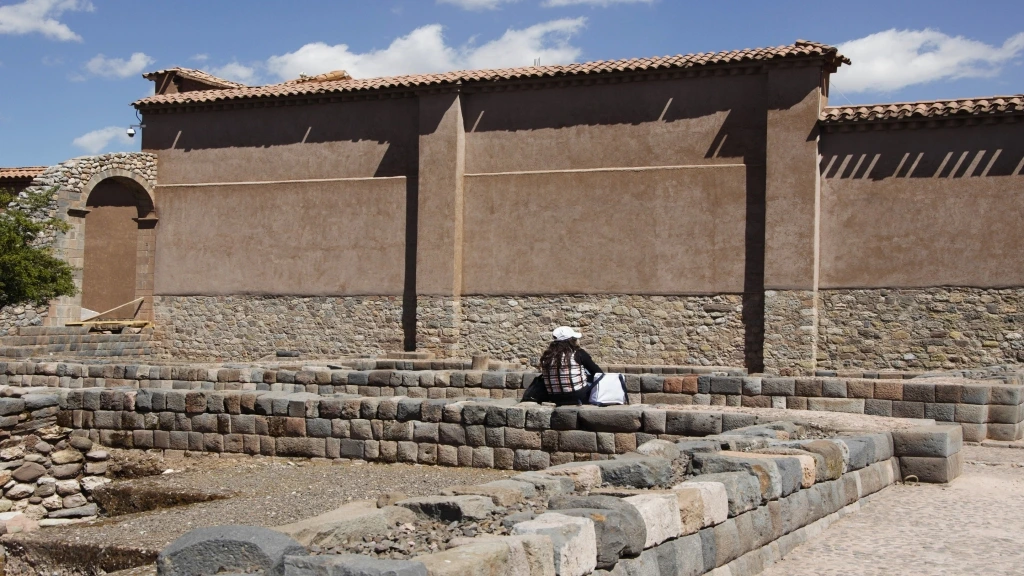
The past, so much past, awaits you in a place that shows how the present-day Cusco keeps its millennia-old roots alive, where any urban walk could end in front of rectangular enclosures with bases of carved stone that once served as homes (their roofs were made of ichu grass or straw), or by strolling through a central courtyard crossed by water channels for domestic use and drainage.
This is the magic of the “Historic Capital of Peru”. A city that is an open-air museum, where every stop is a lesson in Andean culture. It is also an invitation to imagine what the Plaza de Armas, Qoricancha, or Kusicancha would have looked like when Pachacutec, the brave young man who saved his people from the invasion of the Chanka warriors on the plains of Anta, was in power.
Kusicancha: the palace turned into a barracks
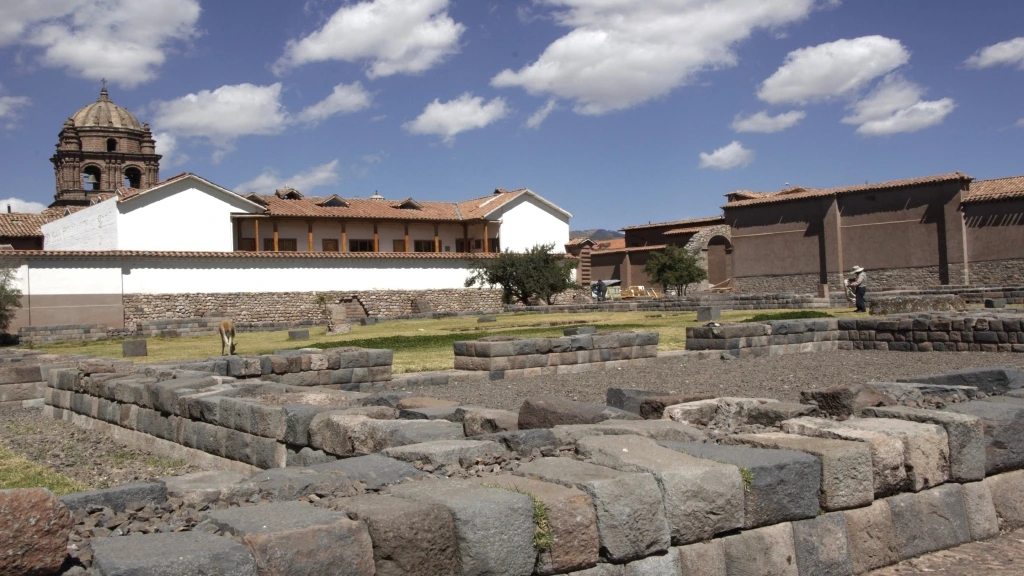
Reflections at Kusicancha. Was there much bustle, or did silence reign in the times of Pachacutec? How many people, including family and servants, would have occupied these rooms? Is it true, as some researchers claim, that ritual objects were made here and the food and drinks consumed at Qoricancha were prepared here?
Perhaps it is true, as true as the fact that this Inca palace became a barracks for the Peruvian Army during the Republican era. ‘27th of November’ was the name of the military installation that began operations in 1934 and remained in use until March 29, 2001, when the Ministry of Defence handed over the premises to the National Institute of Culture (INC), now the Ministry of Culture.
That date marked the rebirth of the “happy enclosure”, which was restored and revitalised. It was a hard task because, since the arrival of the Spanish, the site had been altered and much of its channels destroyed. The stone foundations of Pachacutec’s royal house were used to build various colonial buildings. This process was repeated throughout the old Cusco.
Today, Kusicancha is no longer a barracks, nor the quarters of the panaka of the Inca who transformed his world. It is a recovered space, an archaeological monument rescued from oblivion to show all those who visit Cusco what the city was like before the arrival of the Spanish. Don’t wait any longer—be one of the travellers who explore the “happy enclosure”
Don’t just imagine it, live it. We’re waiting for you!
January 3, 2025