


Cusco: Stories of love and conquest
Travelling goes far beyond simply visiting places and experiencing different cultures. Journeys are also a wonderful opportunity to connect with other tourists and with the people who live in the destinations we explore. Making friends of different nationalities, finding an unexpected travel companion, or starting a pleasant conversation in a square, a café, or perhaps even a bar, are all part of the adventure of discovering our planet.
Most of the time, however, those connections fade or come to an end when paths diverge. One returns to their own world, their routine, and their lifelong friendships, and those shared moments far from home become a lovely memory. After all, reunions rarely happen, and promises or plans to set off together towards another corner of our global home are seldom fulfilled.
In my experience, it is unusual for the affinity born during a journey to survive distance and time. The same is true of travel “loves”. The passion that arises spontaneously — or is carefully nurtured by those who understand romance as part of their itinerary — begins to fade as the day of returning to everyday life approaches.
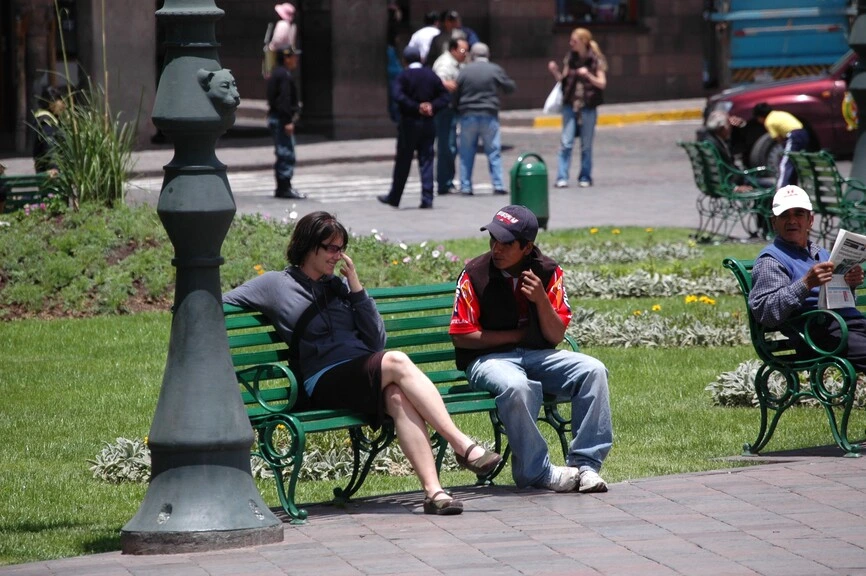
These things happen. Sometimes intentionally, and other times without meaning to. Love goes travelling, and hearts meet (and accompany one another) along the way. It is well known that Cupid’s — or Saint Valentine’s — arrows often find their target among solitary wanderers. Age and origin do not matter, nor do culture or language. Not even the destination itself. The spark can appear in the most unexpected place, at the most unexpected moment.
Just as unexpected as this text, in which I will not be revealing love stories, nor putting together a guide to romantic spots in Peru — and certainly not writing advice on how to flirt in Cusco. I am no expert on the subject, and if I am touching upon it at all, it is only because the closeness of 14 February and the carnival season has stirred a few memories of “international relationships” in the old Inca capital.
Romantic destination?
Although more and more couples travel to Cusco to get married in a colonial church or in a peaceful little corner of the Sacred Valley, the “navel of the world” is not usually seen as a romantic destination, nor as a particularly attractive place for solo travellers searching for their “other half”. Perhaps it is because the “Historical Capital of Peru” has no idyllic beaches, and no Andean version of Romeo and Juliet.
That does not mean, however, that love cannot take root in the hearts of wanderers. A simple stroll through the Historic Centre or a night-time “tour” of the city’s clubs, bars, and pubs is enough to realise that exploring archaeological sites, walking ancient paths, and discovering pre-Hispanic roots are not the only interests visitors bring with them.
Cosmopolitan adventures. Conquests between dances and toasts. Intercultural love under the influence of Pachamama and the Apus. After all, neither the cold, nor the soroche (altitude sickness), nor even exhausting expeditions are obstacles when it comes to sparking flirtation and romance in Cusco. A Cusco that is not only history and archaeology, past and cultural heritage — but also feeling, friendship, and passion.
A “tour” with no agencies and no itineraries, along the paths of the heart. A “tour” with no guides or specialised direction — although that is about to change if you keep reading, because now, right now, I am going to introduce you to a few Cusco characters who are true experts in “international relationships”. Their “art” and “trade” is not new; in fact, it dates back to the 1960s.
Before going any further, let me clarify that I am not one of them. If I know about their strategies of conquest and courtship, it is purely for professional reasons. Several years ago, I travelled exclusively to the city founded by Manco Cápac and Mama Ocllo in order to “research” the behaviour of the so-called “bricheros” — men and women who specialise in charming tourists.
The Cusco Conquerors
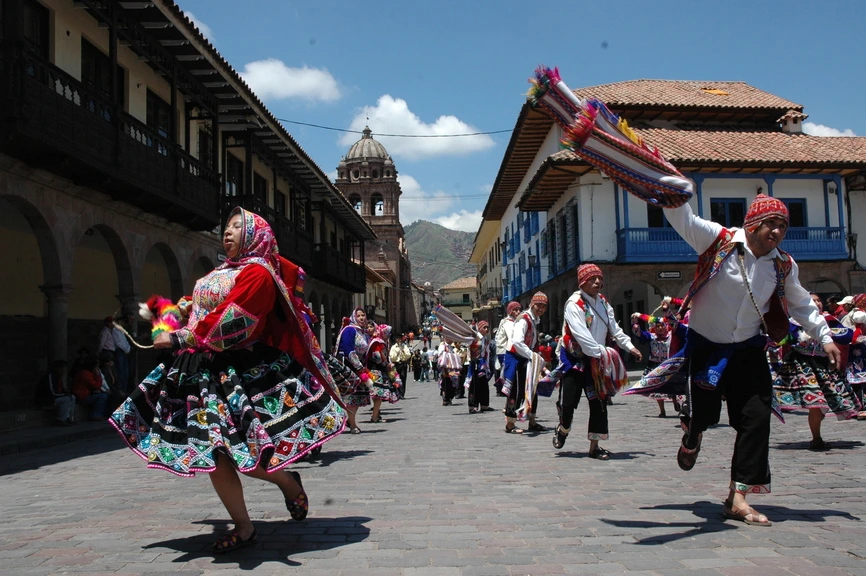
That “journalistic research” trip happened to coincide with two dates closely linked to friendship, joy, and the whims of the heart: Valentine’s Day (14 February) and Carnival — that transgressive celebration whose date shifts every year, as it is tied to the Catholic season of Lent. So it could be said — even if it sounds a little bit cheesy — that love was truly in the air.
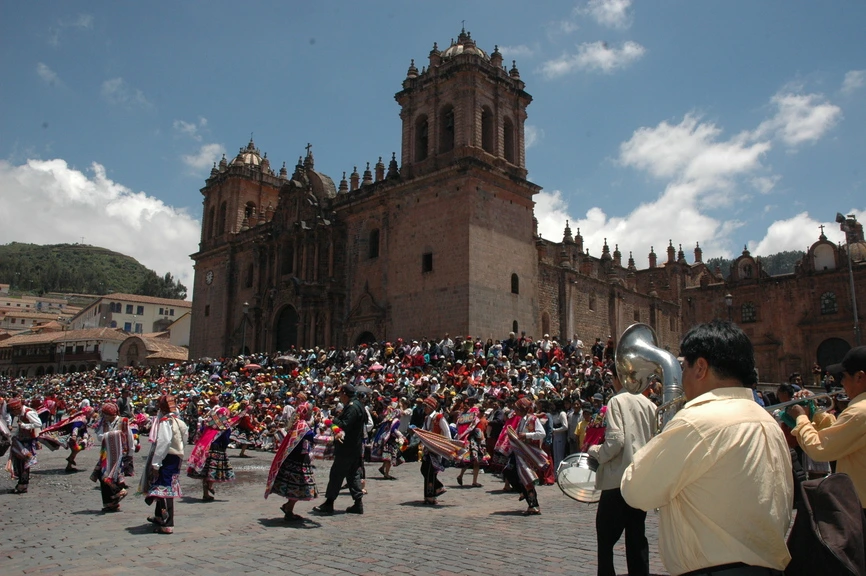
Andean Carnival is synonymous with courtship and fertility. Young people take advantage of the revelry, the dances, the yunzas, the festivities of compadres and comadres, the water games, and the joyful chaos — and sometimes even the anonymity provided by costumes — to flirt mischievously and irreverently with the pretty girls who set their hearts racing.
I remember that the Carnival parade in the Plaza de Armas was the perfect setting to observe the behaviour of the bricheros (from the English word bridge). Yes, there they were, with their long hair and Andean-inspired clothing, looking for a tourist with whom to strike up a conversation in basic English or Spanglish: Hello, qué tal, cómo te llamas, where are you from? That is one of the approaches used by the so-called “gringa hunters”.
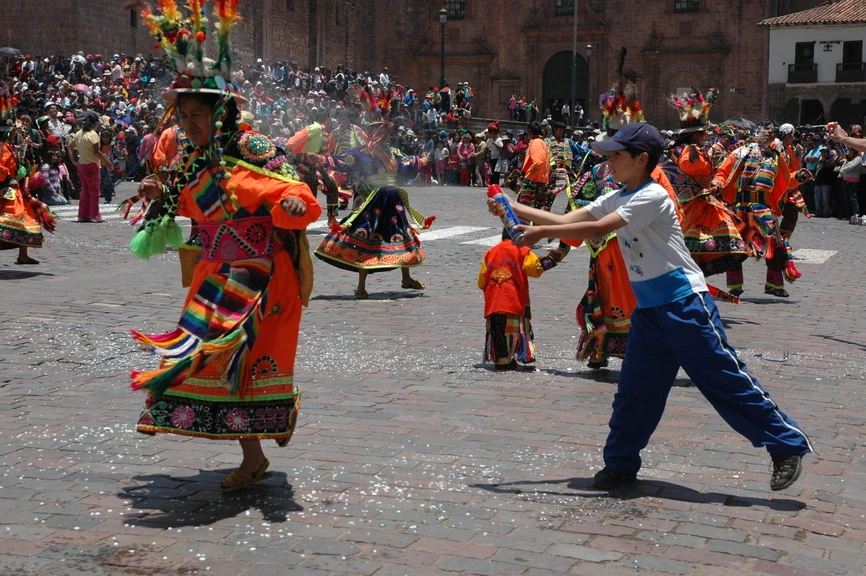
Their success will depend on their skill, charm, and the willingness of the woman they are speaking to. In general, they present themselves as deep connoisseurs of Andean culture. They speak Quechua and refer to myths, legends, and rituals such as coca leaf readings or the use of Ayahuasca. The most daring among them even go so far as to introduce themselves as descendants of the Incas.
The reivindication of Andean roots is crucial to their romantic purposes and intentions. Many female travellers feel drawn to the mystical aura they project — or strive to project. After all, it is often said that opposites attract, and it seems that cultural differences are irresistible in Cusco. Just imagine returning home and telling people you met the great-great-grandson of a sinchi or a chasqui.
International Loves
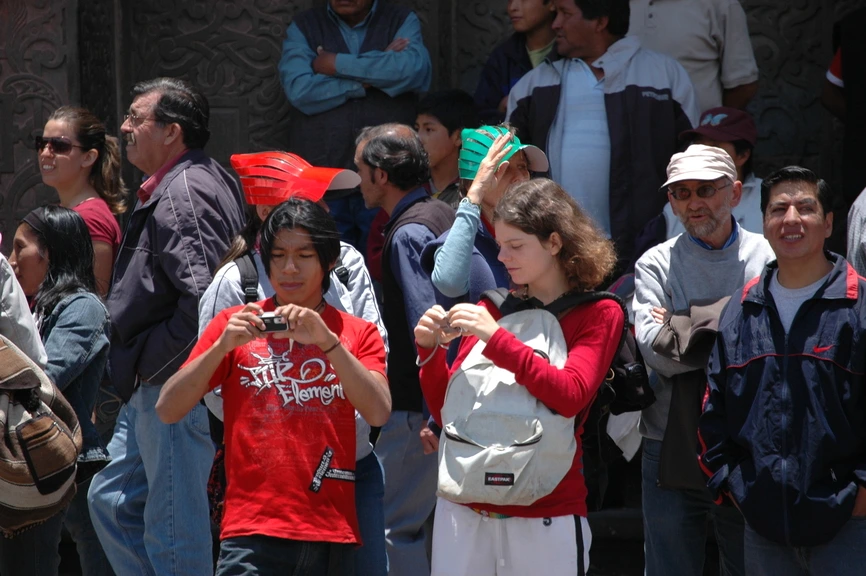
The Plaza de Armas, the artisan neighbourhood of San Blas, and the city’s bars, pubs, and nightclubs are some of the main hunting grounds for these men. That is where they look for their next conquest. Why do they do it? I once asked several practitioners of this “trade”.
“Fun, having a good time, proving that a man from Cusco can make the foreign girls fall in love,” they told me.
One old-school brichero explained that when the first Andean heartthrobs appeared, the goal was often for the foreign partner to become a “bridge” to leave the country. So much so that “quite a few of my colleagues got married and moved to Europe or the United States.” Today, things are different. Now it’s more about enjoying yourself, and for a few days having a partner who takes you out, invites you to places… “Someone who pampers you, basically.”
In all my conversations, everyone agreed on one point: they don’t ask for money, and they don’t act with bad intentions. Any invitations are voluntary, coming from the partner. They added that they don’t force situations — everything grows naturally out of conversation and their charm.
“Many tourists want to meet men like us because we’re different,” one of my interviewees assured me, caught up in the excitement of carnival.
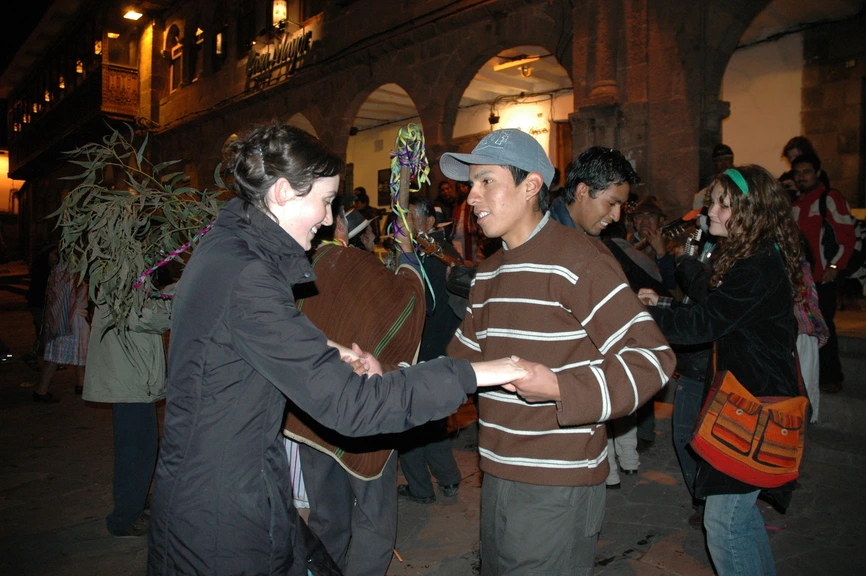
And just as loving is not a crime, brichear isn’t one either. Still, it’s a good idea to know the rules of the “game” before taking part in it. With that in mind, I have one more little bit of gossip to share: it’s not only men who dedicate themselves to this “activity”. There are also bricheras.
Unlike the men, they tend to be well put-together and don’t rely as much on the ancestral or mystical side of things.
Their strategies are different. Bricheras are sweet, gentle, and polite. Foreigners usually meet them in nightclubs, where they wait to be asked to dance or offered a drink. That is how it begins. What happens afterwards is not hard to imagine.
Whether it’s right or wrong is another matter entirely. Who am I to judge? Who am I to interfere in matters of love and these “international relationships” in Inca Cusco — in cosmopolitan Cusco.
February 17, 2026