


Chonta: The condors of Cusco
Curiosity is a wonderful travel companion – and so is doubt. The first pushes you to discover, explore, and venture beyond what’s outlined in your itinerary. The second, however, makes you hesitate, question, and tread carefully whenever someone talks about a “new attraction” or describes a “marvellous spot” that few people have ever visited.
What if that place isn’t as beautiful or impressive as they say? whispers doubt, countering curiosity’s command to rush off to that archaeological site supposedly just like Machu Picchu, that hidden trail said to be better than the Inca Trail, or that viewpoint claimed to outshine the famous Cruz del Cóndor in the Colca Valley and Canyon (Arequipa).
So, what should you do in those cases? Stick faithfully to your planned itinerary, or always leave a little room for the unknown? I faced that very dilemma some time ago in Cusco, while acclimatising to the demands of high altitude before setting out on the route of Apu Ausangate – a five-day trek along challenging trails that reveal the breathtaking grandeur of the Andes.
Walking through the domains of that protective, sacred mountain was my only goal – until I overheard a casual “you can’t miss them, they’re always there” while I was deciding whether to order a soup or a broth at one of the food stalls in Cusco’s traditional San Pedro market, a foodie haven where travellers can sample hearty local flavours at unbeatable prices.
Those words, spoken by a fellow diner happily tucking into a steaming bowl of caldo de cabeza (lamb head soup), immediately sparked my curiosity. And it’s not that I’m nosy, but I pricked up my ears to catch the rest of the conversation. That’s how I found out that this young man had seen several condors gliding over the depths of the Apurímac Canyon – from a viewpoint not too far, yet not too close either, to the city of Cusco.
Tempted by the Condors
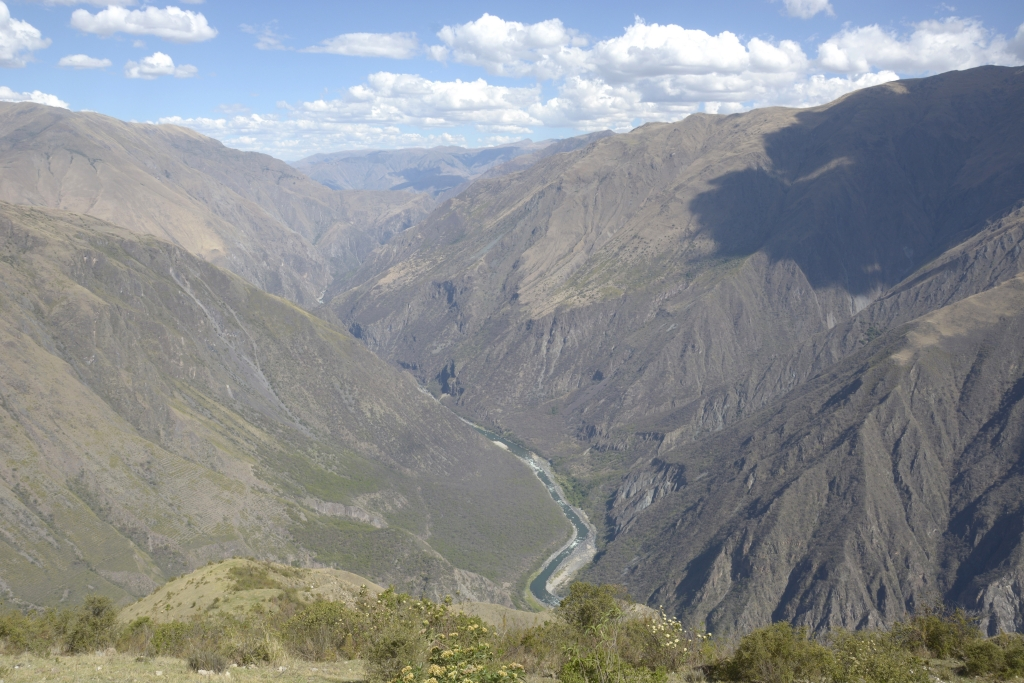
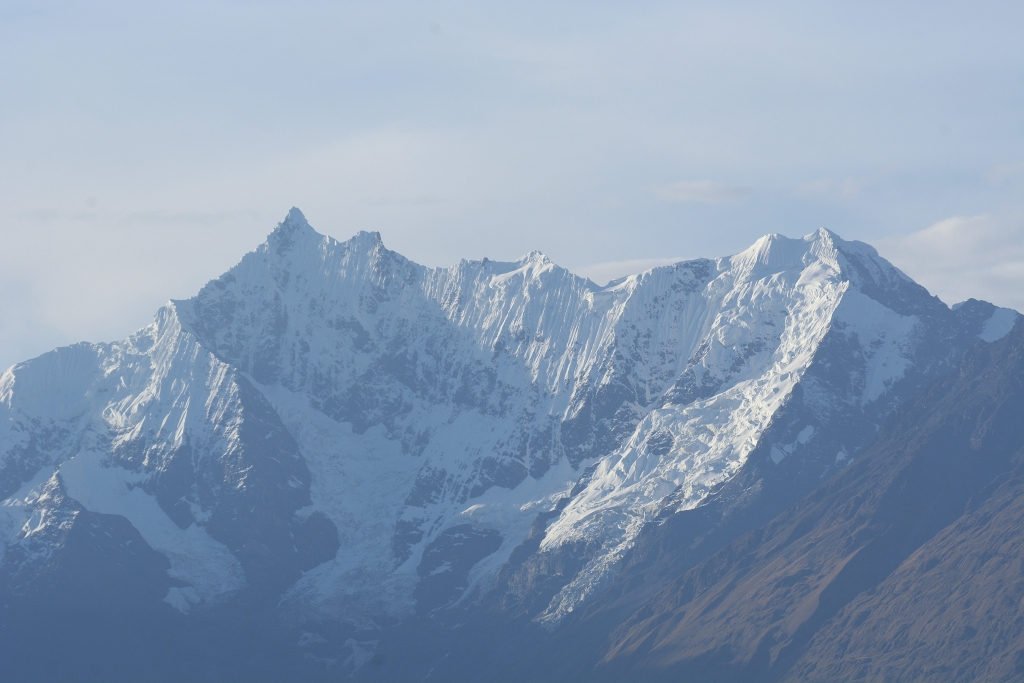
It was called Chonta, a place located just 98 km northeast of the ancient Inca capital, as I would later find out. I also learned that visitors, apart from spotting condors, were left in awe by the dizzying depths of the Apurímac canyon and the majesty of the Salkantay and Humantay snow-capped peaks, two mountain giants standing proud on the horizon.
That was when curiosity and doubt entered into open conflict. What should I do? Stick to my original plan or sneak in a little detour before setting off on the Ausangate trek. To go or not to go. Doubts and uncertainty. In the end, my adventurous spirit prevailed. I would set off for Chonta (Limatambo district, Anta province) with the firm belief that Cusco’s treasures never fail to impress.
“And this won’t be the first time!” was my rallying cry, my mantra, as I packed my bag. With that positive thought, I made my way to Santa Ana street in Cusco, where public transport vans depart for Limatambo (around 15 soles). And so began my unexpected quest for a bird admired and revered since time immemorial.
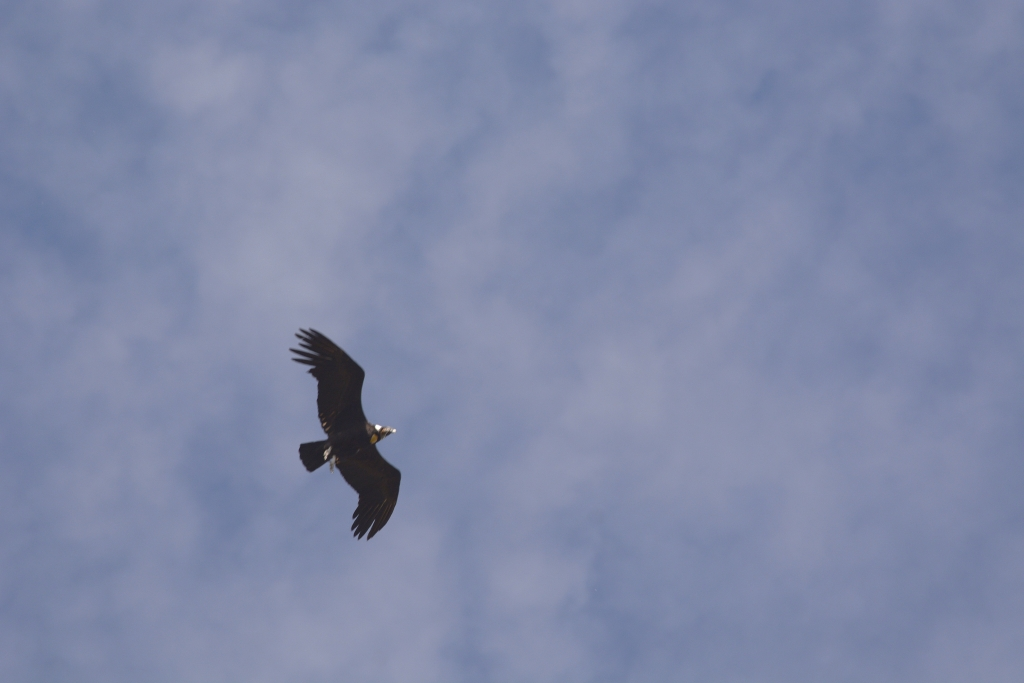
Witnessing the flight of the condors is one of the most breathtaking natural spectacles of the Andes. The Vultur gryphus (their scientific name) are the largest scavenger birds on the planet. Masters of the winds and thermal currents, they look truly majestic as they spread their wings across the sky. A sight that is hard to forget, an image that stays etched in the traveller’s memory.
Farewell to old memories. If everything went well, my mind would treasure new visions of the kuntur (as they are called in Quechua), but this time not among the mountains and terraces of Colca (Arequipa), nor in the desert facing the sea at San Fernando National Reserve (Ica), nor even in the highlands of Lima. Instead, it would be just outside the Imperial City, the “Historic Capital of Peru”, the navel of the Andean world.
The Route to the Lookout
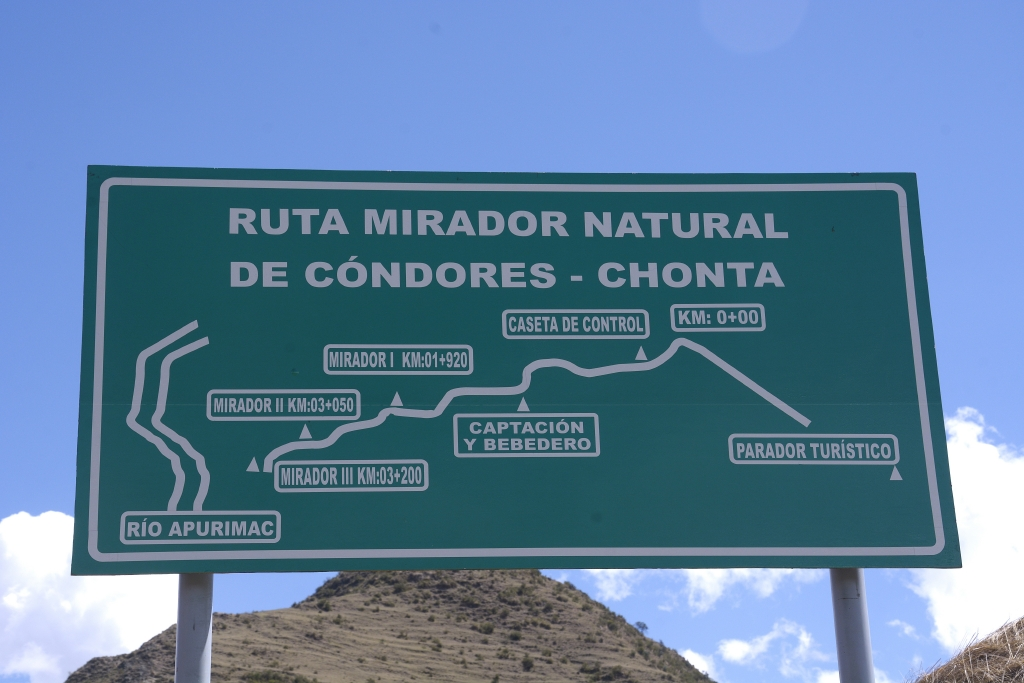
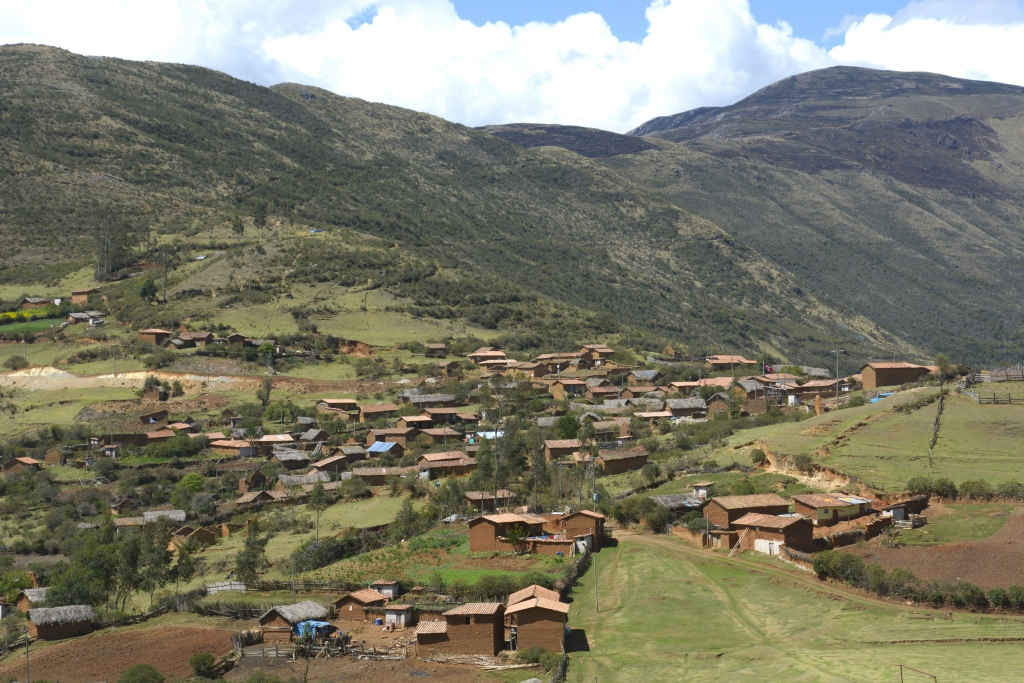
The Urban Cusco (3,400 m a.s.l.) slowly fades into the distance. The bus follows the winding tarmac road towards Abancay, the capital of the Apurímac region. My destination is Limatambo, where I’ll catch a shared car to the community of Chonta (distance: 10 km; fare: 15 to 30 soles; journey time: 45 minutes). From there, a 3.5 km walking trail begins (entrance fee: 10 soles).
Unlike other places, there’s no need to rise at dawn for the best chance of success. Quite the opposite. “The afternoons are much better. I’m not exaggerating, sir — once I saw 20 condors!” said one of the local villagers I met along the path. His enthusiasm was contagious. The trail itself skirts dizzying drops and sheer depth, leading to the three viewpoints set up in Chonta.
His words lifted my spirits. I had worried the kuntur might not appear, especially since my unplanned excursion had started rather late in the Cusco morning. I wasn’t expecting to see 20, of course, but knowing my chances were high reassured me. With that confidence, my adventurous steps carried me upwards from 3,350 to 3,380 m a.s.l., convinced the effort would be well worth it.
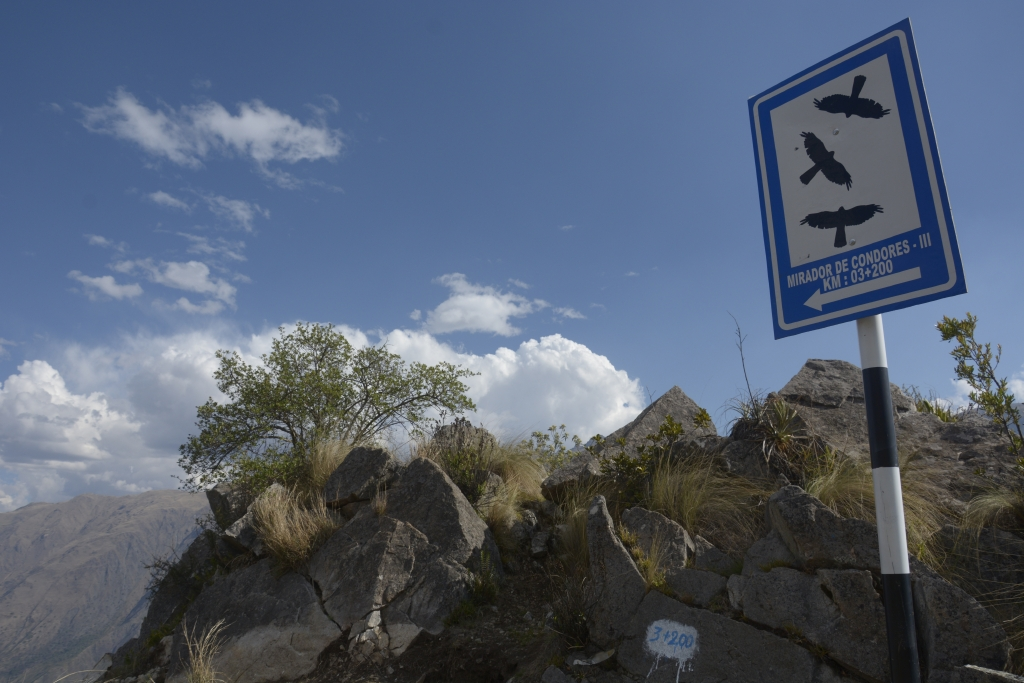
The only thing I regretted was not having enough time to plan a proper itinerary. If, after reading this, you feel inspired to visit Chonta, I’d suggest setting off early (though not at the crack of dawn), so you can make strategic stops at the archaeological sites of Quillarumiyoc and Tarawasi. Both are of Inca origin and lie along the route to the viewpoint.
I’ll tell you more about these sites in another piece. For now, I’ll just mention them in passing — keeping pace with the condors. Those very condors I would end up seeing simply because I was being “nosy” at San Pedro market and then let curiosity have the final word. That wonderful travel companion that pushes you to change your plans, even when caution and doubt would rather stick to what was carefully arranged beforehand.
Condors in the sky
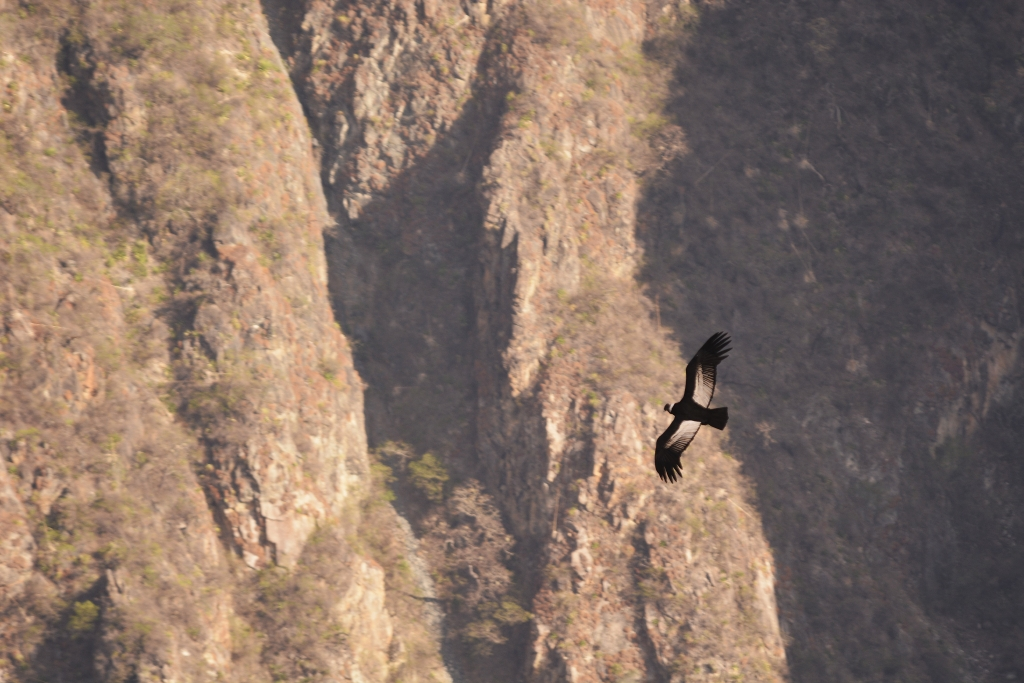
The expectation, the eagerness, the waiting at the three viewpoints. “Relax. They’ll be out any moment now,” reassure the local villagers. Patience is key here. There’s no set timetable, so while the Andean condors make their entrance, the best thing to do is to calmly take in the canyon views of the Apurímac River, the natural border between the Cusco and Apurímac regions.
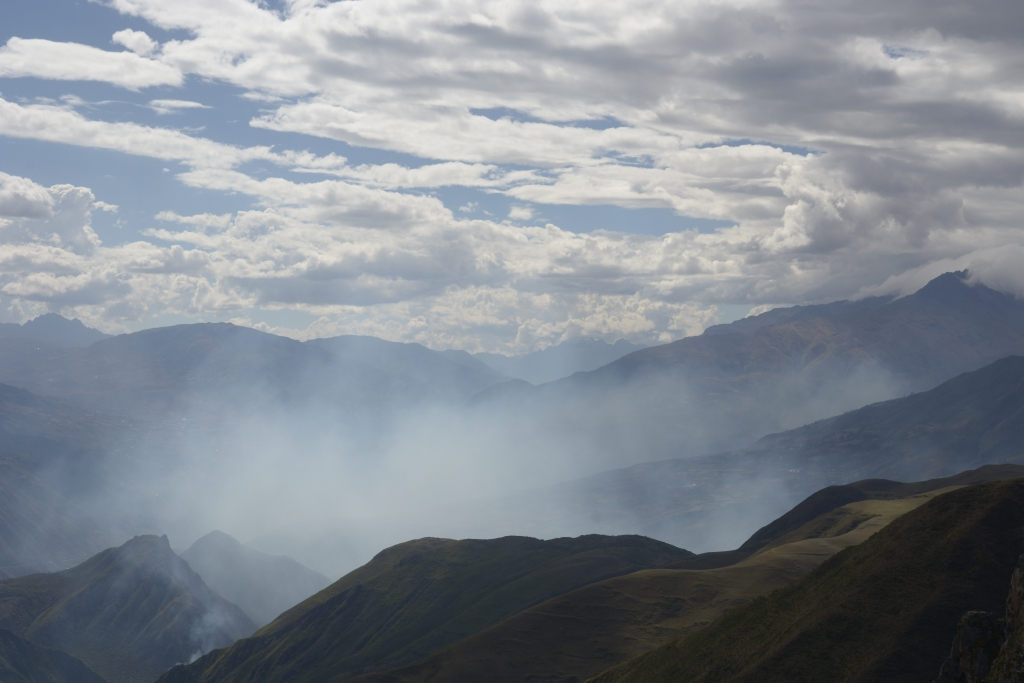
Fascinating visions. The depth, the mountain scenery, the play of light and shadow at sunset, and those fluffy clouds that seem to “compete” to see which one will cover the sun first. The silence, the stillness, and the wind — sometimes gentle, sometimes whipping with its cold breath — are the perfect companions to a sublime moment of deep connection with the surrounding landscape.
Only the main characters of this story are missing. What if the giants, whose wingspan can stretch over three metres, don’t show up? What if a sudden shower drives away these emblematic birds, capable of soaring above 5,000 metres? What if the villager exaggerated, and visitors only rarely spot the vultur gryphus and catch sight of the distinctive white feather ruff that marks the males?
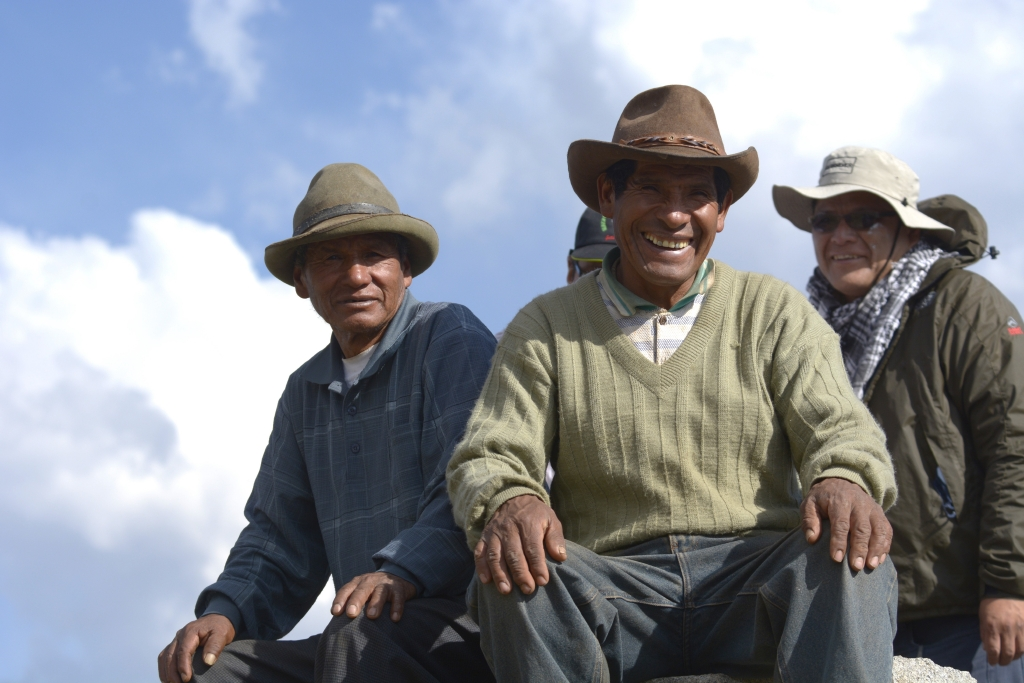
Uncertainty. The time to head back is drawing near. “Don’t leave. They’ll be out any moment now,” the locals insist. I listen, I stay… and they’re right. Now I see them, mastering the currents. Not twenty — but who cares? There are three… no, four gliding right before my eyes. Enormous, magnificent, regal. Watching them, I understand why the ancients believed they were messengers of the gods.
Now I don’t want to return. I want to keep waiting. “Still missing sixteen,” I joke with the villagers who, out of kindness, stayed with me until the end. They smile. They’re pleased because the kuntur didn’t let us down. Well, they rarely ever do in Chonta, the viewpoint that’s neither too near nor too far from Cusco. That’s why it’s such a tempting detour, inviting travellers to change plans and break itineraries.
September 20, 2025